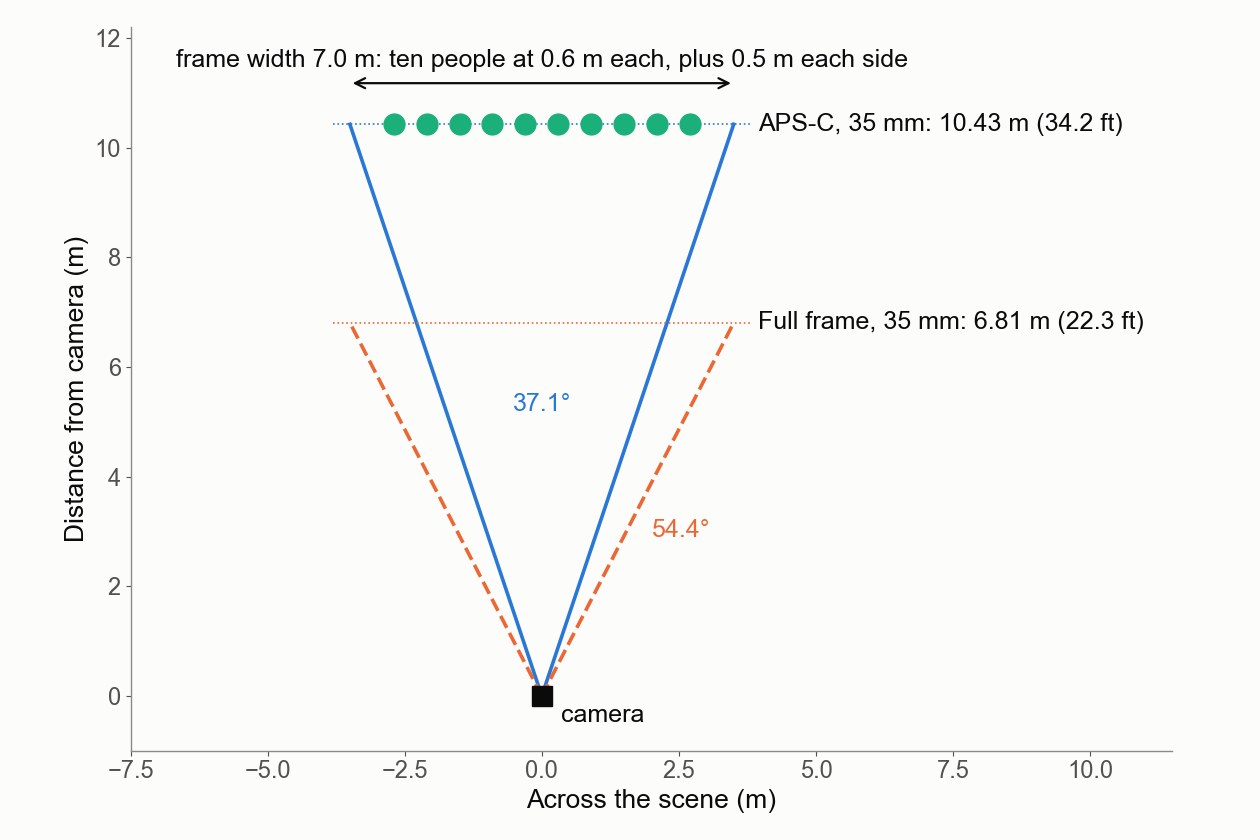
Field of view calculator for camera lenses
by Piotr
Enter a focal length, a sensor and a distance to get the angle of view and the frame size. Then see exactly how far back to stand for a group of ten people.
by Piotr
Enter a focal length, a sensor and a distance to get the angle of view and the frame size. Then see exactly how far back to stand for a group of ten people.
by Piotr
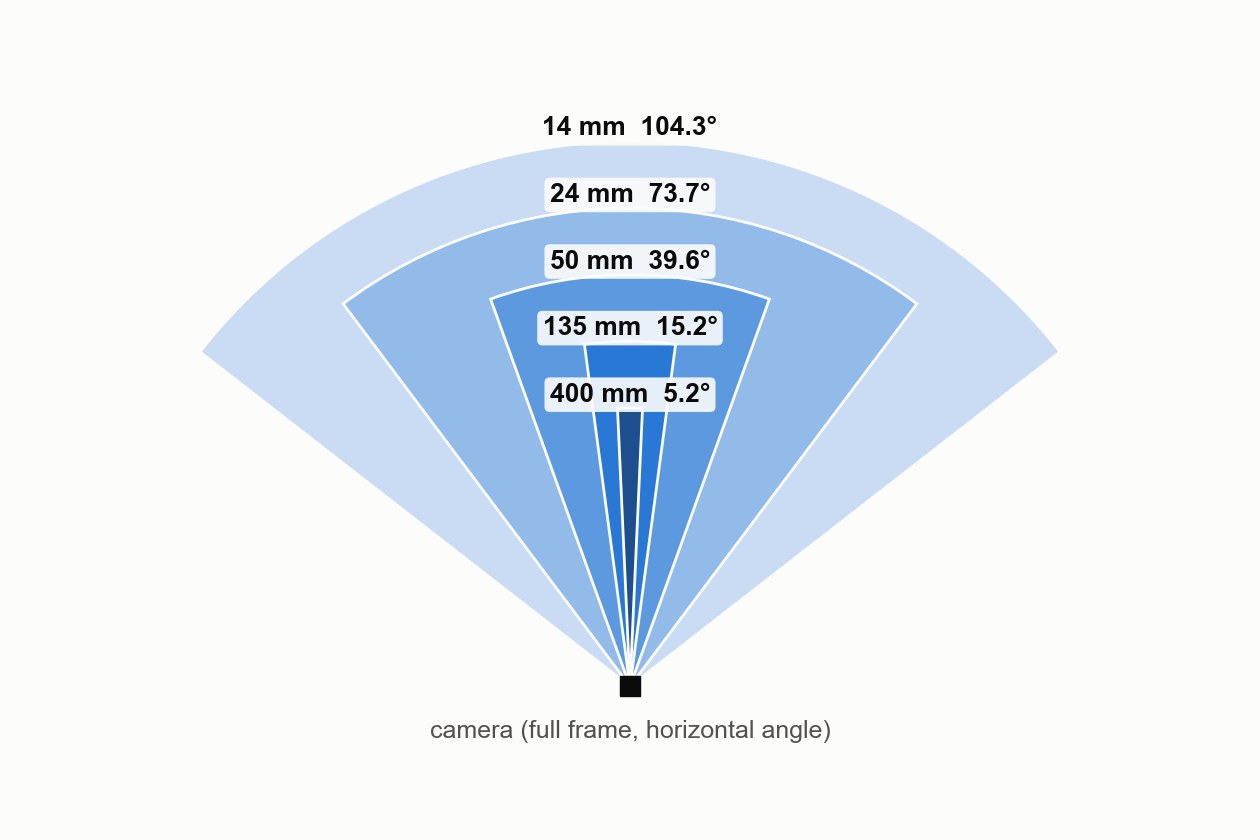
A lens number turned into angles and meters. Computed tables for full frame, APS-C and Micro Four Thirds, a calculator, and a myth about the human eye checked.
by Piotr
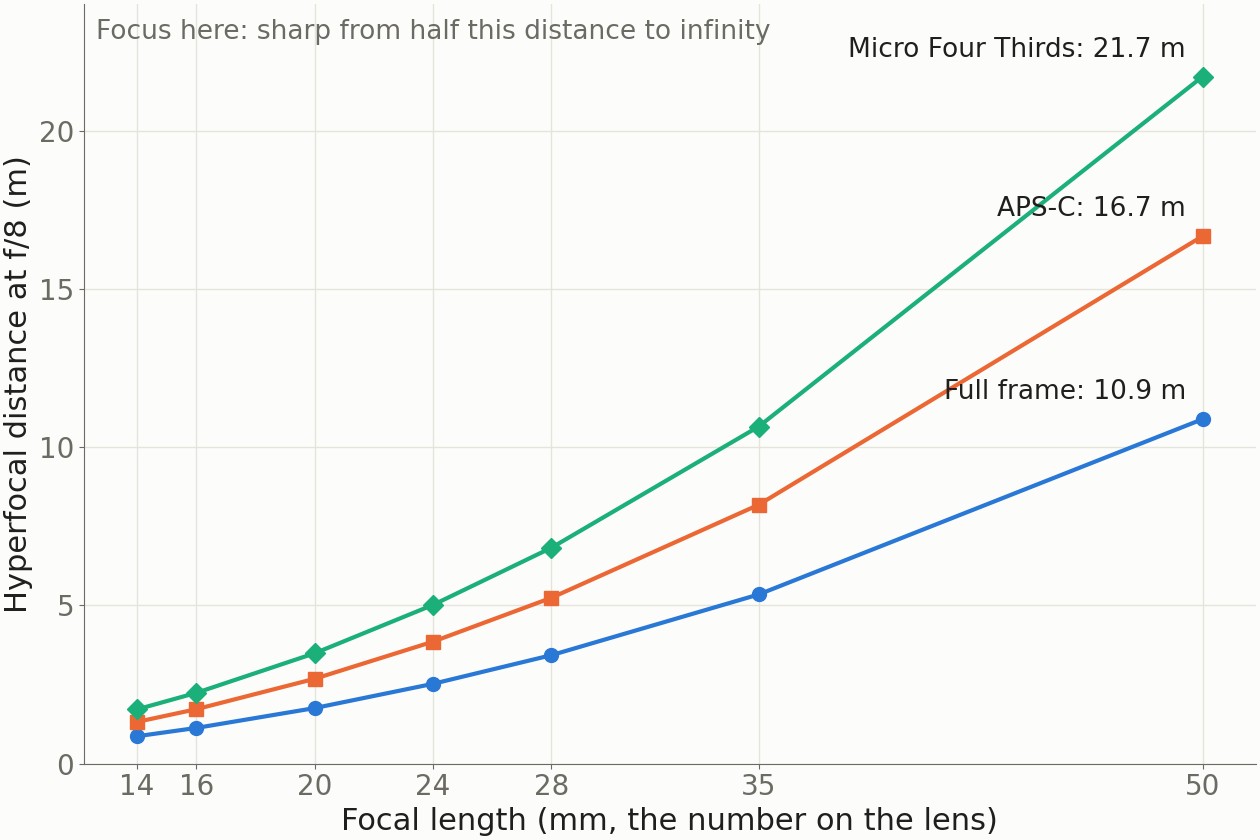
Where to focus so everything from the foreground to infinity is sharp. Printable charts for three sensor sizes and two versions of the one third rule, tested.
Read more about Hyperfocal distance charts and a rule tested
by Piotr
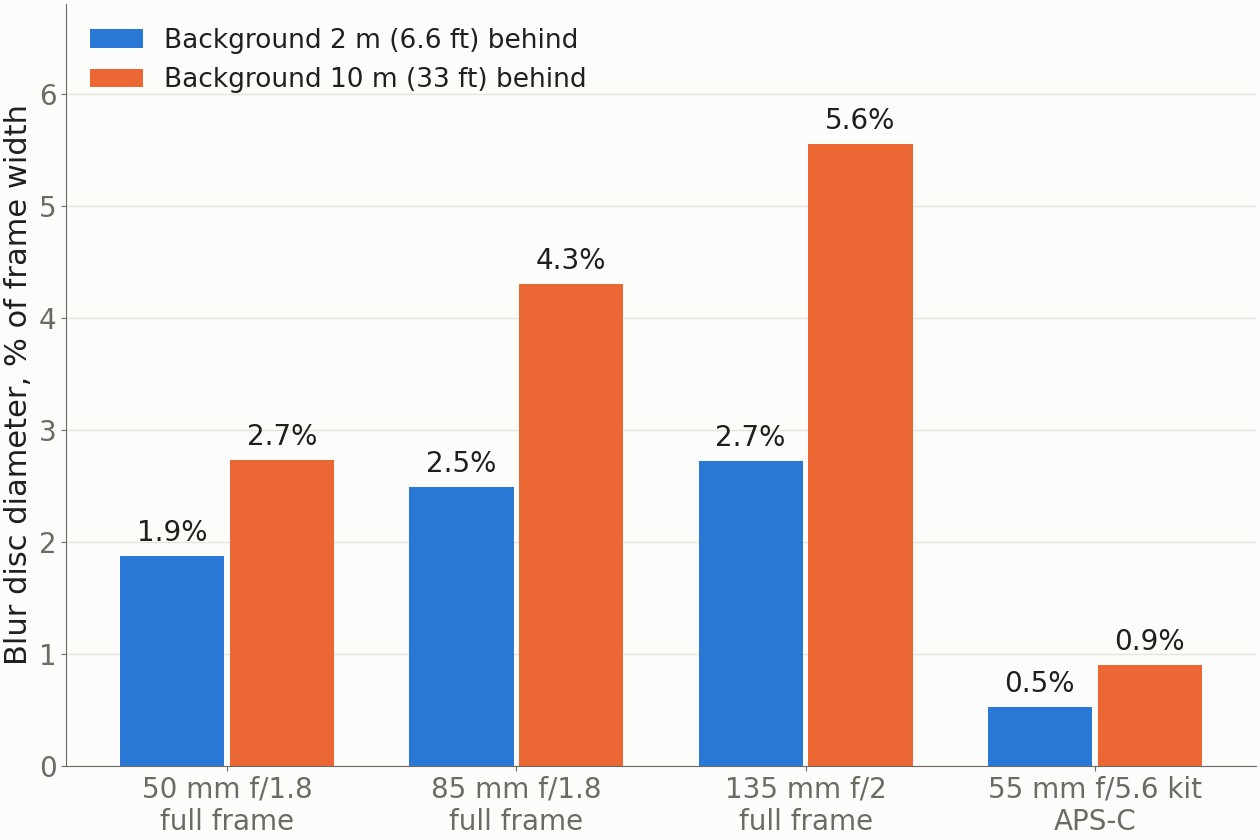
Background blur, computed rather than promised. Blur disc sizes for four portrait setups at the same framing, and the five levers ranked by stops of blur.
by Konstantin Voronov
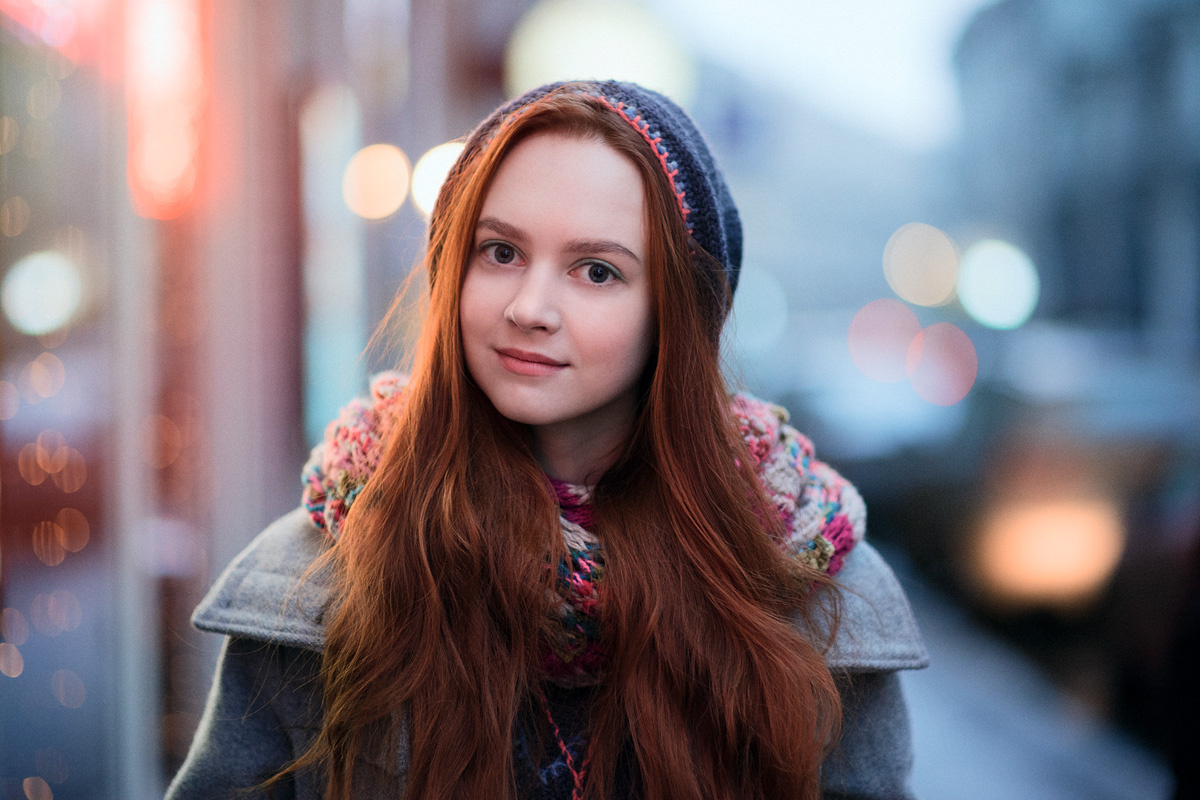
The 85mm prime is the classic portrait lens. Its angle of view, working distance by framing, the best aperture for portraits, 85mm on APS-C and what to buy.
by Konstantin Voronov
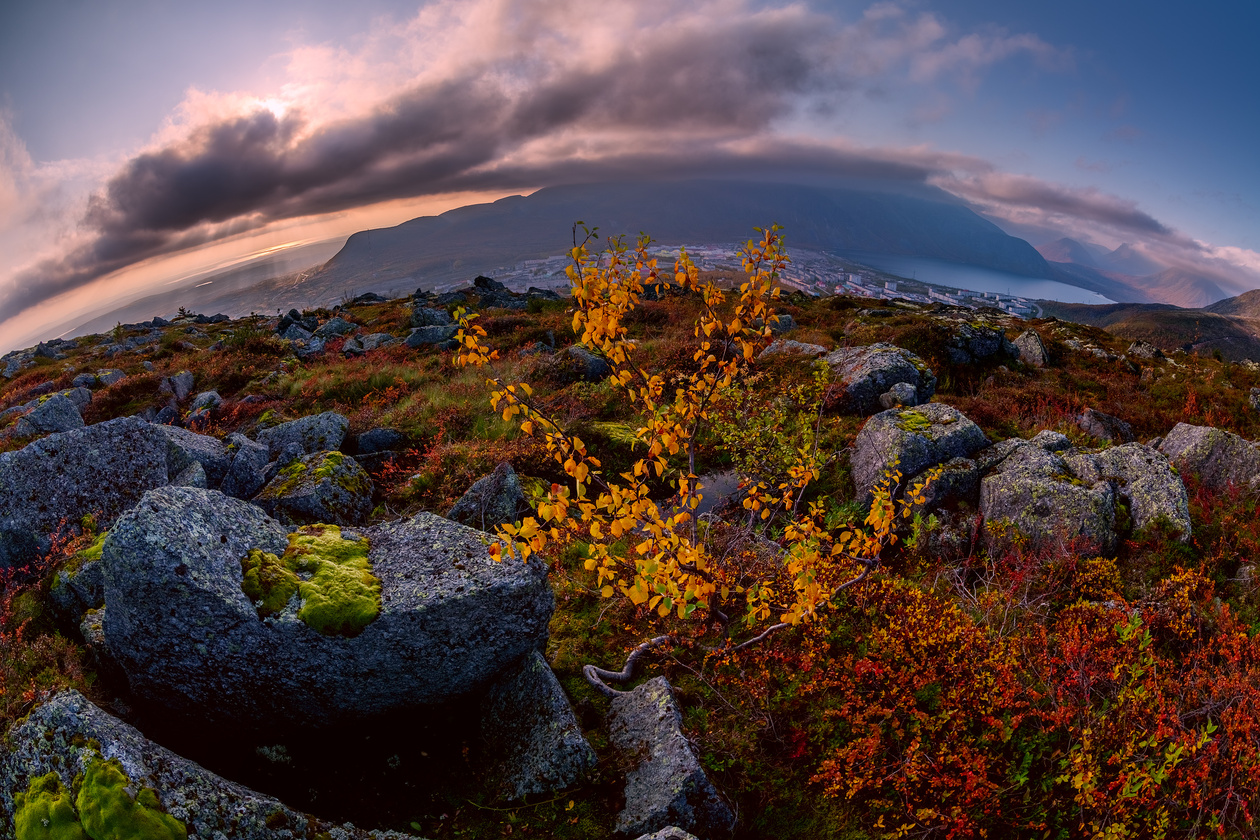
A fisheye takes in 180 degrees and bends every line off-center. Circular vs diagonal types, focal lengths by sensor, hyperfocal focus and which one to buy.
Read more about What is a fisheye lens? 5 reasons to use one
by Konstantin Voronov
Lenses differ first by angle of view. Focal-length ranges for each lens type, how each one changes perspective, and which lens to buy after the kit zoom.
by Konstantin Voronov
The zoom in the camera box is cheap, light and versatile for a reason. What a kit lens does well, where it falls short, and what to buy when it holds you back.
by Georgy Romanov
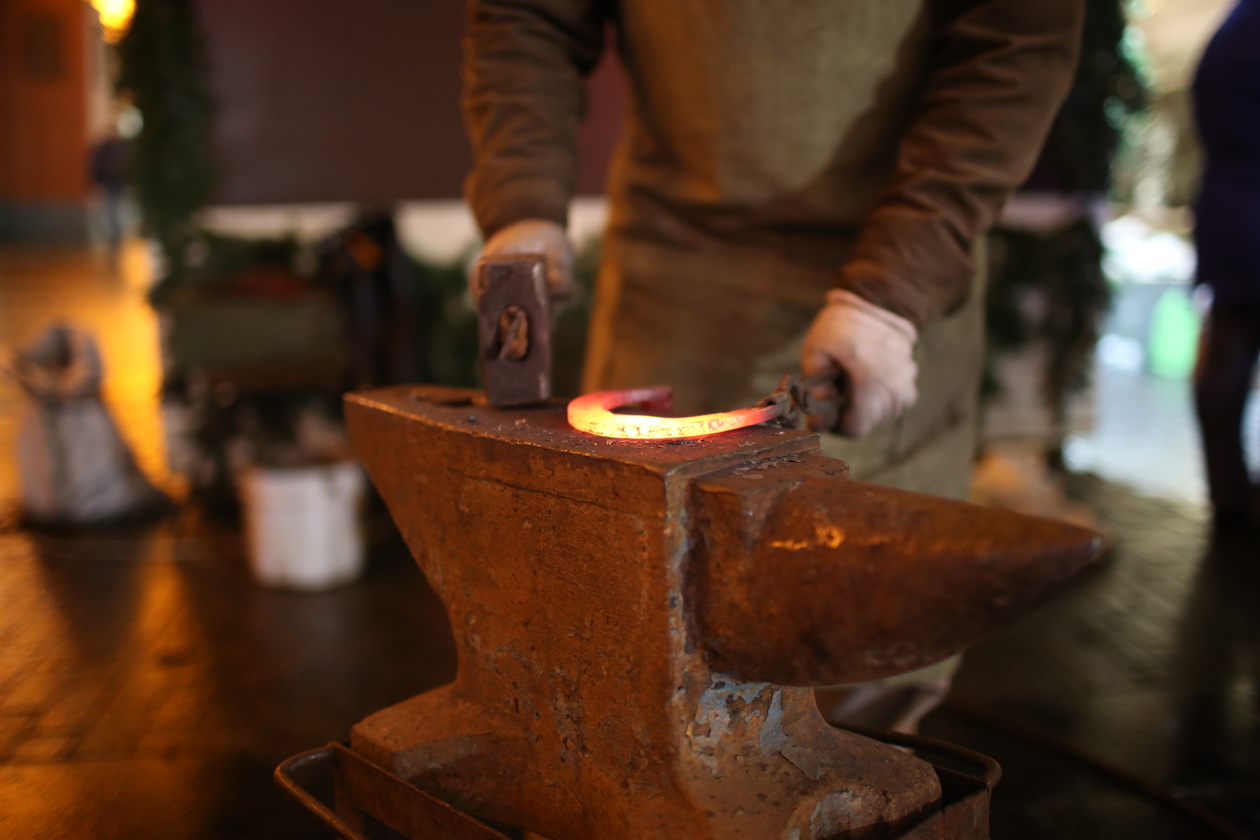
A fixed focal length buys sharper pictures, wider apertures and softer backgrounds. How primes compare with zooms, and how to choose a 50 mm, 35 mm or 85 mm.

by Konstantin Voronov and Renat Mansurov
A wide-angle lens fits a whole room or valley into one frame if you get close. Focal-length ranges, angles of view, composition rules and what to buy.
by Piotr
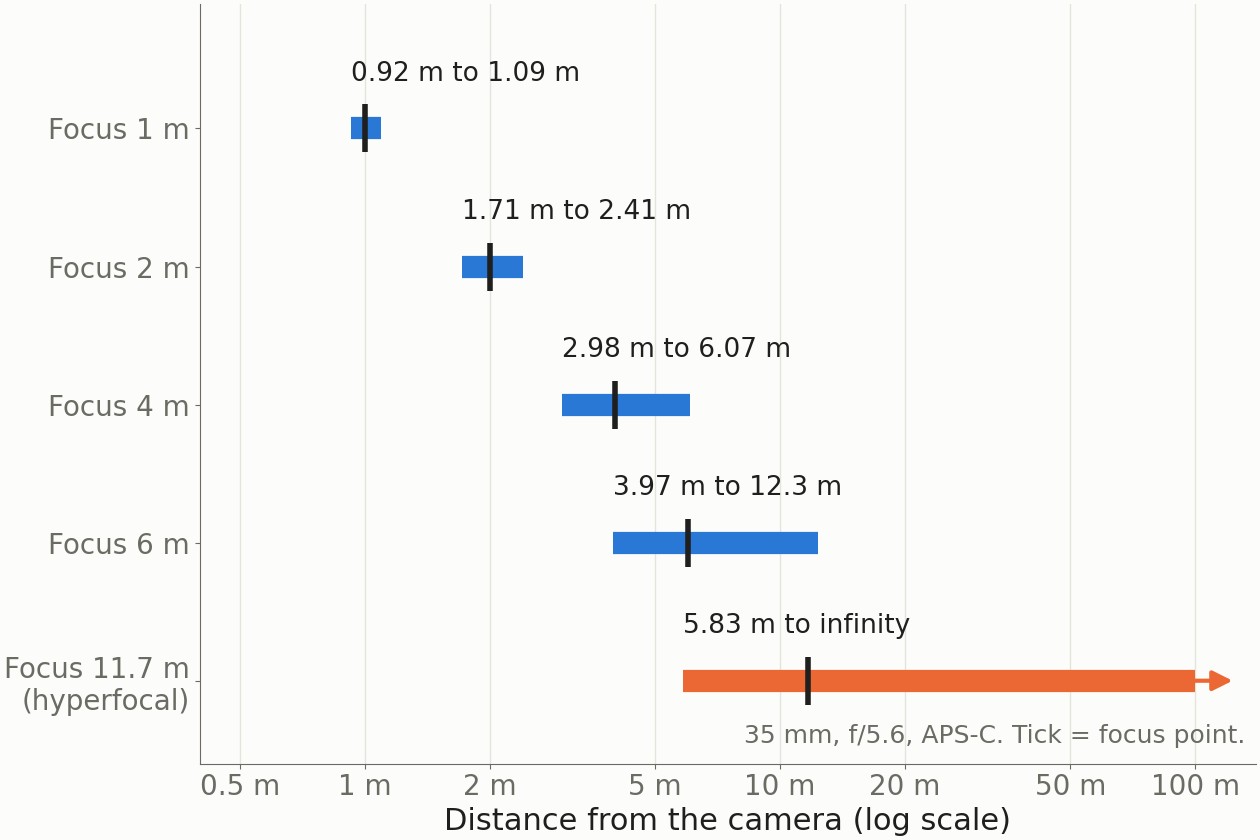
Enter sensor, focal length, aperture and distance to get near and far limits plus the hyperfocal distance. Worked examples and what circle of confusion does.
by Piotr
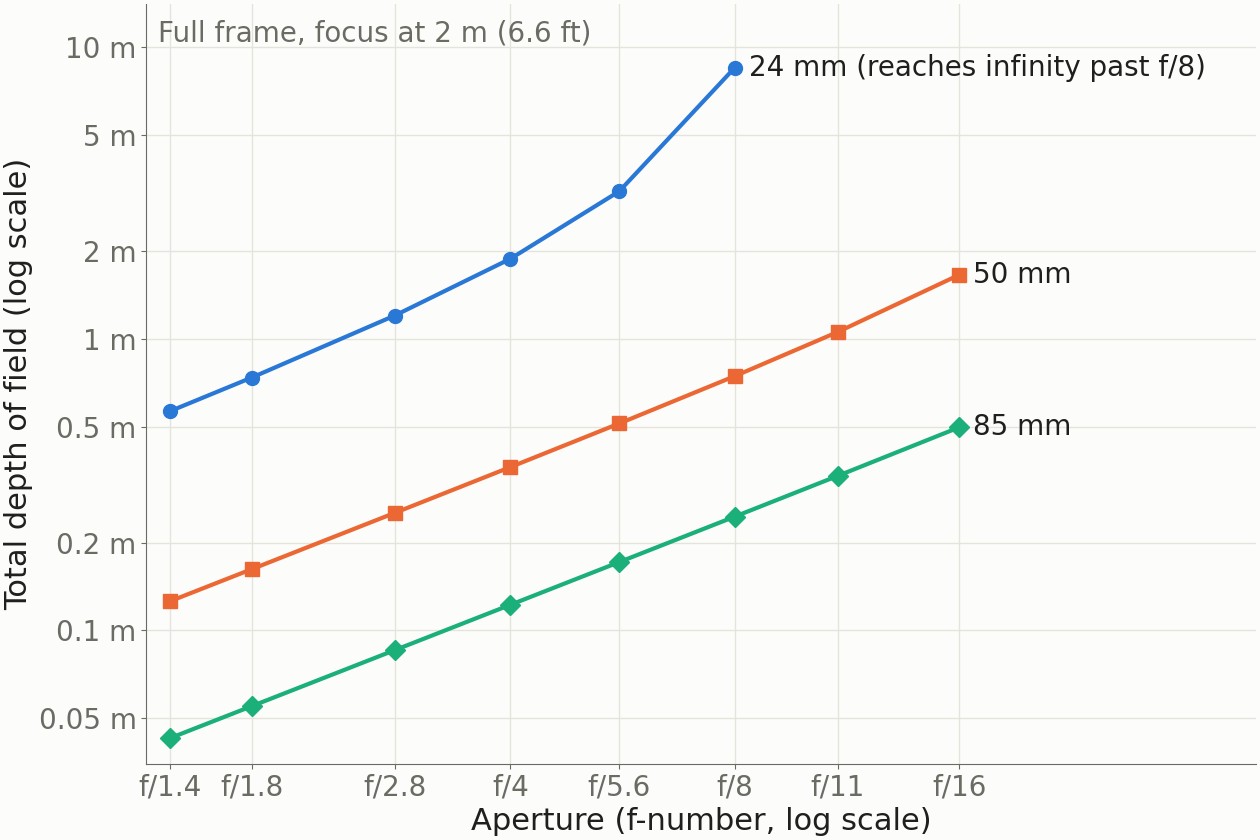
The sharp zone around your focus point, measured: computed tables for three lenses at two distances, a calculator, and the full-frame myth checked by math.
Read more about Depth of field explained with computed tables
by Piotr
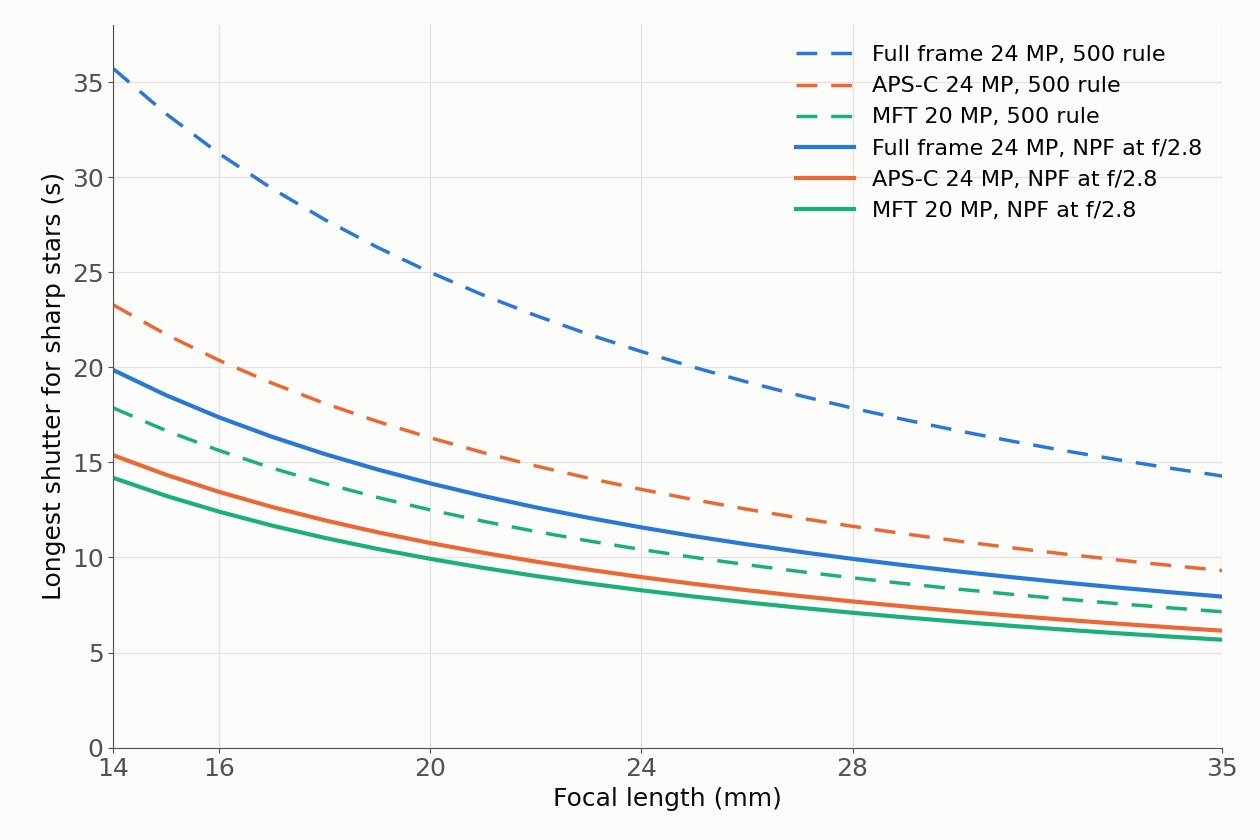
A settings table for faint and dancing aurora. Then the longest shutter your lens allows, phone night modes from Apple and Samsung, and the Kp scale decoded.
Read more about Camera settings for northern lights, computed
by Piotr
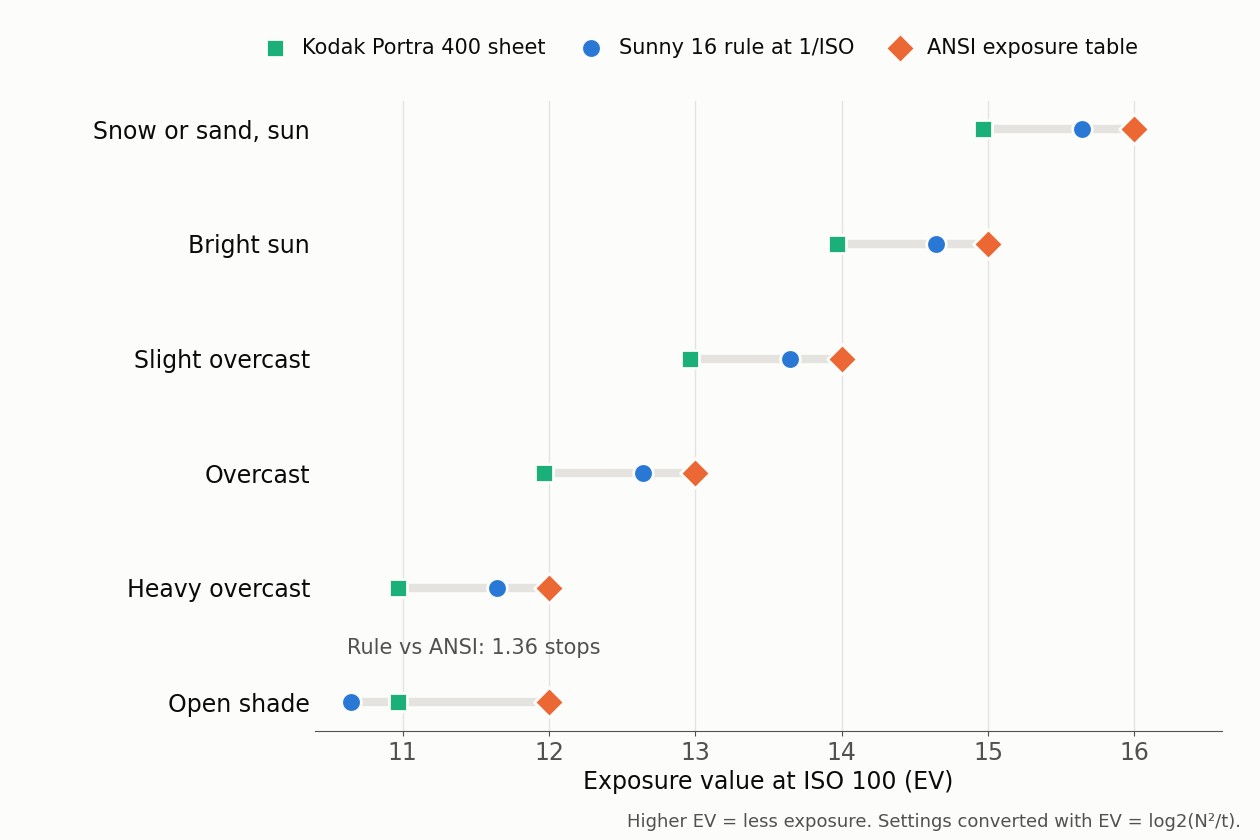
Set f/16 and 1/ISO in full sun. The chart for six kinds of light, the math behind it, and where the rule disagrees with the published exposure tables.
by Konstantin Voronov
The P, A, S and M modes differ only in who sets the shutter speed and aperture. Which mode suits which subject, plus exposure compensation and Auto ISO in each.
Read more about Aperture priority, shutter priority or manual
by Konstantin Voronov
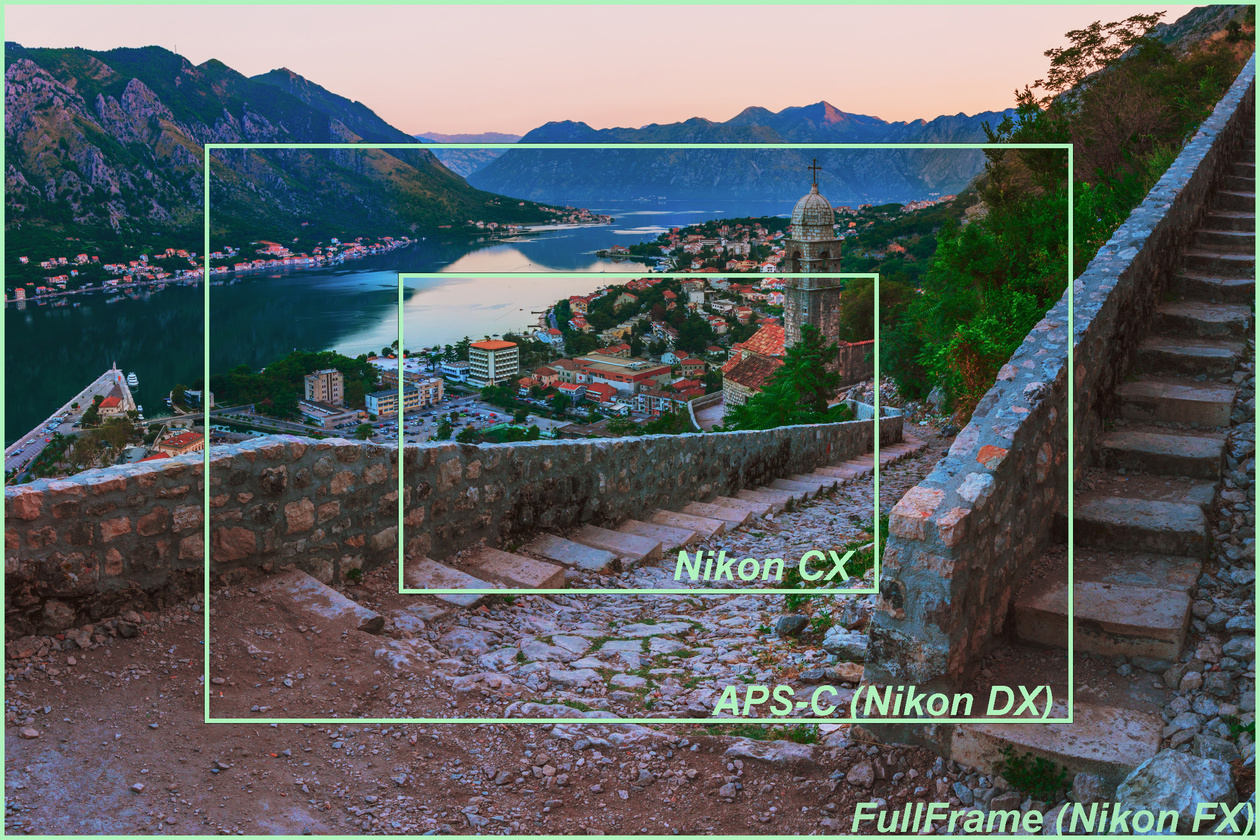
The same lens frames differently on an APS-C body and a full-frame body. Here is the crop factor math, photo comparisons and a verdict on which format to buy.
by Editorial staff
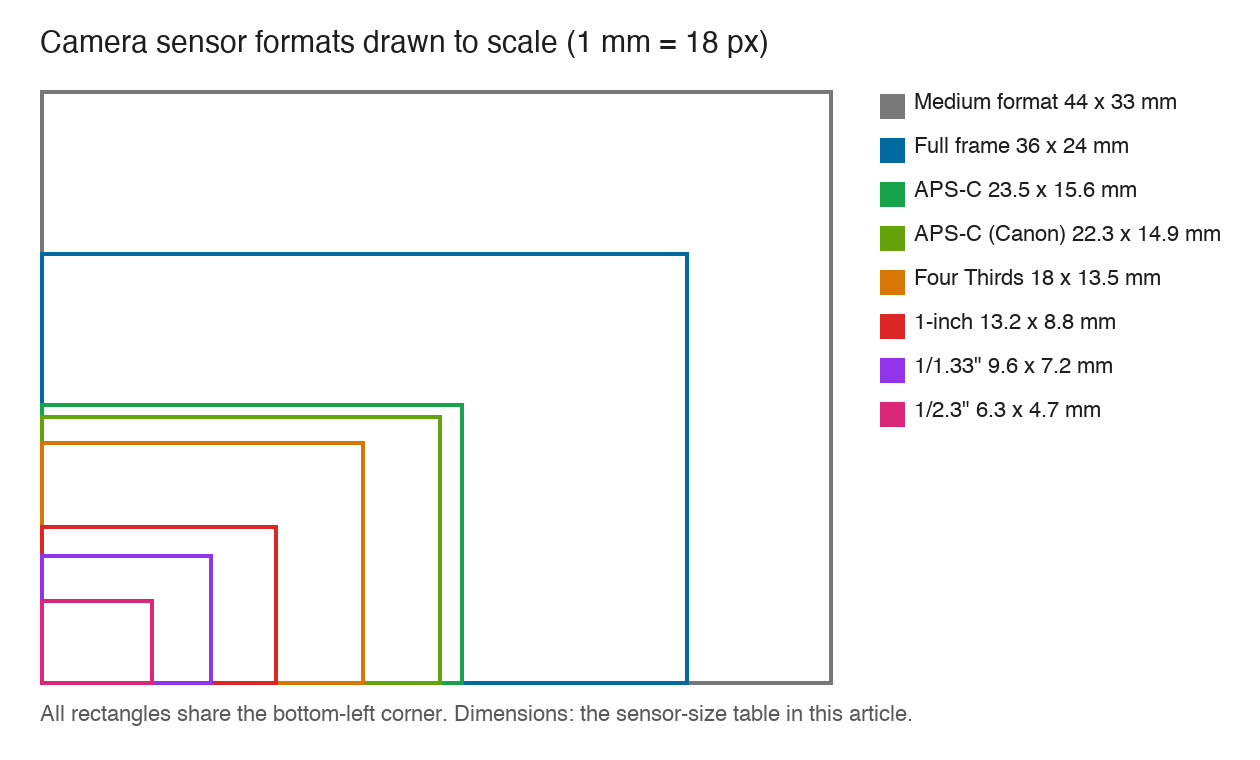
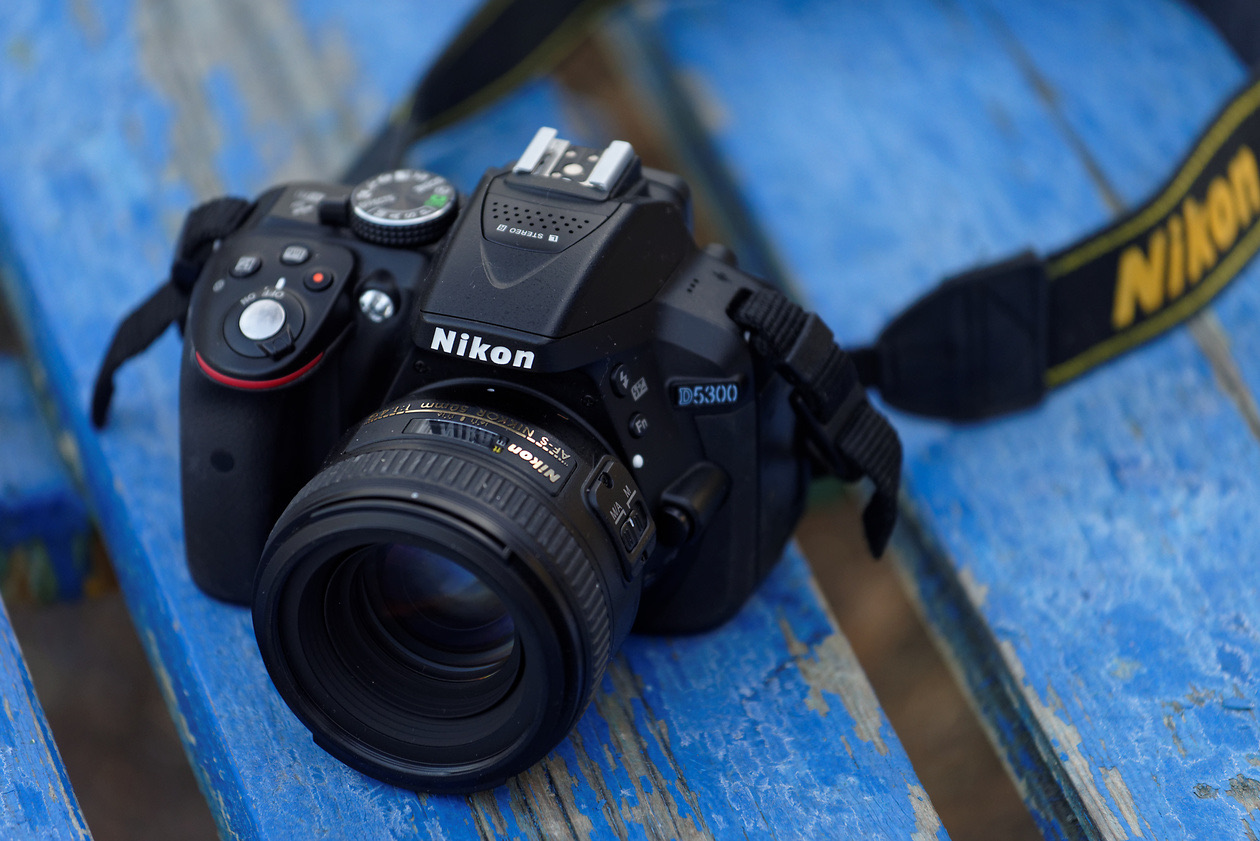
What do full frame, APS-C, Four Thirds and 1-inch actually measure? A table of real sensor sizes, a to-scale chart and the crop factor of every common format.
by Konstantin Voronov
Shutter speed, aperture and ISO decide how bright a photo is and what else it shows: motion, background blur and noise. How the three trade off in stops.
by Konstantin Voronov
Your camera meter assumes the scene is mid-gray. Which metering mode to use when it is not, how to read the histogram, and the tools that flag blown highlights.
by Konstantin Voronov
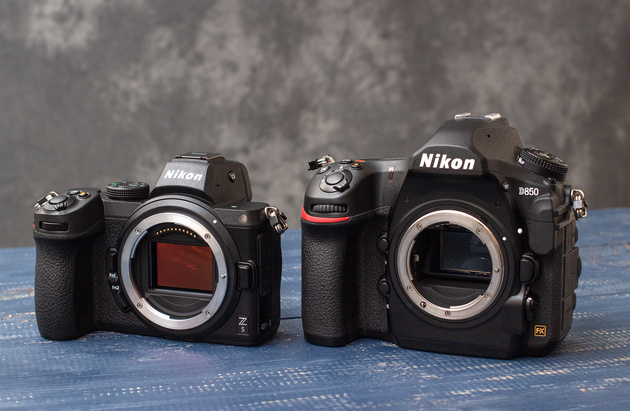
A mirrorless camera drops the reflex mirror and shows the image straight from the sensor. What that changes in practice, and why new DSLR bodies have stopped.
by Editorial staff
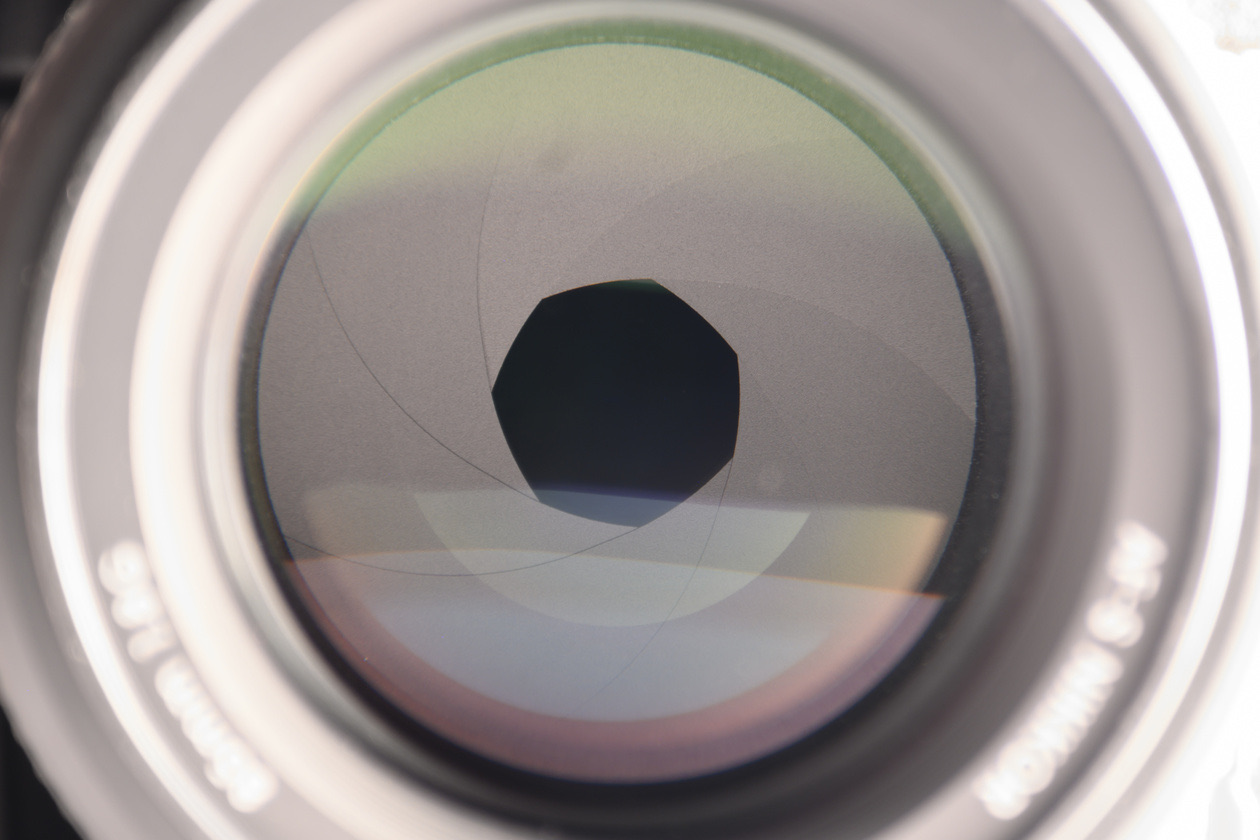
The opening inside the lens controls brightness, background blur and sharpness at once. A full f-stop chart, what f/1.8 or f/16 means and settings by genre.
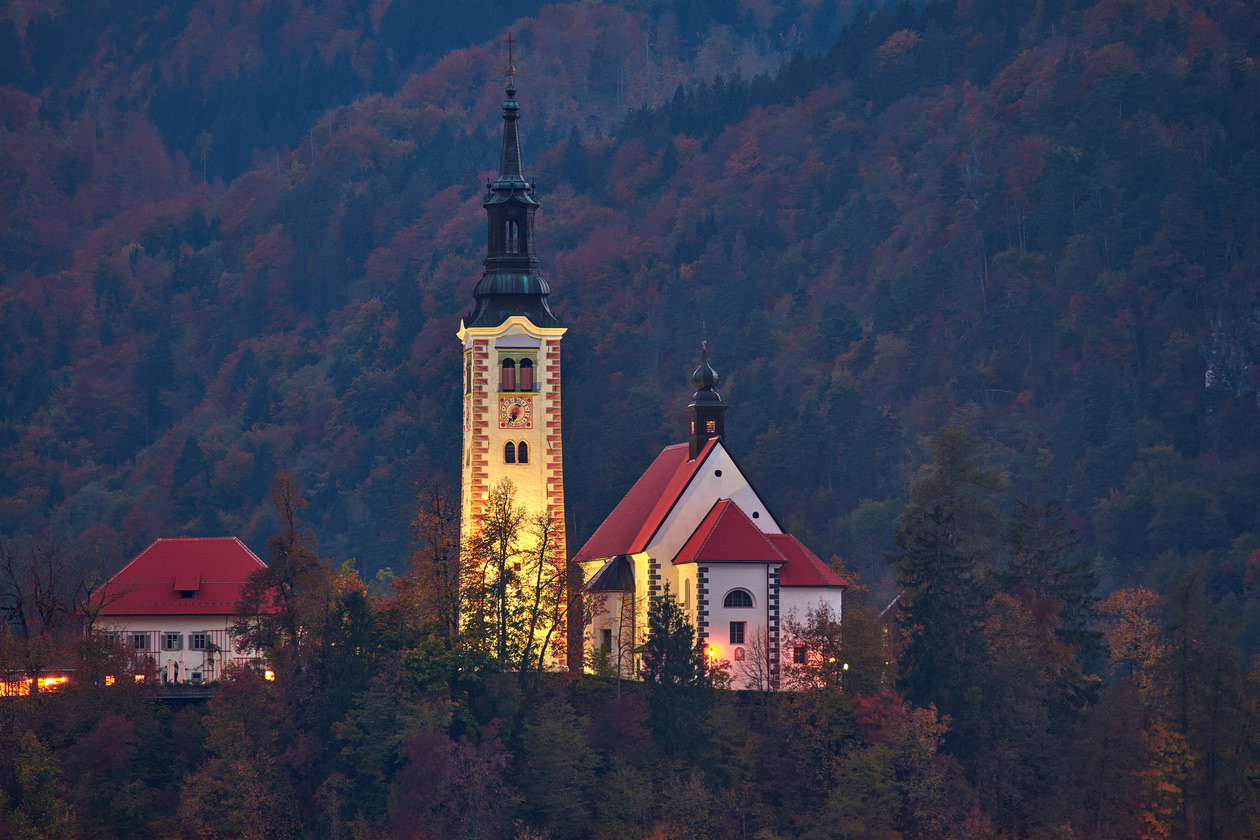
by Konstantin Voronov
Sensitivity is the third exposure setting and the simplest: it changes only brightness and noise. An ISO chart, values for each kind of light and Auto ISO.
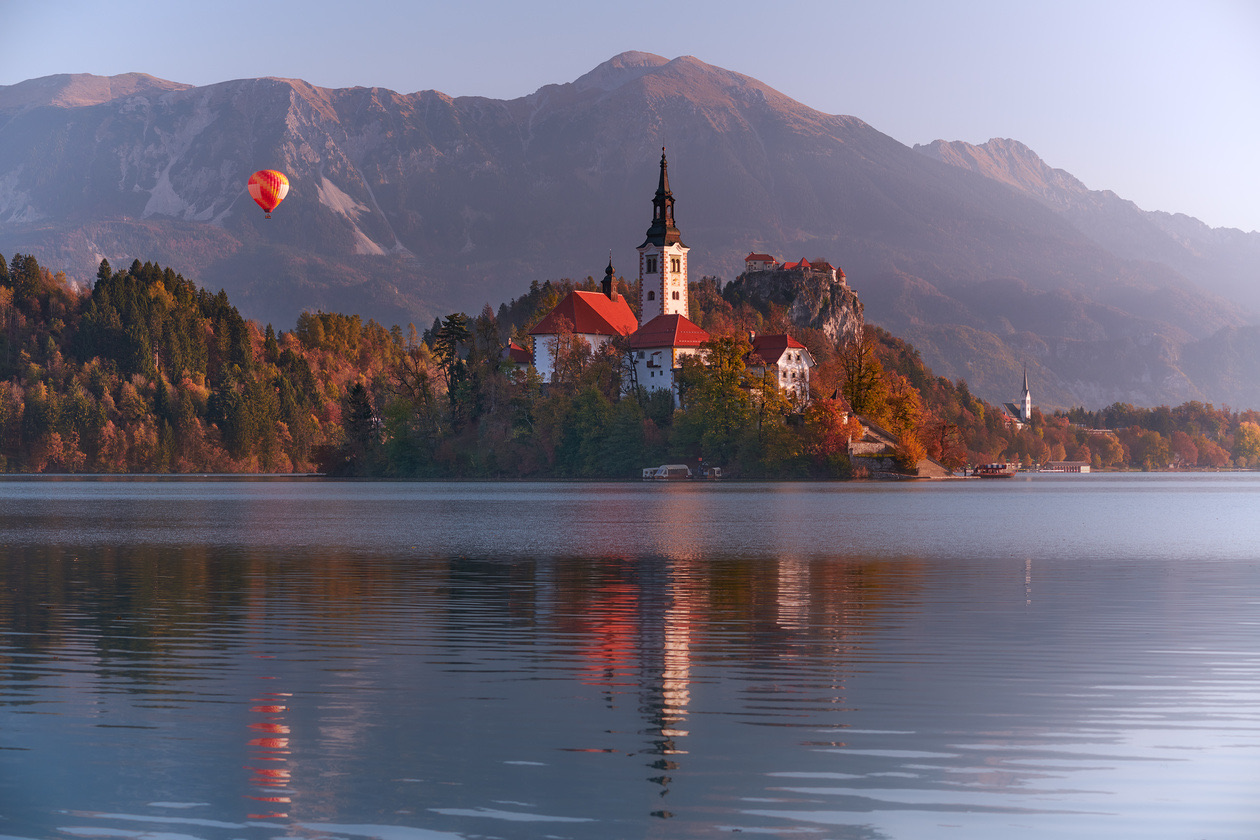
by Konstantin Voronov
How long the shutter stays open decides brightness and motion, frozen or blurred. A chart of shutter speeds, handheld limits by focal length and a tripod guide.
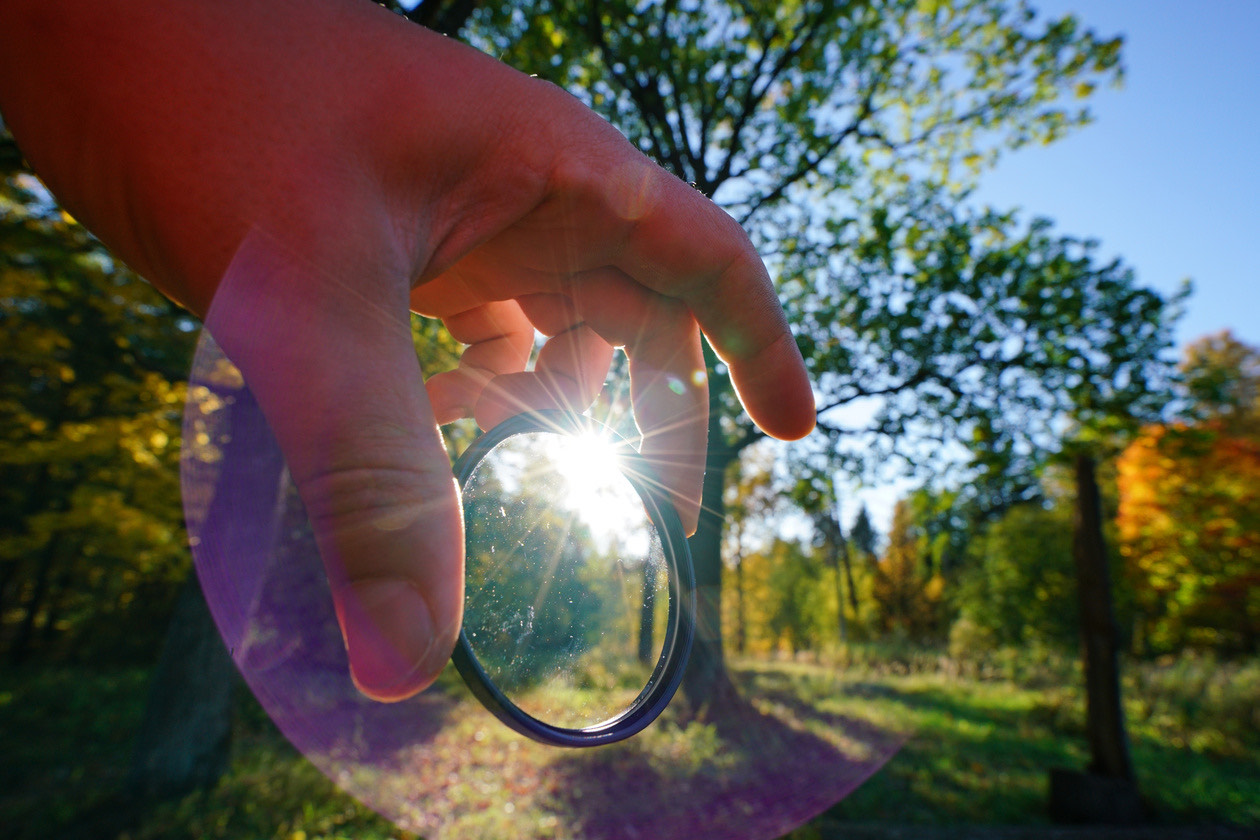
by Georgy Politsarnov
Lens filters confuse beginners more than any other accessory. Here are the filters digital cameras no longer need, the four they still need and how to pick one.
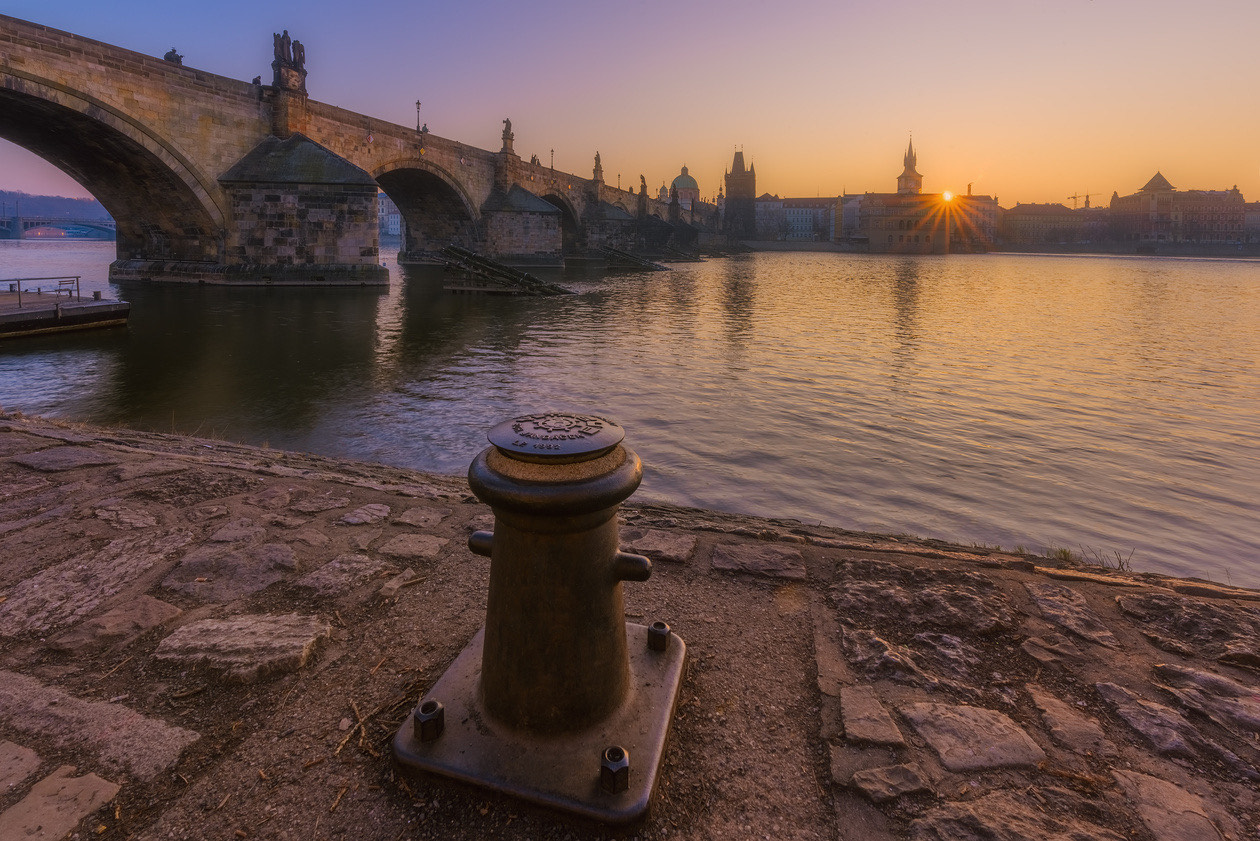
by Konstantin Voronov
Protective and UV filters are frequently recommended with a new camera or lens. When does a digital camera actually need one, and when does it hurt the image?
by Konstantin Voronov
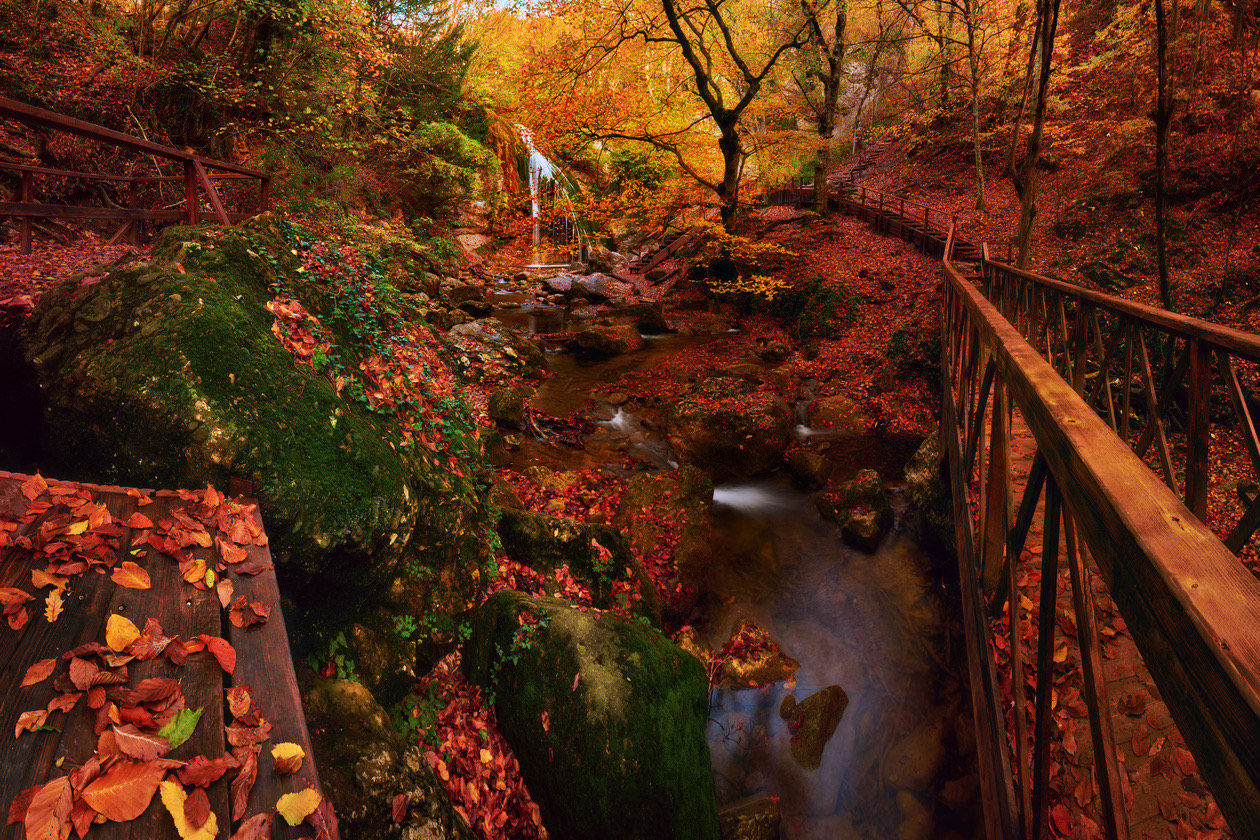
An ND filter cuts the light entering the lens, so you can use long shutter speeds or a wide aperture in bright sun. ND8 to ND1000, variable NDs, step by step.
by Konstantin Voronov
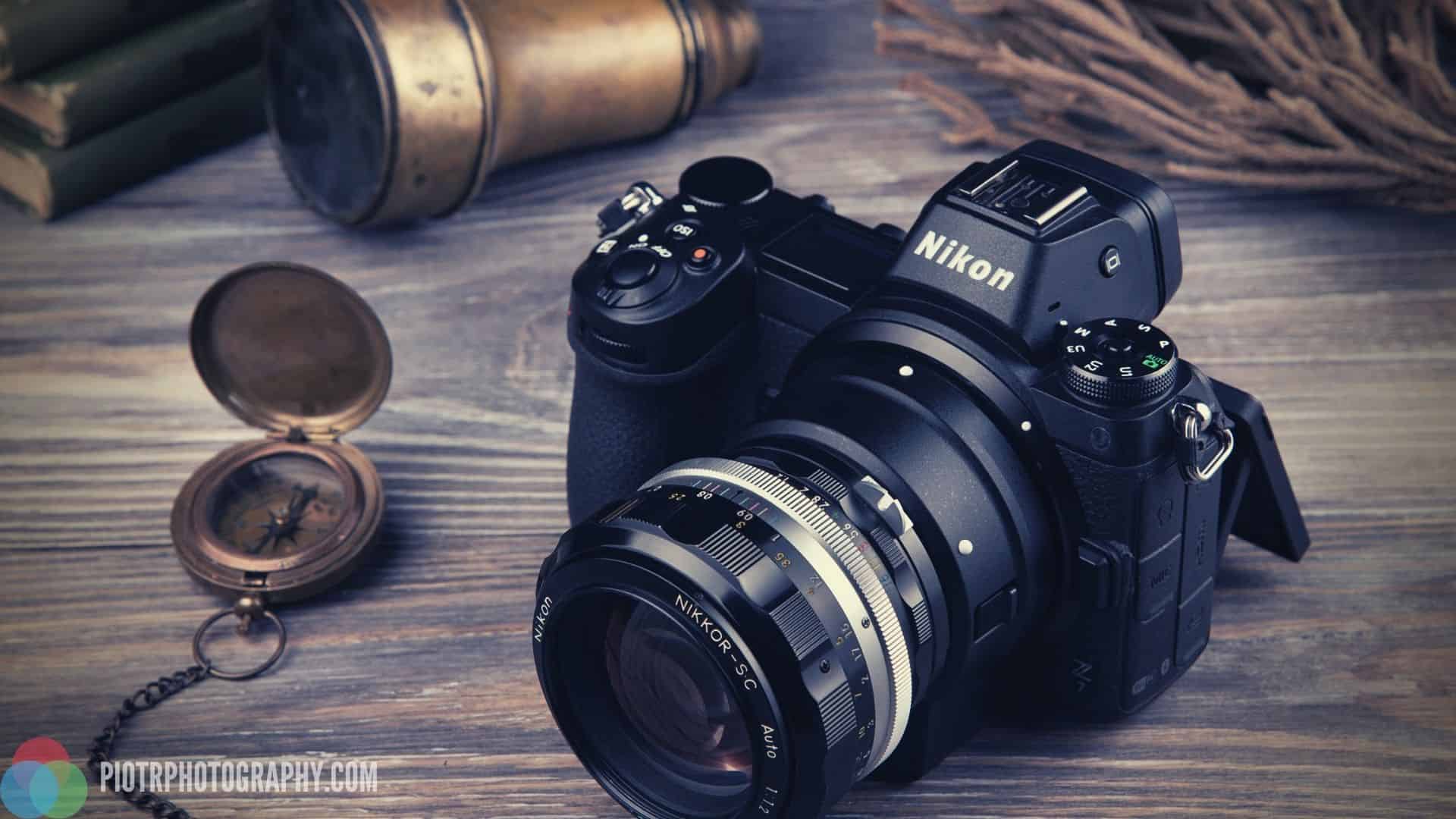
The history of photography and the evolution of photographic equipment goes back almost 200 years. During this time, many interesting creative tools were released, some of which can still be used today. I am writing primarily about lenses. It is the lens that forms the image on the sensor of a digital camera. And the …
Read more about New Life for Old Lenses on the Nikon Z System
by Piotr
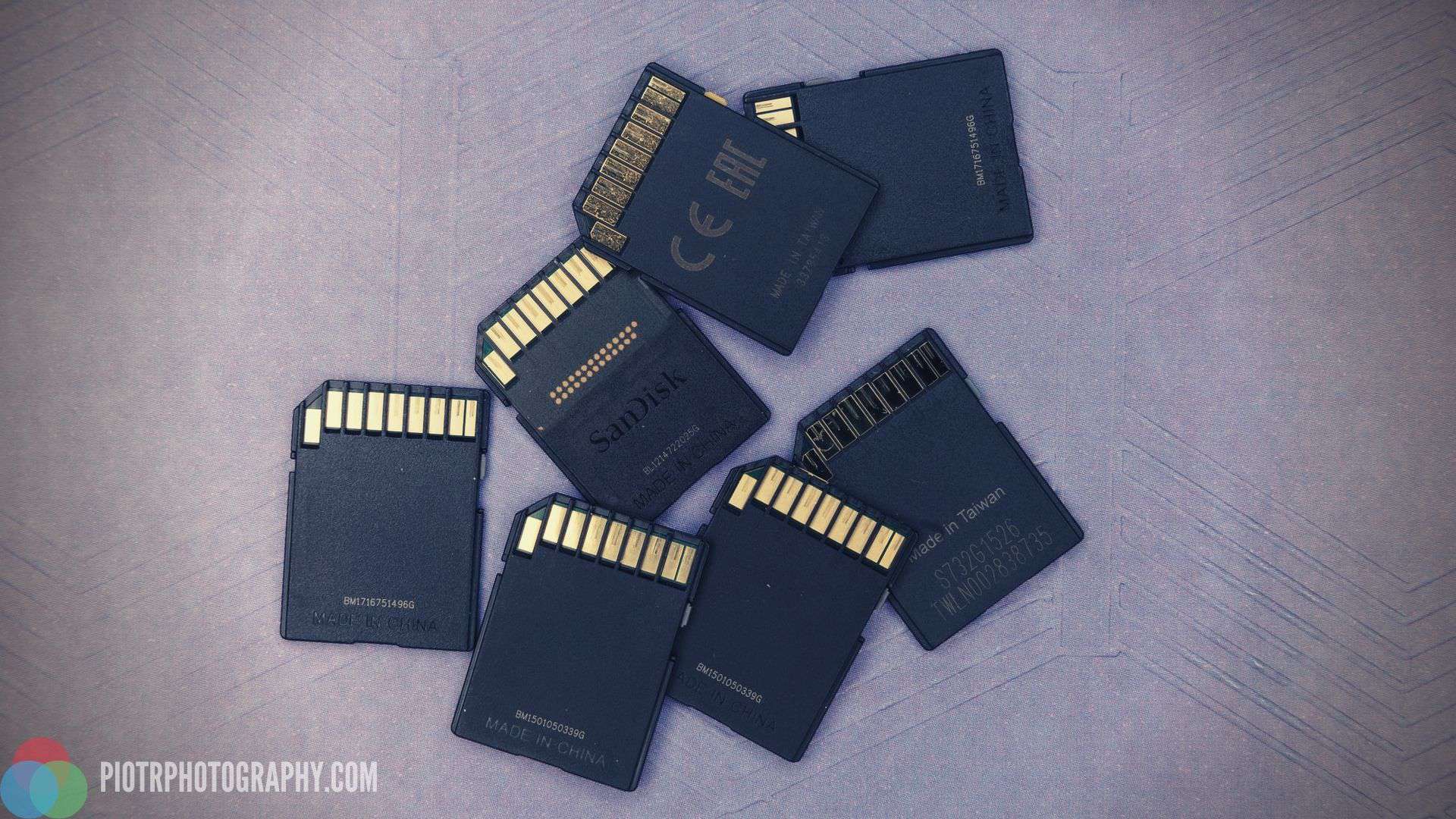
An SD card holds a lot of data in your camera. To keep your SD card secure and make sure that your camera is ready before your next photography shoot, you might want to format the SD card before each use. This article covers the need to format an SD card and the various ways …