APS-C vs full frame in 2026 - which to buy
by Konstantin Voronov · Cameras, Photography Tips
As an Amazon Associate I earn from qualifying purchases. Links to Amazon on this page are affiliate links.
In short: Full frame is 36 x 24 mm and APS-C about 23.5 x 15.6 mm, with a crop factor of 1.5 (1.6 for Canon). The same lens frames 1.5 times tighter on APS-C. Full frame wins in low light and for shallow depth of field. APS-C wins on telephoto reach, size and price.
A telephoto lens brings the picture so close that it is hard to shoot indoors with it, for example. A wide-angle lens has such a wide angle of view that every distant object in the photo looks tiny. So how do you choose a lens with the right angle of view? First you need to understand the main characteristic of a lens. Focal length is the physical quantity that describes a lens's angle of view. When we turn the zoom ring, we change the focal length.
- The longer the focal length, the narrower the angle of view. The narrower the angle of view, the more the lens magnifies distant objects in the frame.
- The shorter the focal length, the wider the angle of view. A wide angle of view is handy both for panoramic views and for working in a cramped room.
When a person uses their own camera, over time they get used to the fact that at certain focal lengths the lens gives this or that angle of view: it "zooms in" on the subject more or less. Do these relations between focal length and angle of view stay the same when you change cameras? Photographers discussing pictures frequently say "this was shot at such-and-such focal length", describing the angle of view at which the image was taken. How do you find out which focal length on your camera gives the same angle of view? We will look at how a lens's angle of view depends on your camera model, and get to know the terms "crop factor" and "equivalent focal length".
A little history: one film format, one angle of view
In the film era, 35 mm film was by far the most widespread: ordinary film, familiar to everyone. It was used everywhere, from the simplest compact cameras to serious professional gear. Since every camera had the same light-sensitive area (the film frame), lenses with the same focal length gave the same angle of view on every camera. For example, on any 35 mm film camera a 50 mm lens had an angle of view of 45°. Modern full-frame digital cameras also use a sensor equal in size to a film frame: 24 x 36 mm.
Today the same works with full-frame digital cameras. With them, any lens shorter than 35 mm belongs to the wide-angle class, and any lens longer than 70 mm belongs to the telephoto class (it brings distant objects closer in the frame).
Angle of view and sensor size
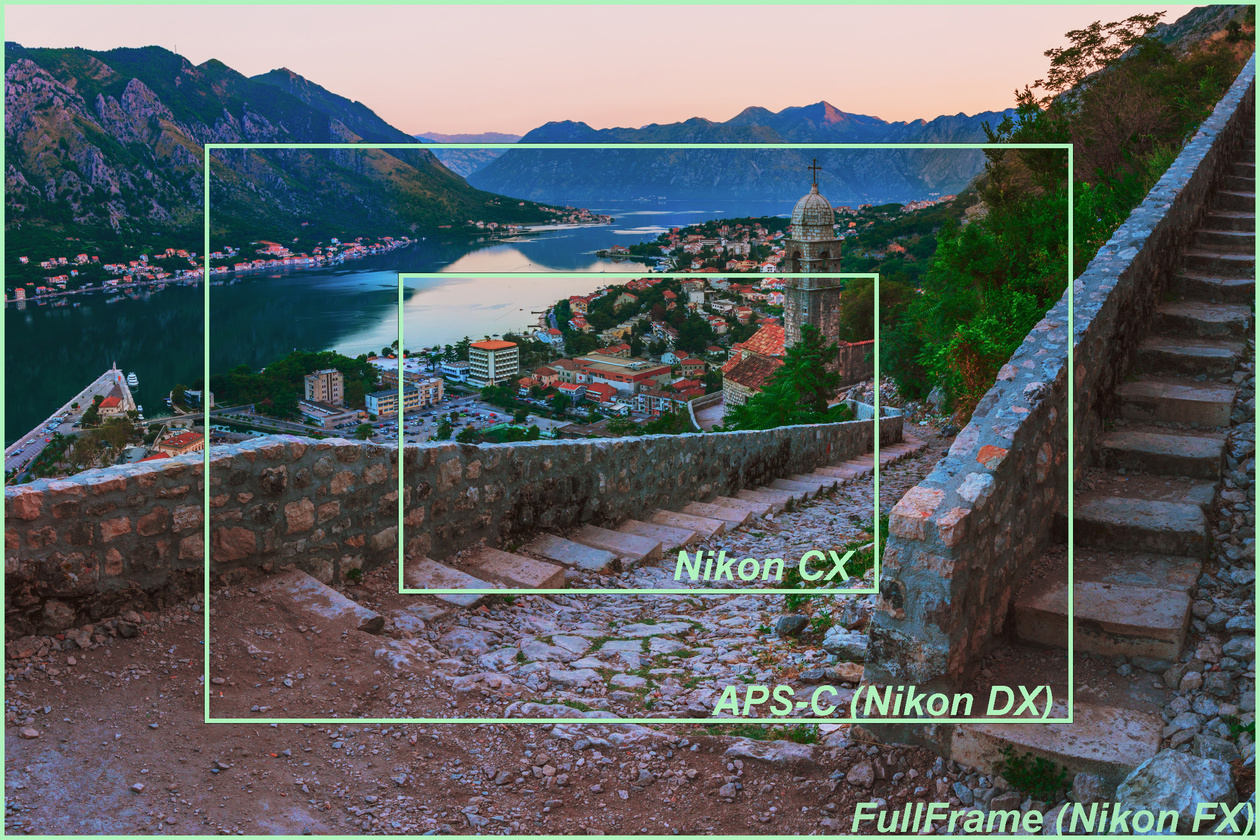
Today the situation has changed. Sensors in digital cameras come in different sizes. So with the same focal length on different cameras, the angle of view also depends on the size of the camera's sensor. The smaller the sensor, the narrower the angle of view at the same focal length.
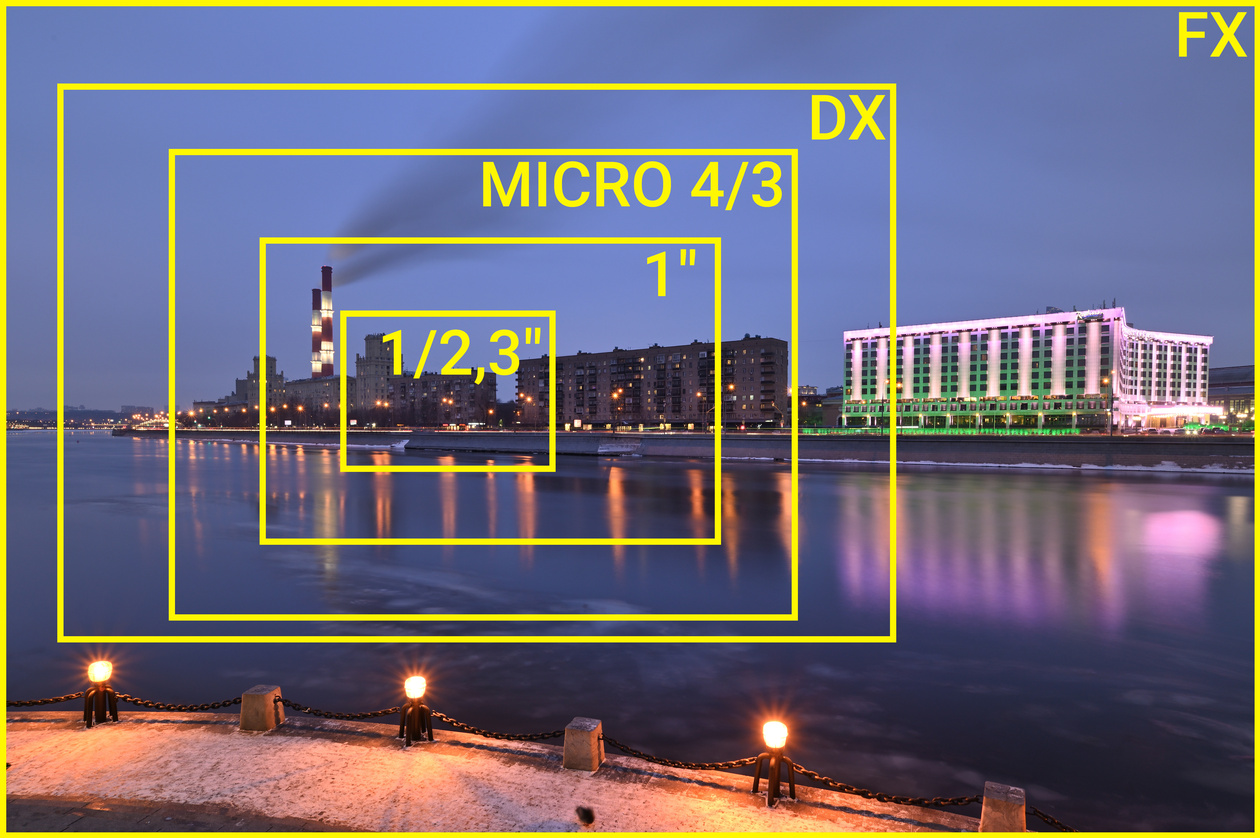
So if a 50 mm lens on a full-frame sensor (or a film frame) covers a certain angle, the same lens covers a noticeably narrower angle on an APS-C sensor, and narrower still on a camera with an even more compact 1" sensor. The smaller the sensor in a camera, the more a lens with the same focal length "zooms in". One and the same lens, mounted on different cameras, gives a completely different picture. You need to take this into account when choosing lenses.
Editor's note: angles of view, computed. The diagonal angle of view is 2 × arctan(sensor diagonal ÷ (2 × focal length)). For a 50 mm lens that gives 46.8° on full frame (43.27 mm diagonal), 31.5° on APS-C (28.21 mm) and 18.0° on a 1" sensor (15.86 mm). The 45° quoted above for a fifty on 35 mm film is the traditional rounded figure.
Crop factor and equivalent focal length
Since cameras today carry sensors of completely different sizes, it is easy to get confused about which angle of view a lens of a given focal length will give on a given camera. Old-school photographers, used to film gear and the classic focal lengths, clearly associate them with particular angles of view. To work out which focal length corresponds to which angle of view on modern cameras, two terms were introduced: crop factor and equivalent focal length.
Equivalent focal length
Equivalent focal length is a conventional characteristic of the lens-plus-sensor system that gives an idea of its angle of view. It shows which focal length a full-frame lens on a full-frame camera would need to get the same angle of view.
Beginners who have bought their first camera do not need this value: the numbers of equivalent focal length will tell them nothing. But experienced photographers used to film gear will find it useful. It will also help anyone thinking about buying a new camera with a different sensor size who wants to choose suitable lenses for it, or to find out how their old lenses will work on the new camera.
In the specifications of a lens not designed for a full-frame camera, you can frequently find the item "equivalent focal length" or "focal length in 35 mm equivalent". It is there so that the photographer can work out which angle of view the lens will give. For example, for a 50 mm lens mounted on a camera with an APS-C sensor, the equivalent focal length will be 75 mm. The tiny 4.3 mm focal length used in a compact camera's lens corresponds in angle of view to a 24 mm lens on full frame.
Smartphones are no exception. Because their sensors are very small, the focal lengths of their small lenses come to just a few millimeters. So if you read in a review that a smartphone has a 16 mm wide-angle lens, keep in mind that this is the equivalent focal length, not the real one. On full frame, a 16 mm focal length gives a wide angle of view.
Crop factor
How do you calculate the equivalent focal length yourself? For that you need to know the crop factor. It is a conventional multiplier that reflects the change in a lens's angle of view when it is used with smaller sensors. The multiplier comes from comparing the diagonal of a digital camera's sensor with the 24 x 36 mm film frame. The word "crop factor" comes from the English words crop, "to cut", and factor, "multiplier".
For example, the diagonal of an APS-C sensor is about 1.5 times smaller than the full-frame diagonal. So the crop factor for an APS-C sensor is 1.5. The diagonal of a Nikon CX sensor is 2.7 times smaller than full frame, so its crop factor is 2.7. Knowing the crop factor, we can calculate the equivalent focal length of a lens: multiply the lens's real focal length by the crop factor. Say we need the equivalent focal length of a 35 mm lens mounted on an APS-C camera: 35 x 1.5 = 52.5 mm. So on an enthusiast camera, a 35 mm lens behaves almost like the classic "fifty" on full frame.
Full frame vs APS-C with the same lens
Full-frame sensors. They measure 36 x 24 mm, the size of a frame of 35 mm film. Most modern lenses are designed for such cameras, and on them they can show their full potential. Since the sensor of these cameras is equal in size to a film frame, the crop factor and equivalent focal length are not needed for them: the crop factor of full frame is 1. Owners of full-frame cameras are at an advantage here: it is much simpler for them to understand which angle of view a given lens will give.
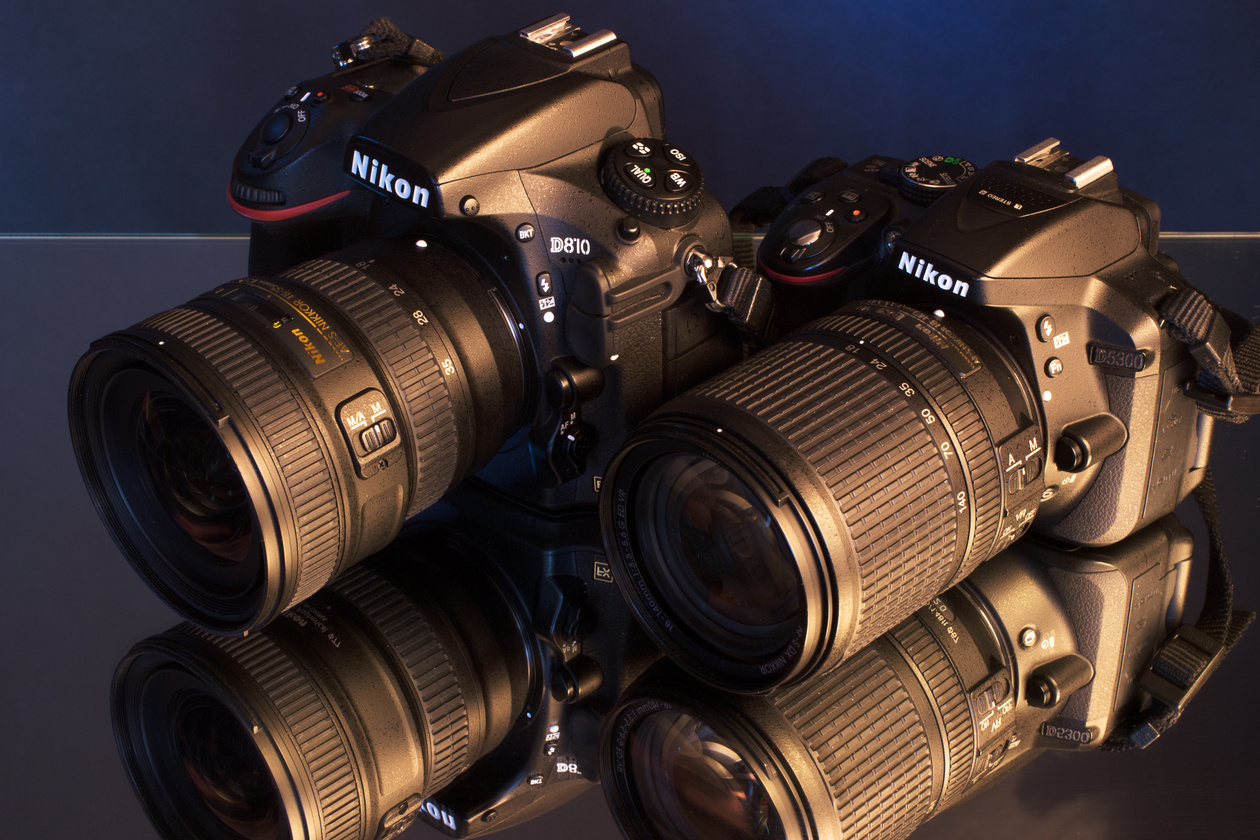
APS-C sensors. They measure about 23.5 x 15.6 mm and have a crop factor of 1.5. Such a sensor is slightly smaller than full frame but significantly cheaper. These sensors are sometimes called "cropped". Full-frame lenses can still be used on them, but every lens will "zoom in" much more, which is not always convenient. Certain lenses are designed for a specific kind of shooting, and losing the intended angle of view keeps them from being used as intended. This applies first of all to wide-angle, portrait and reportage lenses:
- Full-frame wide-angle lenses lose their main advantage, the wide angle of view.
- Full-frame portrait lenses on a "crop" zoom in too strongly, so they become hard to shoot with: you have to step much further away from the person to fit even a waist-up portrait.
- Full-frame reportage lenses, above all 24-70 mm zooms, get awkward angles of view on a crop camera that do not suit fast, dynamic reportage well in practice.
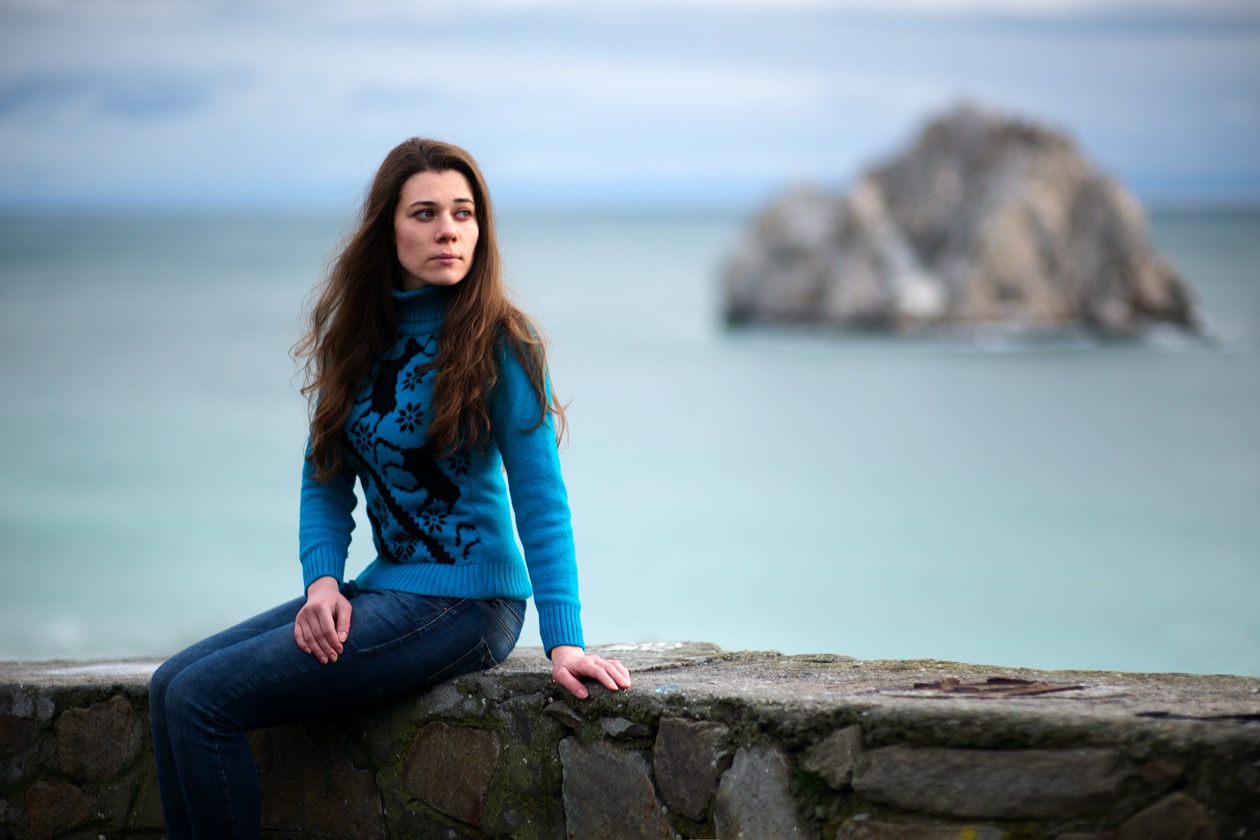
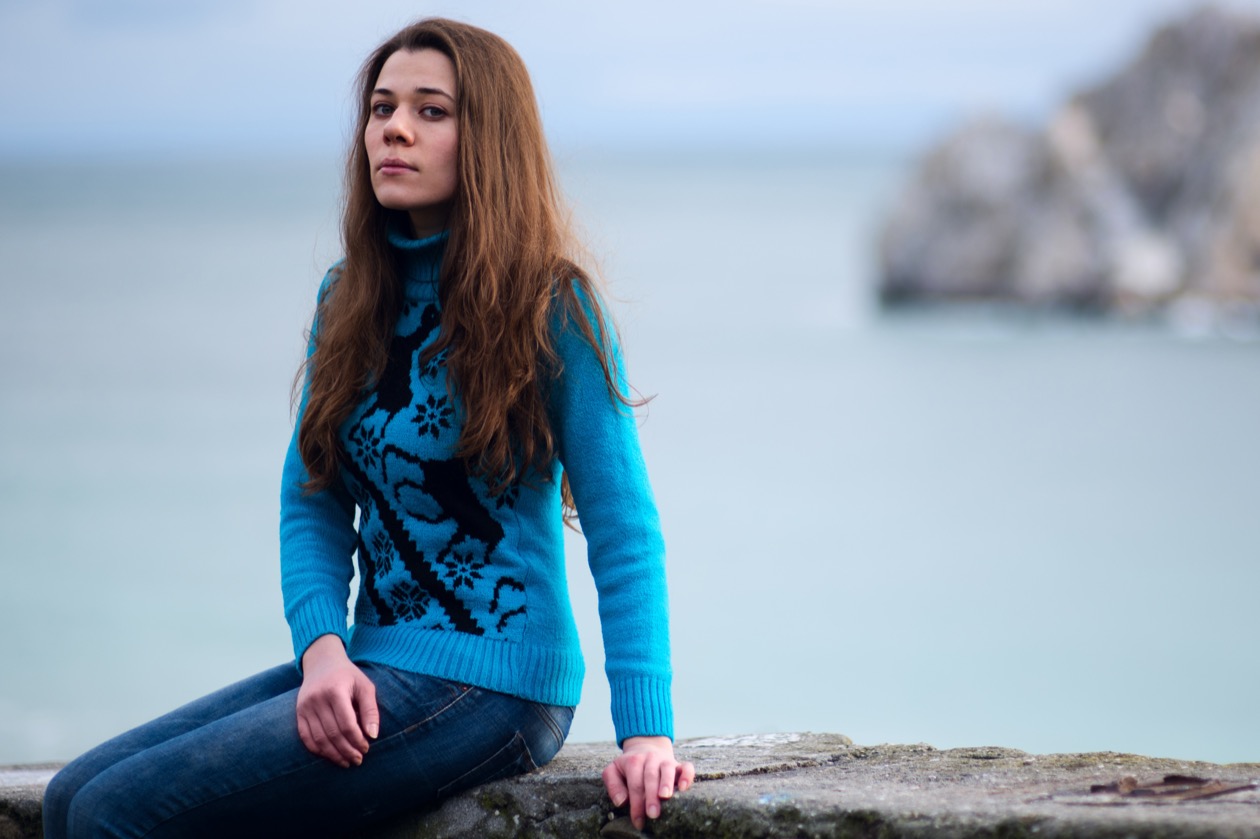
The photos were taken with the same lens from the same distance. As you can see, the version shot on the "cropped" camera has a narrower angle of view, and less detail made it into the frame.
A 50 mm lens on a crop camera stops being a general-purpose lens. Its equivalent focal length becomes 75 mm. In effect, it is no longer a standard lens but a portrait lens that will make you step further back from the subject. To make a waist-up portrait with a "fifty", I had to step about three meters away from the model.

Lenses made for APS-C
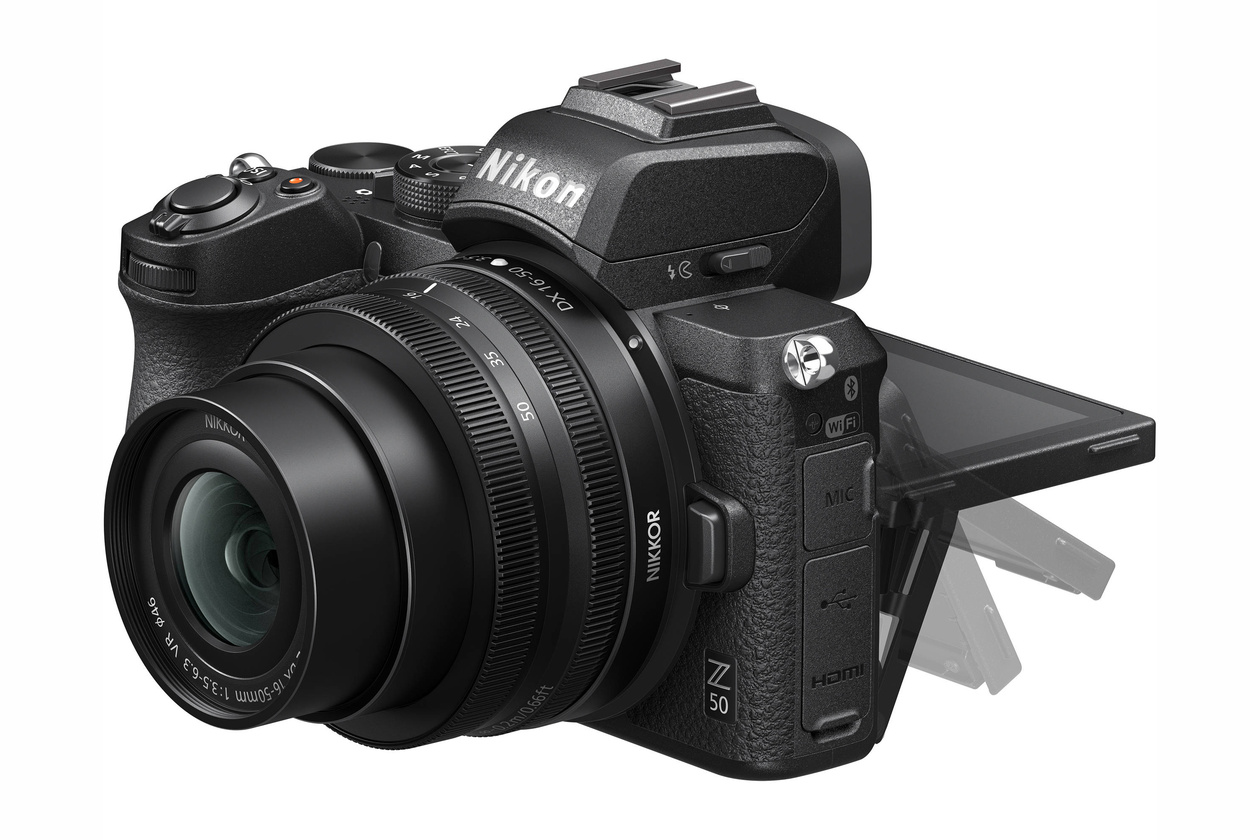
To create lenses suited to these tasks, specially designed lenses are made for the "crop". In the Nikon system such lenses carry the letters "DX" in their name. Because these lenses are designed for a smaller sensor, they become more compact and cheaper than their full-frame counterparts.
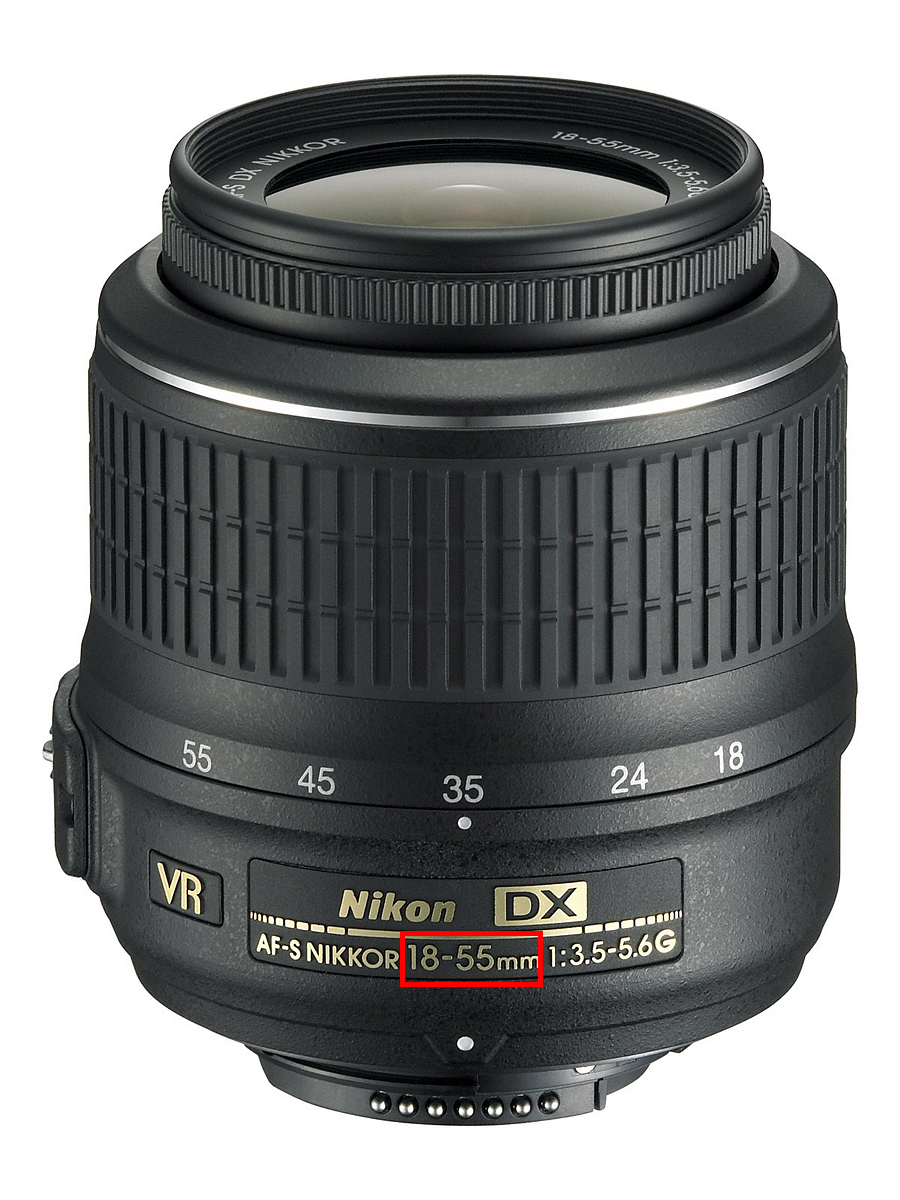
For the same reason, they cannot work properly on full-frame sensors. What happens if you mount a "cropped" lens on a full-frame camera? Unlike Canon SLRs, Nikon cameras allow this. In that case you get very strong darkening at the edges of the frame. Modern full-frame Nikon cameras can recognize "cropped" lenses when they are mounted and automatically crop the frame to the size of an APS-C sensor. This setting can be turned on or off in the camera menu.
Equivalent focal length chart
Editor's note. Common real focal lengths and the full-frame focal length that gives the same framing, using the rounded crop factors on spec sheets. The exact factors computed from sensor diagonals are 1.53 for APS-C, 1.61 for Canon APS-C and 2.00 for Four Thirds.
| Real focal length | APS-C (x1.5) | Canon APS-C (x1.6) | Four Thirds (x2) |
|---|---|---|---|
| 10 mm | 15 mm | 16 mm | 20 mm |
| 16 mm | 24 mm | 25.6 mm | 32 mm |
| 18 mm | 27 mm | 28.8 mm | 36 mm |
| 24 mm | 36 mm | 38.4 mm | 48 mm |
| 35 mm | 52.5 mm | 56 mm | 70 mm |
| 50 mm | 75 mm | 80 mm | 100 mm |
| 85 mm | 127.5 mm | 136 mm | 170 mm |
| 135 mm | 202.5 mm | 216 mm | 270 mm |
| 200 mm | 300 mm | 320 mm | 400 mm |
| 300 mm | 450 mm | 480 mm | 600 mm |
Read it the other way to find the lens you need: to get the 50 mm full-frame view on APS-C, divide by 1.5 and use a lens of about 33 mm, which is why 33 mm and 35 mm primes are the standard lenses on crop cameras.
Equivalent aperture: what the crop factor does to f-numbers
Editor's note. The crop factor does not change exposure. A lens at f/2.8 gives the same image brightness on APS-C and full frame at the same ISO and shutter speed. It does change depth of field once you match the framing. Equivalent aperture = f-number × crop factor, so f/1.8 on APS-C (1.8 × 1.53 = 2.75) gives about the depth of field of f/2.8 on full frame, and f/2.8 on APS-C behaves like f/4.3. The Wikipedia article on crop factor states the same rule: to match field of view and image quality across cameras, aperture and ISO have to be adjusted by the crop factor.
The same area ratio explains the difference in noise. Full frame has 864 mm² of sensor against 366.6 mm² for APS-C, 2.36 times more. In stops that is log₂(2.36) = 1.24, so at the same exposure a full-frame sensor collects about 1.2 stops more light in total.
Rule of thumb: On APS-C, multiply focal length by 1.5 for framing and the f-number by 1.5 for depth of field. Exposure settings stay the same. For the classic 50 mm view, fit a 33 to 35 mm lens.
Smaller formats: Micro Four Thirds, 1-inch and superzooms
Other manufacturers use sensors of other sizes, and so other crop factors. The Micro Four Thirds standard is widely known: it is used by Olympus, Panasonic and smaller makers that joined them, such as Yongnuo and Xiaomi. It has a crop factor of 2 and a sensor of about 18 x 13.5 mm. These are not very large sensors, with all the pluses and minuses that follow. Cameras with such sensors are compact, like the lenses designed for them. However, it is very hard for cameras with such a sensor to compete in image quality with full-frame cameras: the sensor area differs roughly fourfold.
Editor's note. With the 18 x 13.5 mm format size, full frame has 3.56 times the area. With the 17.3 x 13.0 mm image area that current Micro Four Thirds bodies list, the ratio is 3.84. For every format size, see the sensor size chart.
A 1" sensor is sometimes used in compact cameras. Its crop factor is 2.7. A 1/2.3" sensor is the standard for budget compact cameras, action cameras and top camera phones. Its crop factor is about 6. One of the less obvious advantages of small sensors is that they make it possible to build compact lenses with a very narrow angle of view, which bring distant objects up close. Such a sensor is used in the Nikon P1000 superzoom, which can photograph very distant objects in close-up.
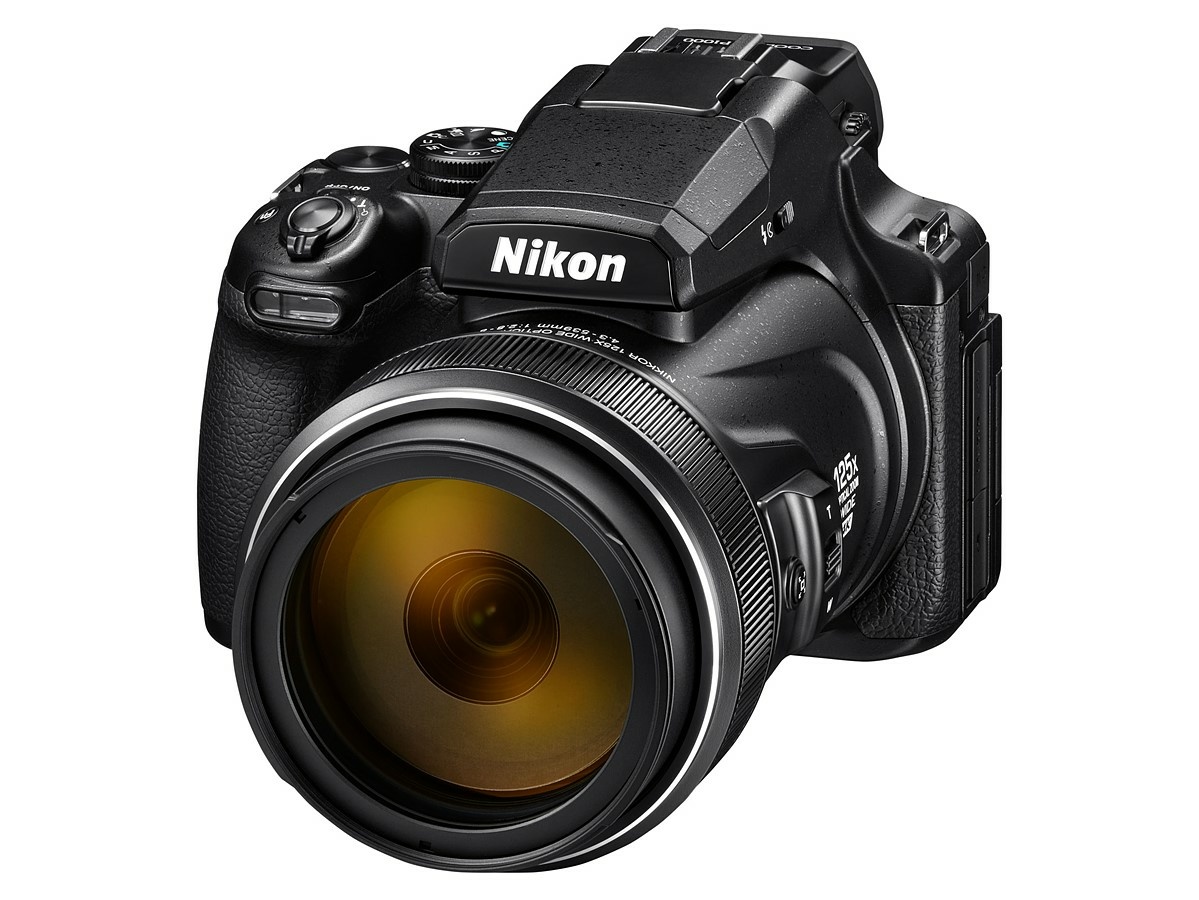
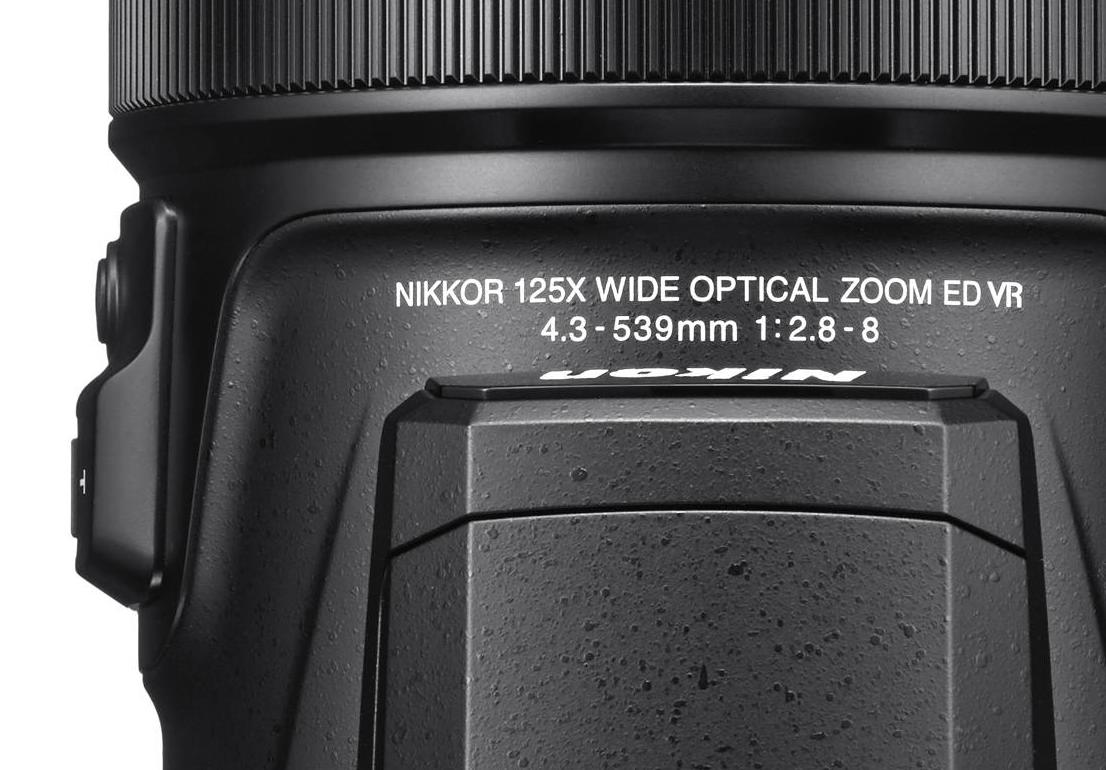
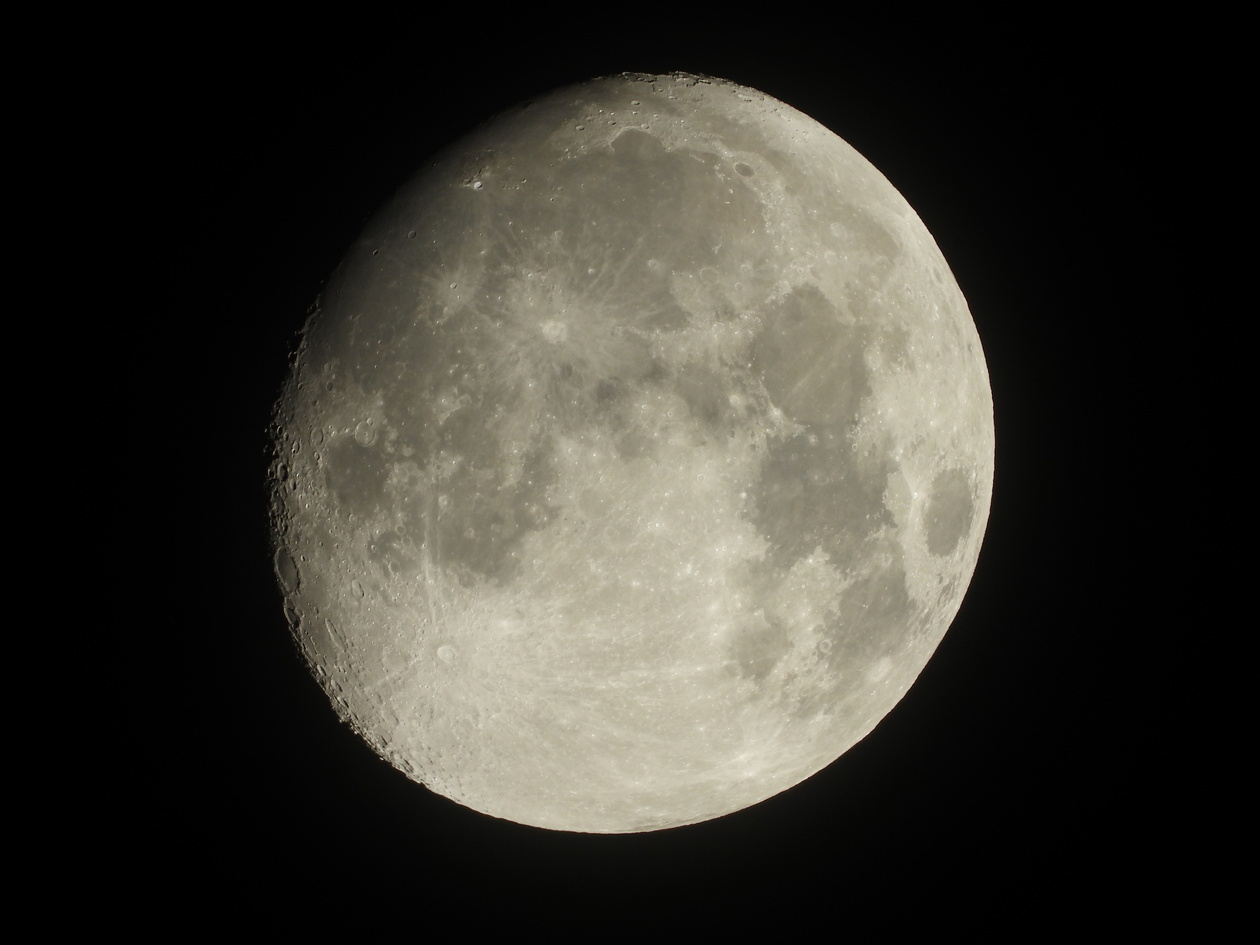
And while this camera is fairly compact and affordable, on a full-frame camera you are unlikely to reach such a narrow angle of view at all without additional cropping of the frame. We, at least, have never had to work with lenses of 3000 mm focal length.
Editor's note. 539 mm × 5.5 (the crop factor of a 6.3 x 4.7 mm 1/2.3" sensor) = 2,965 mm, which is where the "3000 mm" comes from.
When equivalent focal length matters in practice
In everyday shooting, a beginner is unlikely to need equivalent focal length. It is enough to grasp the main pattern: short focal length, wide angle of view; long focal length, narrow angle of view. The specific numbers matter less: the main thing is to get used to your own camera. Knowing the equivalent focal length is useful in the following cases.
- Talking with other photographers, at workshops and lectures. Photographers, article authors and speakers who shoot full frame still forget, when they talk about the focal lengths they use, that other gear exists. For example, professionals recommend a 50 mm lens (a "fifty") to everyone as a general-purpose lens. Yet on non-full-frame cameras such a lens gives a noticeably narrower angle of view and turns from a general-purpose standard lens into a moderate telephoto that zooms in too much. So owners of crop cameras should read the universal advice to shoot with a fifty as "use a 35 mm lens".
- Choosing a new lens. Knowing the equivalent focal length keeps you from getting confused and always tells you which angle of view a lens will give on your particular camera, taking the crop factor into account.
- Calculations. For the slowest shutter speed for handheld shooting, it is better to use the equivalent focal length. The same goes for the shutter speed for star photography by the "500 rule". On the other hand, it is important to remember that depth of field and hyperfocal distance are calculated with the real focal length, not the equivalent one!
Editor's note: the two shutter-speed rules with numbers. The handheld rule of thumb is 1 ÷ equivalent focal length: a 50 mm lens on APS-C (75 mm equivalent) needs about 1/75 s, and a 200 mm lens needs 1/300 s. The 500 rule divides 500 by the equivalent focal length: a 14 mm lens allows about 36 s on full frame but 500 ÷ 21 = 24 s on APS-C.

APS-C and full frame in 2026
Editor's note. Both formats are still current in the makers' own 2024 to 2026 releases. In November 2024 Nikon released the Z50II APS-C mirrorless camera, and in April 2025 the Z5II full-frame mirrorless camera. In October 2025 Nikon added two lenses for its APS-C (DX) bodies, the NIKKOR Z DX 16-50mm f/2.8 VR and the NIKKOR Z DX MC 35mm f/1.7. Fujifilm's X-T50 lists a 23.5 x 15.7 mm APS-C sensor. The choice between the two formats is still open on new bodies, not only on the used market.
Verdict: APS-C or full frame?
Editor's note: our verdict. Choose by what you shoot, using the numbers above:
| You mostly shoot | Better format | Why |
|---|---|---|
| Low light: events, interiors, night streets | Full frame | 2.36 times the area, about 1.2 stops more total light |
| Portraits with blurred backgrounds | Full frame | f/1.8 on full frame needs about f/1.2 on APS-C for the same depth of field |
| Ultra-wide landscapes and interiors | Full frame, or APS-C with lenses made for it | Full-frame wide lenses lose their wide view on APS-C |
| Wildlife, sports from the stands, the Moon | APS-C | A 200 mm lens frames like 300 mm, with smaller, cheaper lenses |
| Travel and everyday carry | APS-C | DX-type lenses are more compact and cheaper |
| First interchangeable-lens camera | APS-C | Lower cost of entry; your lenses can move to a full-frame body later if they are full-frame lenses |
If you are buying your first camera, start with an APS-C mirrorless camera and a 35 mm prime lens for APS-C, the "fifty" of the crop format. If low light or shallow depth of field is the reason you are upgrading, move to a full-frame mirrorless camera. For specific bodies, our list of 8 mirrorless cameras under $1,000 covers six APS-C and two Micro Four Thirds models; it dates from 2021, so check that each model is still sold. If you have not settled on mirrorless yet, read mirrorless vs DSLR in 2026, and the camera sensor size chart covers every format from phones to medium format.
Now you know what equivalent focal length is and how to use it in practice. It is a tricky topic that inevitably comes up for photographers when choosing new gear and simply when talking to each other. So it is worth understanding! If your camera has a 1.5 crop factor, you will need shorter lenses than for full-frame cameras.
Frequently asked questions
- What is the difference between APS-C and full frame?
- Size. A full-frame sensor measures 36 x 24 mm, the size of a 35 mm film frame, while an APS-C sensor measures about 23.5 x 15.6 mm (22.3 x 14.9 mm in Canon cameras). APS-C has about 42 percent of the full-frame area, so the same lens shows a narrower view on it, by a crop factor of 1.5 (1.6 for Canon).
- What is a full-frame camera?
- A full-frame camera has a 36 x 24 mm sensor, the same size as a frame of 35 mm film. Because film set the reference, a lens on a full-frame camera gives the angle of view its focal length has always described: a 50 mm lens gives the classic standard view, with a crop factor of 1.
- Is a crop sensor worse than full frame?
- For low light and shallow depth of field, yes: full frame has 2.4 times the area of APS-C, about 1.2 stops more total light at the same exposure. For telephoto reach, size and price, APS-C has the advantage, because its lenses are smaller and cheaper and a 200 mm lens frames like a 300 mm lens.
- What is the crop factor of APS-C?
- APS-C has a crop factor of 1.5, and Canon APS-C has 1.6. Multiply a lens focal length by the crop factor to get its full-frame equivalent: a 50 mm lens on APS-C frames like a 75 mm lens on full frame, and a 35 mm lens frames like a 52.5 mm lens.
- Does a crop sensor change the aperture of a lens?
- Not for exposure: f/2.8 gives the same brightness on APS-C and full frame at the same ISO and shutter speed. For depth of field at the same framing, multiply the f-number by the crop factor, so f/1.8 on APS-C gives about the depth of field of f/2.8 on full frame.
- Can you use full-frame lenses on an APS-C camera?
- Yes. A full-frame lens mounted on an APS-C camera of the same system works, but it frames 1.5 times tighter, so wide-angle lenses lose their wide view and portrait lenses force you to step far back. Lenses made for APS-C, such as Nikon DX lenses, give dark corners on full frame unless the camera crops the image.
Sources
- Crop factor, Wikipedia contributors (2026)
- Angle of view (photography), Wikipedia contributors (2026)
- Nikon releases the Z50II APS-C size mirrorless camera, Nikon Corporation (2024)
- Nikon releases the Z5II full-frame mirrorless camera, Nikon Corporation (2025)
- FUJIFILM X-T50 specifications, Fujifilm (2026)