Mirrorless vs DSLR in 2026
by Konstantin Voronov · Cameras, Photography Tips
As an Amazon Associate I earn from qualifying purchases. Links to Amazon on this page are affiliate links.
In short: A DSLR sends light through a mirror to an optical viewfinder. A mirrorless camera has no mirror and shows the image straight from the sensor. In 2026 mirrorless is the default for a new camera: it focuses anywhere in the frame, previews exposure in the viewfinder and adapts old lenses. DSLRs survive mainly for owners of DSLR lenses.
What is a mirrorless camera, and how is a DSLR different?
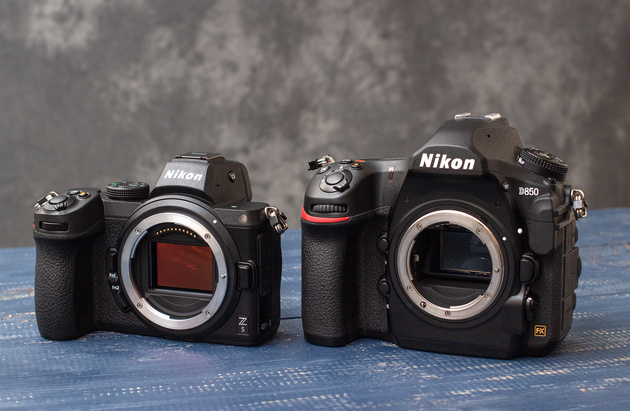
Editor's note. In a DSLR, a mirror sits at 45 degrees behind the lens and reflects the light through a focusing screen and a pentaprism (or pentamirror) to the optical viewfinder. To take a picture, the mirror swings up, the shutter opens and the image reaches the sensor, as the Wikipedia article on DSLRs describes. A mirrorless camera has no such mirror: "the lens always shines light onto the image sensor, and the picture from the sensor is displayed on a screen for the photographer", in the words of the Wikipedia article on mirrorless cameras. Both use the same kinds of sensors, from APS-C to full frame (see the camera sensor size chart).
| DSLR | Mirrorless | |
|---|---|---|
| What you see when composing | Optical image through the mirror | The image from the sensor, with exposure and color applied |
| Autofocus | Separate phase-detection module, points clustered near the center | Phase-detection sensors on the image sensor, points across the frame; detects faces and eyes |
| Front and back focus errors | Possible, lens by lens | Absent, because focus is measured on the sensor itself |
| Stabilization | In the lens, or sensor-shift in the bodies that have it | Sensor-shift in the bodies that have it, working with any lens, adapted ones included |
| Old lenses | Mainly its own mount | Adapters for DSLR, rangefinder and older lenses |
| Shutter noise | Mirror and shutter | Quieter mechanical shutter, silent electronic mode |
| Battery use | Low while composing through the optical viewfinder | Higher: sensor and screen or viewfinder always on |
| Size and weight | Larger body | 300 to 500 g lighter for the same lens, in the author's kit |
Why switch from a DSLR to mirrorless: the author's experience
The full-frame mirrorless body the author tested for this switch, the Nikon Z 5, stands out for a relatively affordable price. It has every chance of becoming the "people's camera": versatile, inexpensive and as practical as possible. Below is the practical experience of moving from a DSLR to it, and the benefits a photographer gets from the switch.

1. Autofocus
Yes, the phase-detection autofocus in DSLRs is still more effective in certain scenarios. But you will notice the difference only if you shoot top-level sports with professional DSLRs. If your interests lie in fine-art photography, portrait and wedding photography, shooting animals or family reportage, mirrorless cameras will clearly be more convenient.
The mirrorless body here uses so-called hybrid focusing. Fast phase-detection sensors sit right on the image sensor: focusing happens with their help, and at the final stage the contrast method kicks in, which gives perfect focusing accuracy.
This system lets you focus not only near the center of the frame (an unavoidable limitation of phase-detection focusing in any DSLR) but anywhere in the frame at all. The tested body has 273 autofocus points.
Since focusing happens not with a separate module but right on the sensor, there are no problems such as back focus and front focus. And yes, third-party lenses that have a "difficult" back and front focus on DSLRs, focus with different errors at different distances and can behave unpredictably with the central and side focus points come back to life on mirrorless. I have built up a lot of practical experience with such lenses: lenses from brands such as Sigma, Tokina and Yongnuo worked perfectly on the mirrorless body with no autofocus errors at all. With Tamron you need to be more careful: the majority of their lenses will work too, but there are exceptions. The lens maker's website has a compatibility table for its lenses and camera bodies.
When shooting a portrait, you do not need to "aim" the autofocus point at the model's eye, focus and then recompose: all of that is in the past. The camera itself detects a person's face and eye and focuses precisely in the right place. The photographer can give more attention to composition, the model's pose and working with light. In short, the mirrorless camera lets you spend much more time on creativity instead of solving technical problems.
2. Sensor-shift stabilization
The most important feature of the tested body is image stabilization based on shifting the camera's sensor. Despite the relatively low price, the stabilization is rated at 5 stops of exposure. That is, if previously you needed a shutter speed of about 1/30 s for a sharp frame and longer speeds already gave camera shake, stabilization lets you shoot handheld at speeds of up to 1 second (the difference between these speeds is 5 stops of exposure)!
Of course, stabilization compensates only for hand shake. If there are moving objects in the frame, choose the shutter speed according to how fast they move.
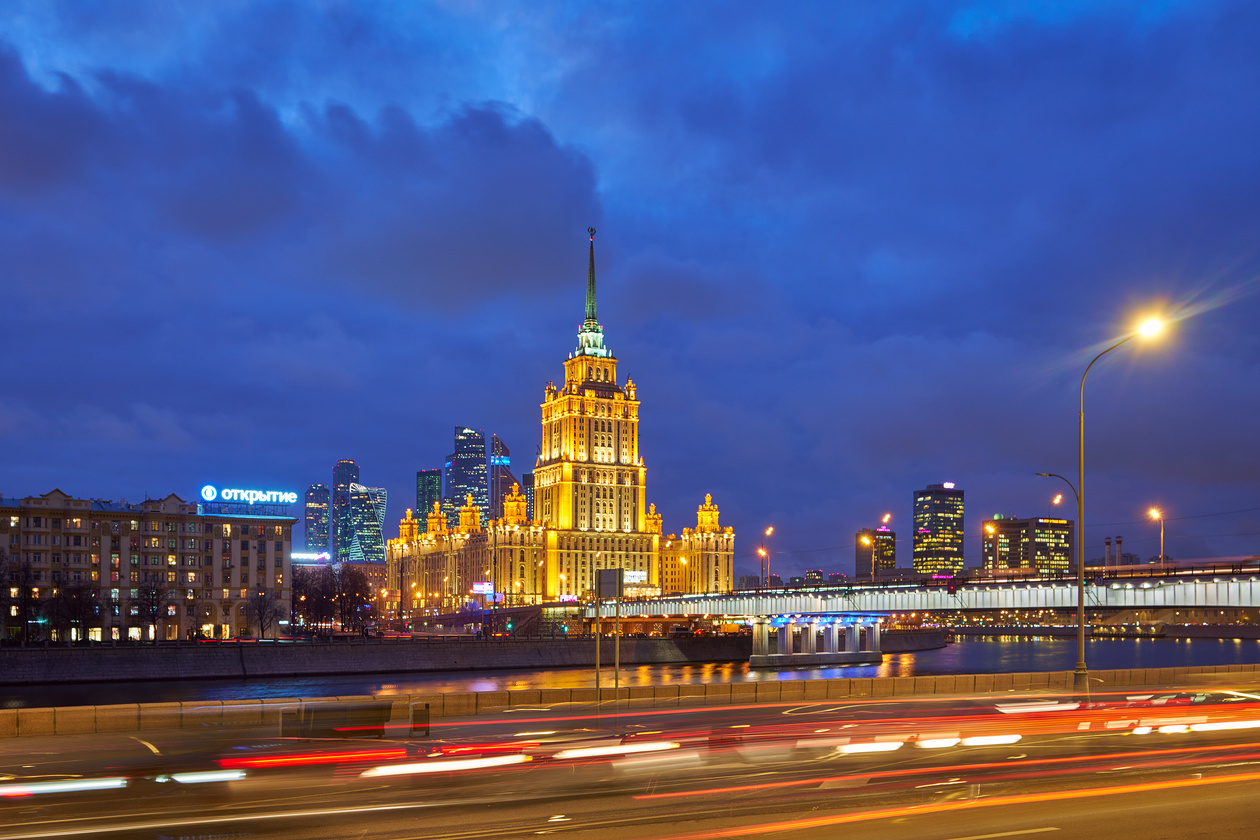
Stabilization is a great safety net against accidental camera shake. Shooting portraits with a long lens and your hand trembled a little as you pressed the shutter button? Stabilization will help! Went out into the city at night and forgot your tripod? Stabilization lets you use a longer shutter speed and a lower ISO and get quality shots.
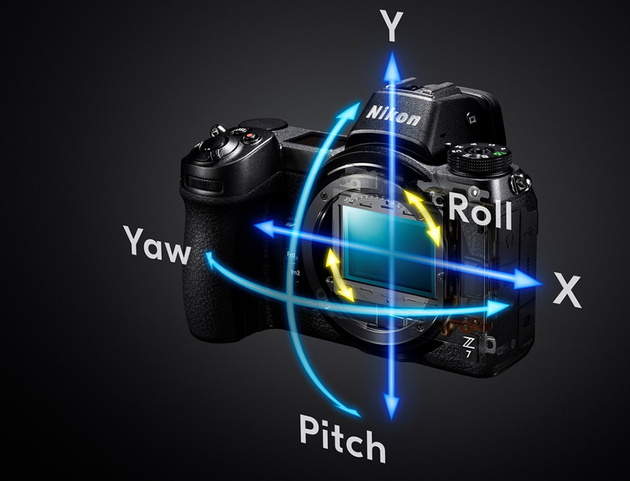
A big plus of sensor-shift stabilization is that it works with any lens, whether a native mirrorless lens or any other lens mounted through an adapter. So we get properly working stabilization on any of our lenses. Even with an old manual prime, stabilization works, and that makes using any lens even more convenient!
Editor's note. Sensor-shift stabilization is not unique to mirrorless cameras. Ricoh's September 2026 notice to PENTAX owners recalls that the PENTAX K100D DSLR of 2006 already had a sensor-shift shake reduction mechanism. What mirrorless adds is that the stabilized image is visible in the electronic viewfinder before the shot.
3. You do not have to buy new lenses
Moving to a new system is always complicated for an advanced photographer by the need to buy not only a new camera but also lenses for it. And as a rule, such a photographer already owns a large collection of excellent lenses! With the tested system, you can keep using the maker's DSLR lenses through its mount adapter. All of its DSLR-mount lenses except the very oldest screw-drive autofocus ones mount on the mirrorless body like native lenses. There are no problems with their compatibility, image quality or focusing. Focusing, on the contrary, even becomes better, livelier and more accurate.
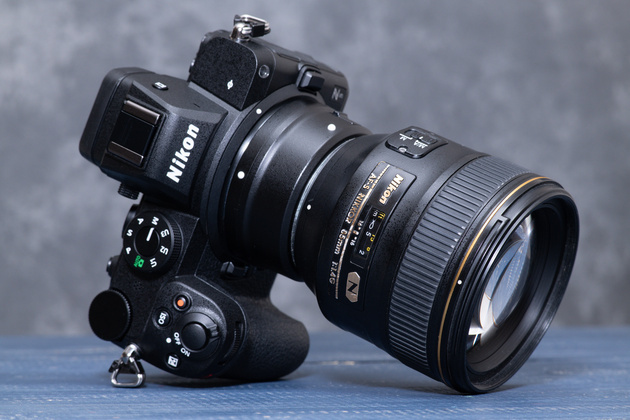
Besides, a mirrorless camera is convenient to use with manual lenses. Thanks to the record-short flange distance of the new mount, you can fit almost any lens here, even one from a Leica. All you need is a suitable adapter, and there are plenty on sale, even for the most exotic mounts! We tried a mirrorless camera with an old manual lens.

On mirrorless cameras, focusing manually is more convenient: there is focus magnification and focus peaking. The share of shots in focus has noticeably gone up. And even with such lenses, sensor-shift stabilization keeps working in the camera, insuring the photographer against shake.
If you have no lenses yet and are choosing a camera from scratch, look at a kit with a lens included. A general-purpose kit lens is made for the first steps in photography, so that later the photographer can consciously choose more specialized lenses suited to their tasks. For photographers who already own DSLR lenses, a kit with the camera and the mount adapter but without a lens makes more sense.
4. Easier to learn and to use
Those who have used a DSLR will understand me. In LiveView mode (through the screen) and when shooting through the viewfinder, we are, you could say, using two different cameras, with different interfaces and focusing capabilities. For a beginner this creates extra difficulties. For example, the optical viewfinder of a DSLR does not show the frame as it will be captured. Everything looks fine in the viewfinder, but after you press the shutter button, the finished picture has a completely different brightness and different colors. Of course, experienced photographers know how to set everything up correctly in such a situation. But today you do not have to learn all of this at all! In a mirrorless camera it does not matter whether we use the electronic viewfinder or the screen: it is the same camera, with the same interface and capabilities. On both the screen and the viewfinder, the picture is shown at once with the exposure and colors it will finally have!
When this exposure preview gets in the way, you can turn it off in the camera settings. You need that, for example, when working with studio flashes.

The tested body has a large viewfinder with a high resolution of 3.6 megapixels. Even if you are skeptical about electronic viewfinders and prefer the live picture, still take another look through a modern one. In recent years electronic viewfinders have taken a big step forward: they work smoothly, without noticeable lag, and the picture is detailed enough even in low light. And while shooting, you can show the electronic level, the histogram and other important tools on both the screen and the viewfinder!
The interface of a mirrorless camera is certainly more convenient and intuitive to learn. And for professionals this mode is ultimately more convenient too: it lets you bring exposure mistakes down to zero.
5. A quiet shutter
You will agree that it is not pleasant when a camera clatters its mirror and shutter so loudly that passers-by turn around! In the mirrorless body tested, the shutter works very well: its sound is very quiet, soft and pleasant. This lets you shoot where you need to keep quiet: in a theater, a library, a church. There is also a completely silent shooting mode, but it has two caveats: you cannot shoot with flash, and you get rolling shutter with fast-moving subjects. Then again, every mirrorless camera has these limitations when using the electronic shutter. So it is very good that the camera works quietly in mechanical shutter mode too. The shutter of the tested body is rated for 200,000 cycles.
6. Compactness
You frequently leave a DSLR at home on a walk or when meeting friends for the simple reason that it is too big. I know this from my own experience: I began taking the mirrorless camera with me much more frequently, and the number of spontaneous interesting shots I take has grown noticeably. Yes, formally the weight of the camera-plus-lens kit (with the same lens) went down only modestly compared with a DSLR. But this difference (300 to 500 grams), together with the smaller dimensions, lets you put the camera even in a small bag and take it along more frequently. Mirrorless systems also offer compact lenses that have no counterparts among DSLR lenses.
7. Image quality
Photographers buying a new camera usually expect better image quality from it. "Image quality" is a complex and largely subjective concept. But as a rule, people mean sharp frames with minimal digital noise and good color rendering. The truth is that all of this depends in the end not so much on the camera as on the photographer's skill with it. Shots of fully modern quality can be made on gear from two decades ago. But it takes a lot of effort not to miss focus, avoid shake, fit within the dynamic range and simply nail the exposure. And this is where it becomes obvious that a camera is not just a box with a sensor. It has to be easy to use. Working with it should be simple and intuitive, and imperfect electronics should not get in the photographer's way.

In terms of shooting convenience, the mirrorless camera has serious advantages. Thanks to its modern features, perfect image quality is fairly easy to achieve. Face and eye autofocus, image stabilization, compact size and comfortable ergonomics let you get sharp and beautiful pictures far more frequently, without blur, missed focus or wrong colors.
No camera has a "Masterpiece" button. On the contrary, every camera demands good artistic taste, creative ideas and professional skills from the photographer.
Editor's note. The mirror does not form the image in either design: in both, the sensor records it. A DSLR and a mirrorless camera with the same sensor start from the same raw image quality, and the differences above come from focusing, stabilization and what the viewfinder shows you.
Battery life: the real cost of going mirrorless
A dead camera is a lot of trouble for a photographer. What do you do so that the camera does not turn into a useless "brick" in the middle of a shoot or a trip? How do you get the most frames out of one battery charge? Mirrorless cameras have their own specifics in working with the battery.

In a mirrorless camera, a lot of energy goes into feeding the image to the viewfinder and the screen. If the screen or the electronic viewfinder stay active for a long time, they will "eat" the whole battery. With a DSLR you should not keep switching it on and off to save the battery; with a mirrorless camera it is the other way around. During a break in shooting, do not forget to switch the power lever to OFF. When you need the camera again, it takes only moments to turn on: the tested body is ready to shoot in less than a second.
Still, the numbers are better than their reputation. Here is my battery statistic from a full-frame mirrorless Nikon Z 7: during this shoot I did nothing special to save power, I shot through the electronic viewfinder, at long shutter speeds and at high ISO, and I was shooting at minus ten degrees Celsius. On one battery charge I made 1,224 frames. That is a serious figure even by DSLR standards, and for a mirrorless camera, which uses the battery much more actively, an excellent result. Once you adapt to the specifics of the new gear, you will easily make about a thousand shots on one charge of the body tested above, as on a DSLR of the same level.
Carry spare batteries and a power bank
No matter which camera you use, if the shoot is even slightly important, you should always have at least one spare battery. The battery in the camera may not get charged before the shoot, or it may fail. The number of spare batteries depends on the style and genre of shooting. For a day of intense wedding shooting I take 4 to 5 batteries. It is not certain that I will use them all up, but there must always be a safety margin in important work! When I travel somewhere without access to an outlet, I take one battery per two days, and for my style of shooting that is enough.
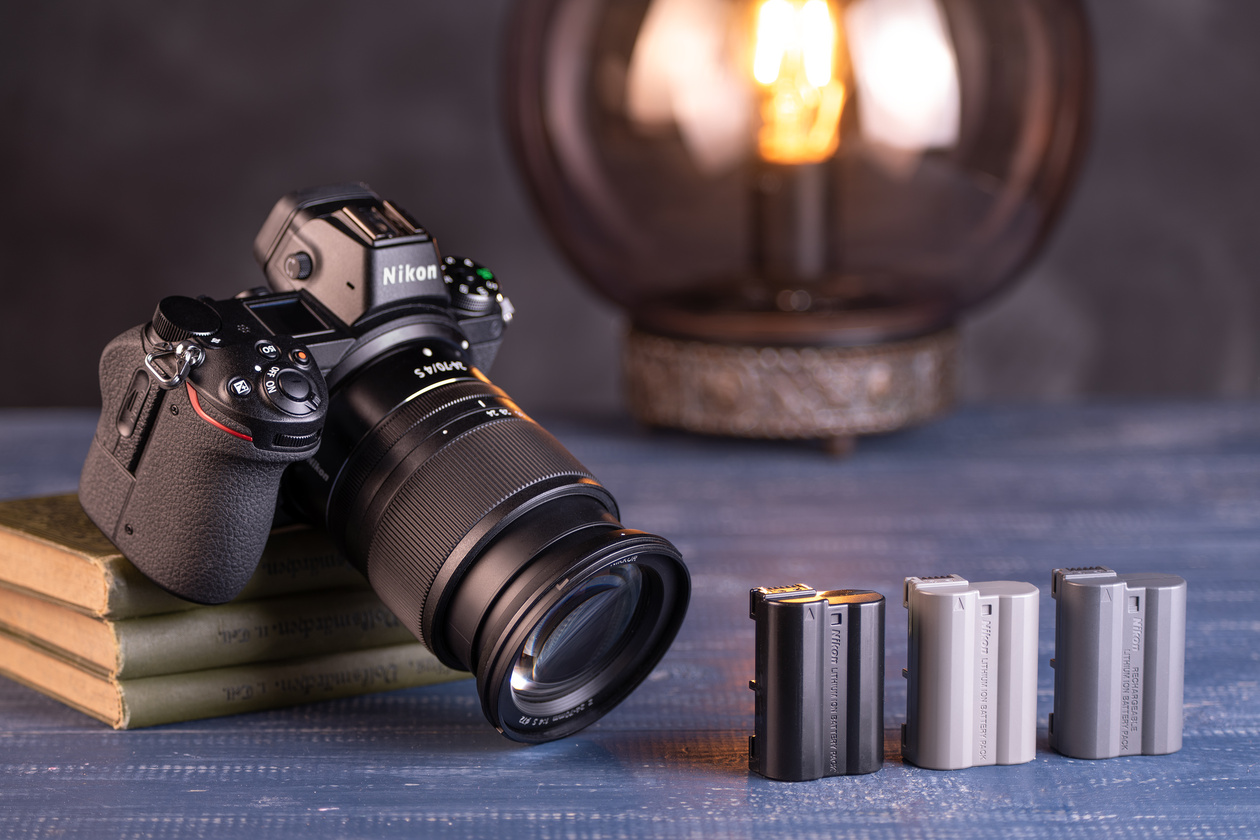
Use only original batteries. There are plenty of third-party batteries on the market for any camera model at a tempting low price. On paper they are no different from the originals, but in practice buying a cheap non-original battery is a lottery. Such a battery may break after a month, hold its charge poorly or not work at all from the start. Buy cheap, pay twice: in the long run original batteries come out even cheaper than non-original ones that have to be replaced frequently. My original battery made in 2014 still works perfectly, almost every day, at every shoot. It has moved from DSLR to DSLR and now to a mirrorless body, with no loss of capacity and no sudden shutdowns.
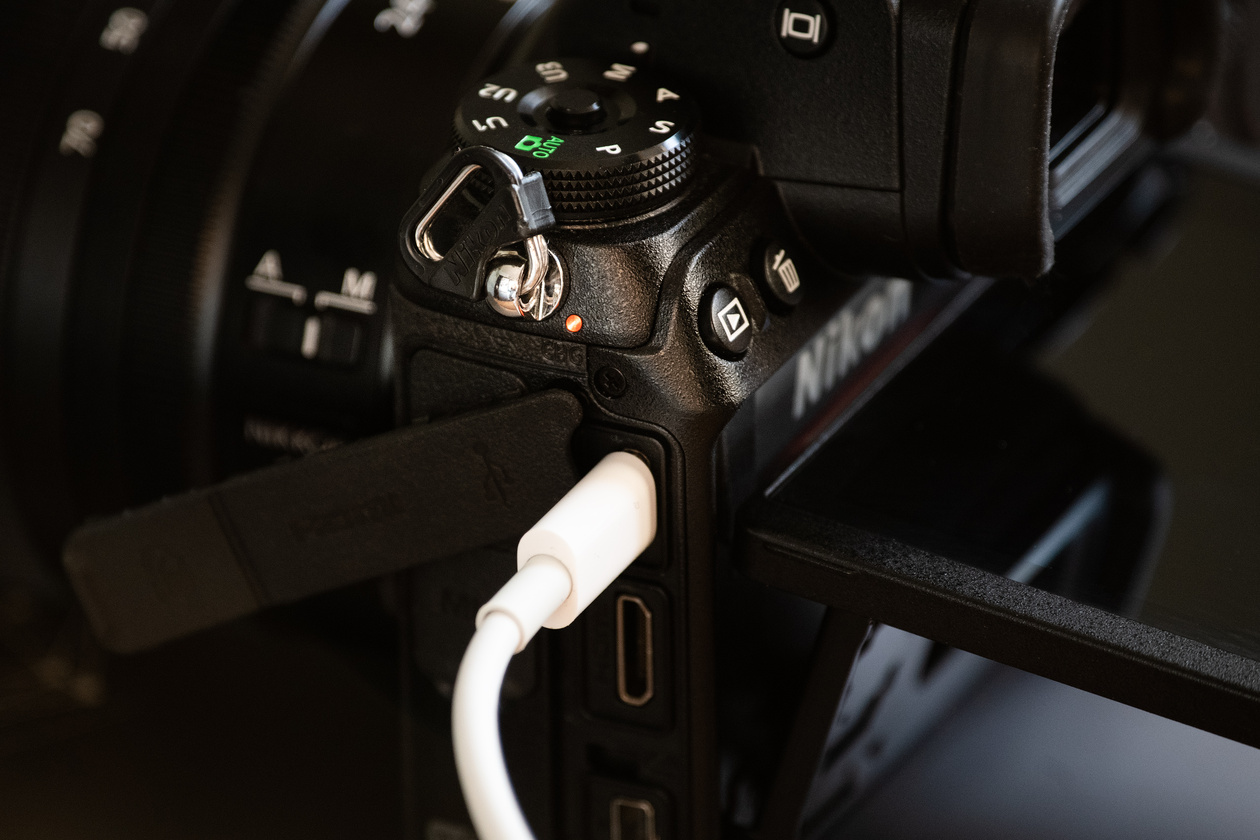
Mirrorless cameras can charge the battery right in the camera through a USB Type-C port. The power can come from a laptop port, a phone charger or a power bank. USB charging means you do not have to take a separate charger on a trip, and charging from a power bank saves you extra batteries on long trips without electricity. A small caveat: in all these cases the camera charges a little more slowly than with a wall charger. The tested body can also run from external USB power while you shoot, so a session does not have to stop when the battery runs low.
Settings that save the battery
| Setting or habit | What to do | Why it saves power |
|---|---|---|
| Power switch | Turn the camera off during breaks | The screen and viewfinder draw power the whole time the camera is on |
| Standby timer | Set a short timer; do not wake the camera with a half-press for no reason | Every wake-up from sleep costs energy; waking takes about half a second |
| Test shots | Think through composition and settings before pressing the shutter | Shooting, reviewing and deleting test frames drains the battery |
| High ISO and long exposures | Save them for the frames that matter | Both drain the battery noticeably |
| Wi-Fi and Bluetooth | Switch to airplane mode when power is tight | Keeping a connection uses energy, even over low-energy Bluetooth |
| Image review | Turn off automatic display after each shot; review the session later near an outlet | Showing pictures on the screen uses power |
| Focus mode | Use single-shot AF (AF-S) for static subjects instead of continuous AF | Continuous AF keeps moving heavy lens elements |
| In-camera JPEG corrections | Turn off noise reduction, Active D-Lighting and distortion correction | Processing loads the camera's processor; the same can be done on a computer |
| Stabilization | Turn it off on a tripod or when power is tight | Stabilization uses energy |
| Built-in flash | Use an external flash, which has its own batteries | A built-in flash draws on the camera battery |
| Viewfinder or screen | Compose on the rear screen when power is tight | The higher-resolution viewfinder costs the processor more energy |
Batteries discharge faster at sub-zero temperatures. So in the cold, carry the camera under your jacket, and better still, take the battery out during breaks and keep it warm, close to your body. Spare batteries should not get cold either: put them in a trouser pocket, for example.

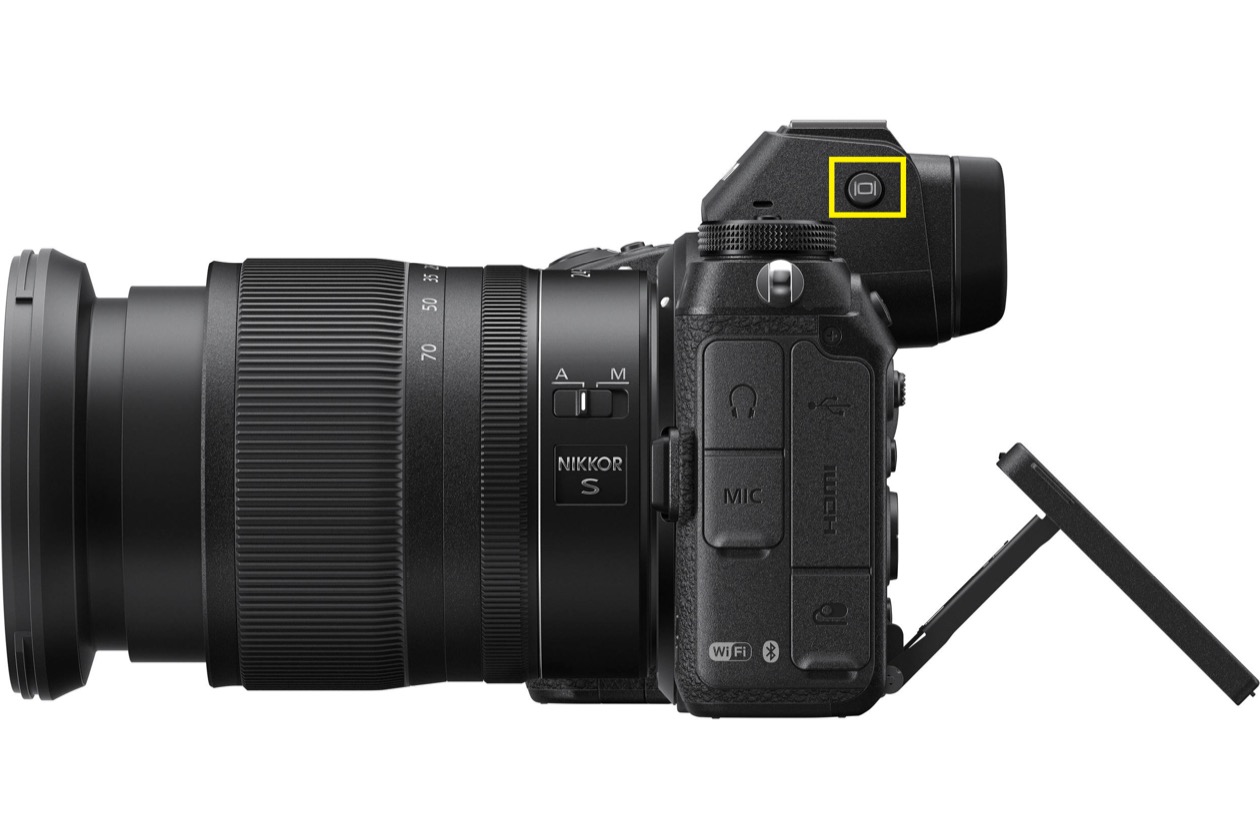
With sensible use and setup, you can noticeably extend a mirrorless camera's working time on one battery charge, without limiting your photography.
Rule of thumb: Budget at least one spare original battery and a USB-C power bank with a mirrorless camera, switch it off between bursts, and expect around a thousand frames per charge once your settings are tuned.
Is the DSLR dead? The state of DSLRs in 2026
Editor's note. We checked what the camera makers themselves have published:
- Nikon: its last DSLRs were the D780 (January 2020) and the D6 flagship (February 2020). Nikon's global news archive lists no digital SLR release after that. Every camera body it has announced since is mirrorless, from the Z 5 in July 2020 to the Z5IIC in September 2026.
- Canon: in May 2024 Canon announced the EOS R1, a full-frame mirrorless camera, as "the first flagship model for the EOS R SYSTEM". In October 2019 Canon had still announced the EOS-1D X Mark III as its "flagship DSLR camera".
- Ricoh (PENTAX): on 9 September 2026 Ricoh announced that it will discontinue production of the current K series digital SLR cameras, while it develops "a new series of digital SLR cameras based on an entirely new concept".
So new DSLR bodies have largely stopped, and the remaining DSLR line is being redesigned rather than extended. The lenses and bodies already sold keep working, and existing DSLR lenses carry over to mirrorless through adapters.
Verdict: mirrorless or DSLR?
Editor's note: our verdict. Buy mirrorless unless one of the DSLR cases below fits you.
| Your situation | Buy | Reason |
|---|---|---|
| First interchangeable-lens camera | Mirrorless | Exposure preview in the viewfinder; eye AF; new lenses still coming out |
| You own DSLR lenses from one maker | That maker's mirrorless body plus its adapter | Your lenses keep autofocus and gain sensor-shift stabilization |
| Portraits, weddings, family, travel | Mirrorless | Eye AF, quiet shutter, 300 to 500 g lighter kit |
| You insist on an optical viewfinder | DSLR | Only a DSLR has one; new bodies have largely stopped |
| Tight budget, used market | Either, compare prices | A used DSLR with a used lens can cost far less, but it is a closed system |
For a sensor format inside the mirrorless choice, start with an APS-C mirrorless camera for a first camera or travel, or a full-frame mirrorless camera for low light and portraits; our APS-C vs full frame guide explains the trade-off with numbers. If you are moving from a DSLR, buy the camera maker's own mount adapter first, an original spare battery for your model and a USB-C power bank. For specific budget bodies, see our 8 mirrorless cameras under $1,000; that list dates from 2021, so check that each model is still sold.
The mirrorless camera is a good opportunity to move to modern gear for relatively little money. With it you can get much better frames and give more attention to the reason people buy a camera in the first place: creativity!
Frequently asked questions
- What is a mirrorless camera?
- A mirrorless camera is an interchangeable-lens camera with no reflex mirror. The lens projects light straight onto the image sensor, and the picture from the sensor is shown on the rear screen or in an electronic viewfinder. A DSLR instead uses a mirror and a pentaprism or pentamirror to send the light to an optical viewfinder until the moment of exposure.
- Is mirrorless better than DSLR?
- For most photography in 2026, yes. Mirrorless cameras focus with sensors on the image sensor, so they can focus anywhere in the frame and detect faces and eyes, and the viewfinder shows the exposure before you shoot. DSLRs keep an optical viewfinder and, with top sports bodies, an edge in certain fast-action scenarios.
- Do mirrorless cameras have worse battery life than DSLRs?
- They use more power, because the sensor and the screen or electronic viewfinder work all the time the camera is on. With sensible settings the gap is small: the author made 1,224 frames on one charge with a full-frame mirrorless camera at minus ten degrees Celsius, and expects about a thousand frames from the body tested here.
- Can you use DSLR lenses on a mirrorless camera?
- Yes, through a mount adapter. The short flange distance of mirrorless mounts leaves room for an adapter. With Nikon's adapter, the example tested here, the maker's DSLR lenses keep autofocus, except the oldest screw-drive autofocus lenses. In-body stabilization then works with adapted lenses too, including old manual-focus primes.
- Are DSLRs being discontinued?
- Largely. Nikon's news archive lists no new DSLR after the D6 of February 2020, and every camera body it has announced since is mirrorless. Canon made the mirrorless EOS R1 the flagship of its EOS R system in 2024. Ricoh announced in September 2026 that it will end production of its current PENTAX K series DSLRs.
- Is it worth buying a DSLR in 2026?
- Only in narrow cases: you already own DSLR lenses and bodies, you want an optical viewfinder, or a used body costs far less than a mirrorless one. For a new system, buy mirrorless, since current camera lines, new bodies and new lenses come out for mirrorless mounts.
Sources
- Mirrorless camera, Wikipedia contributors (2026)
- Digital single-lens reflex camera, Wikipedia contributors (2026)
- Nikon releases the D6 digital SLR camera, Nikon Corporation (2020)
- Nikon releases the Z5IIC full-frame mirrorless camera, Nikon Corporation (2026)
- Canon develops EOS R1 as first flagship model for EOS R SYSTEM, Canon Inc. (2024)
- PENTAX Digital SLR Cameras Aim for a New Stage, RICOH IMAGING (2026)