What is aperture? F-stops explained
by Editorial staff · Photography Tips
As an Amazon Associate I earn from qualifying purchases. Links to Amazon on this page are affiliate links.
In short: Aperture is the adjustable opening in the lens, written as an f-number. The smaller the number, the wider the opening: f/2 lets in twice the light of f/2.8. A wide aperture blurs the background; a narrow one keeps more of the scene sharp. Most lenses are sharpest around f/5.6–f/11.
Aperture is one of the three key camera parameters (along with shutter speed and ISO) that every photographer needs to learn to work with. How the three fit together is in the exposure triangle explained. This lesson is for beginners who want the main facts about aperture, briefly and in plain language.
What is aperture in photography?
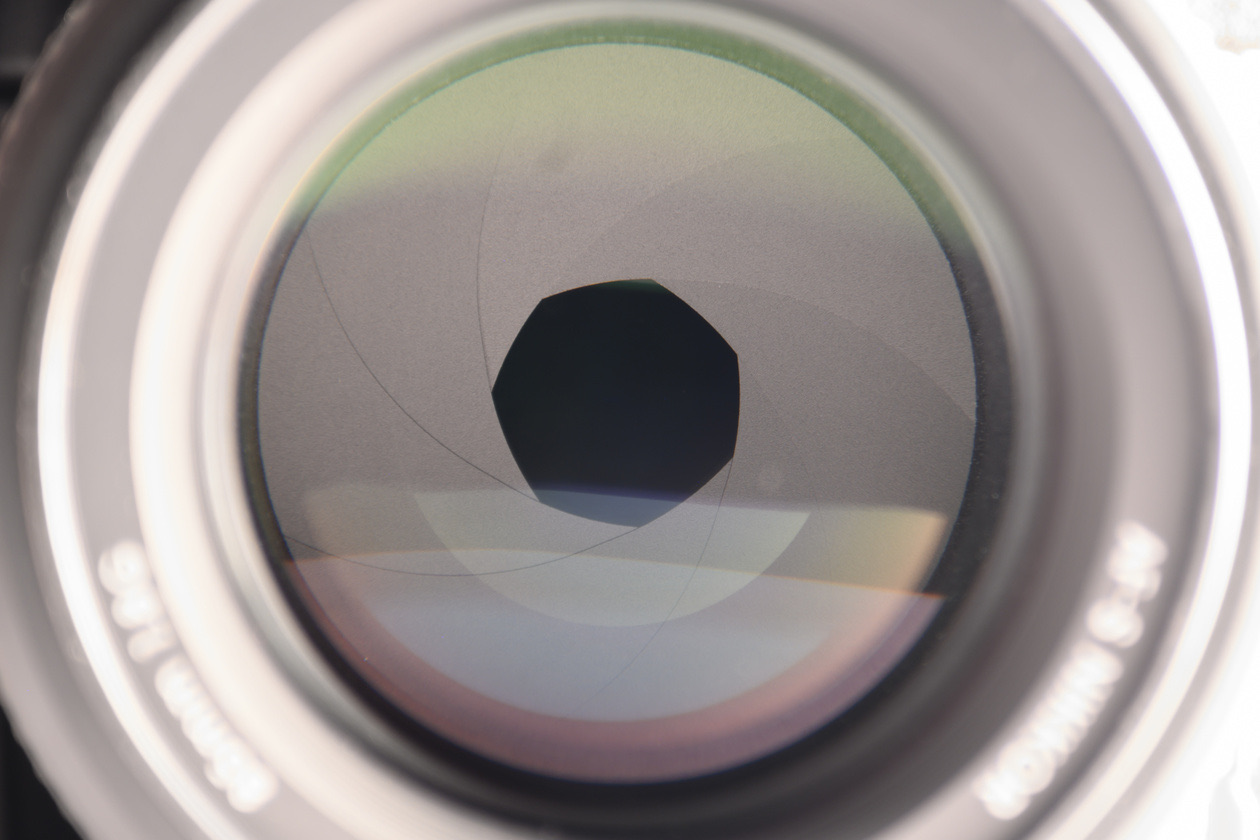
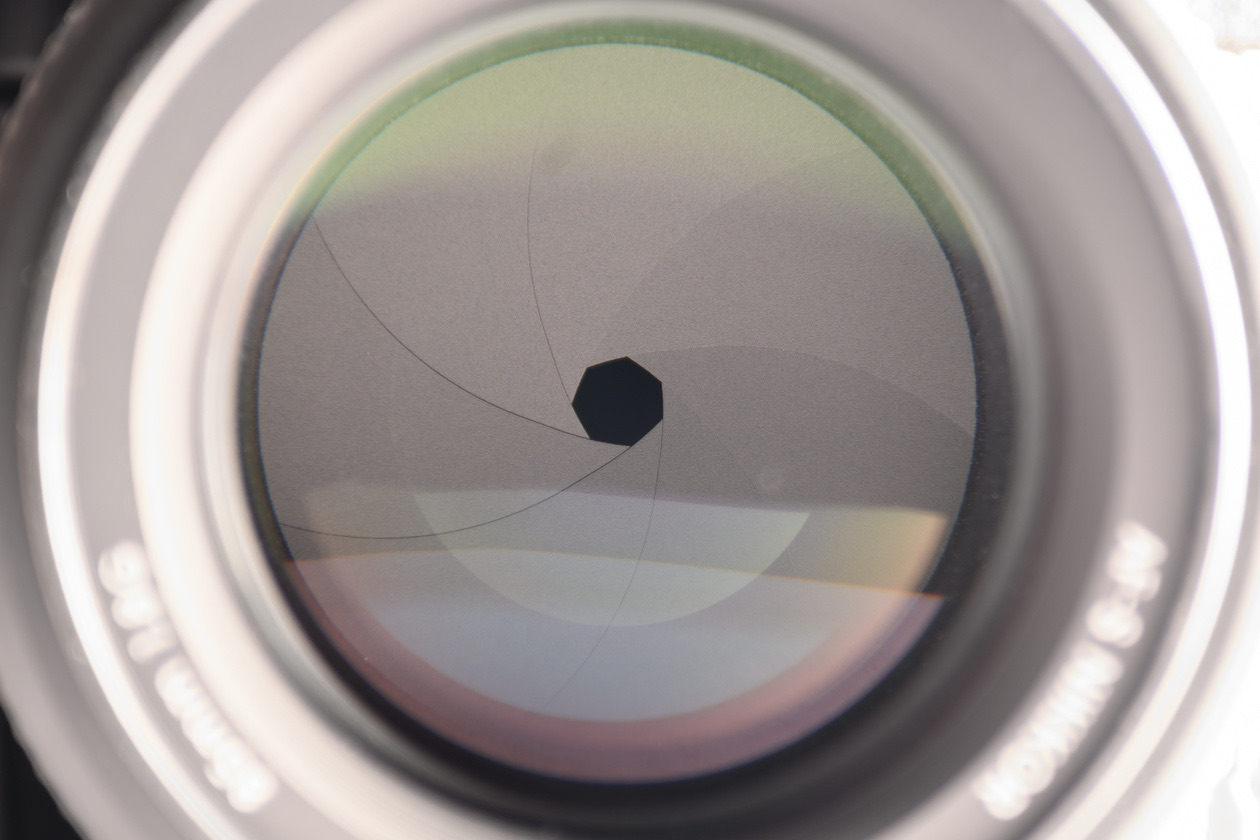
The aperture mechanism is a set of blades inside the lens. As they close and open, they form the opening through which light reaches the sensor. The number of blades affects how out-of-focus areas look. A small number of blades (6–7) turns highlights in a blurred background into polygons. Advanced lenses have rounded aperture blades, usually nine or more in current lenses, so even when the aperture is stopped down, out-of-focus highlights in the background stay smooth circles. That said, "nuts", polygonal highlights as a kind of "wrong" background blur, have their admirers too. It is all a matter of taste.
How aperture is shown on the camera
Aperture is marked with the letter F (or f). The number after the letter is the aperture value. For example, F3.5 (f/3.5) is an open aperture (a large opening in the lens), while F16 (f/16) is a closed one. The proportion works in reverse, because the aperture value is really a fraction whose first part is dropped.
Remember this so you do not repeat the classic beginner's mistake: wanting to open the aperture as wide as possible, the beginner sets the largest available number. Naturally, that does not open the aperture but closes it all the way. Remember: the smaller the number after F, the wider the aperture is open.
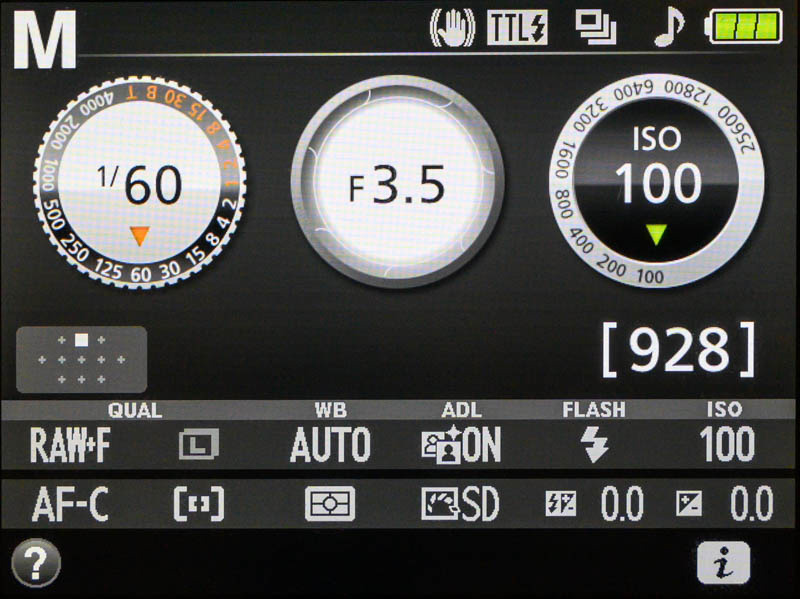
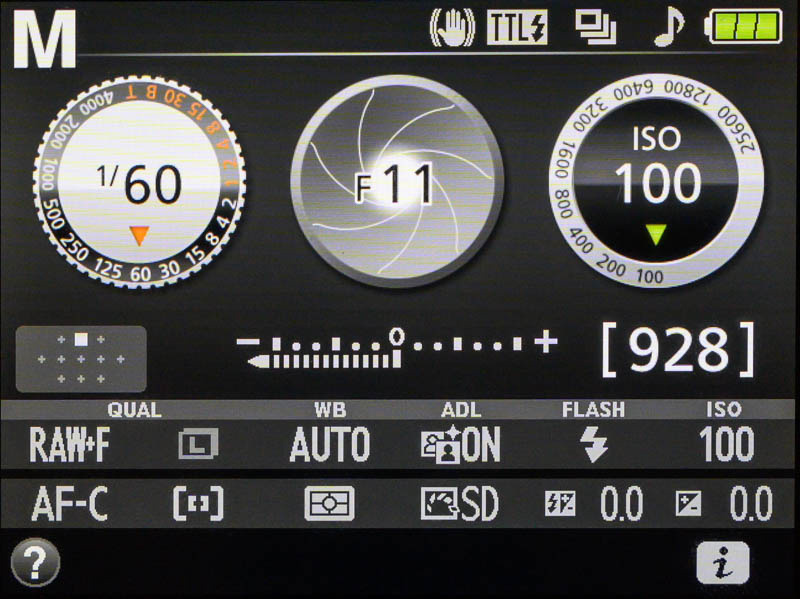
The aperture value is always shown on the camera display and in the viewfinder, whatever mode you shoot in. If you use automatic mode, watch how the camera changes the aperture depending on the conditions: it is useful practice!
F-stop chart
Editor's note: this chart is computed. A full stop multiplies the f-number by √2 (about 1.41), which halves the light, because the area of the opening goes with the square of its diameter (Wikipedia, F-number). The marked numbers are rounded: f/11 is really 11.31 and f/22 is 22.63. The third-stop values are the ones cameras display between full stops. The last column shows how the shutter speed would change to keep the same exposure if f/2.8 needed 1/500 s.
| Full stop | ⅓ stop narrower | ⅔ stop narrower | Exact value | Light vs f/2.8 | Same exposure as f/2.8 at 1/500 s |
|---|---|---|---|---|---|
| f/1 | f/1.1 | f/1.2 | 1.00 | ×8 | 1/4000 s |
| f/1.4 | f/1.6 | f/1.8 | 1.41 | ×4 | 1/2000 s |
| f/2 | f/2.2 | f/2.5 | 2.00 | ×2 | 1/1000 s |
| f/2.8 | f/3.2 | f/3.5 | 2.83 | ×1 | 1/500 s |
| f/4 | f/4.5 | f/5 | 4.00 | ×1/2 | 1/250 s |
| f/5.6 | f/6.3 | f/7.1 | 5.66 | ×1/4 | 1/125 s |
| f/8 | f/9 | f/10 | 8.00 | ×1/8 | 1/60 s |
| f/11 | f/13 | f/14 | 11.31 | ×1/16 | 1/30 s |
| f/16 | f/18 | f/20 | 16.00 | ×1/32 | 1/15 s |
| f/22 | f/25 | f/29 | 22.63 | ×1/64 | 1/8 s |
| f/32 | 32.00 | ×1/128 | 1/4 s |
Read it like this: going from f/8 to f/5.6 is one stop more light, and going from f/8 to f/11 is one stop less. A lens marked f/1.8 opens 3⅓ stops wider than a kit zoom at f/5.6 (computed: (5.6/1.8)² ≈ 9.7 times the light).
Modes in which you can set the aperture yourself
In automatic mode the camera controls the aperture. But you can take this parameter under your own control. Switch to aperture priority (A, marked Av on Canon cameras) and you can adjust it. In this mode the camera picks the shutter speed and the ISO (if Auto ISO is on) for the aperture you chose, to get a bright enough picture. So keep an eye on the shutter speed too: if you closed the aperture and the shutter speed became too long, you risk a blurred frame.
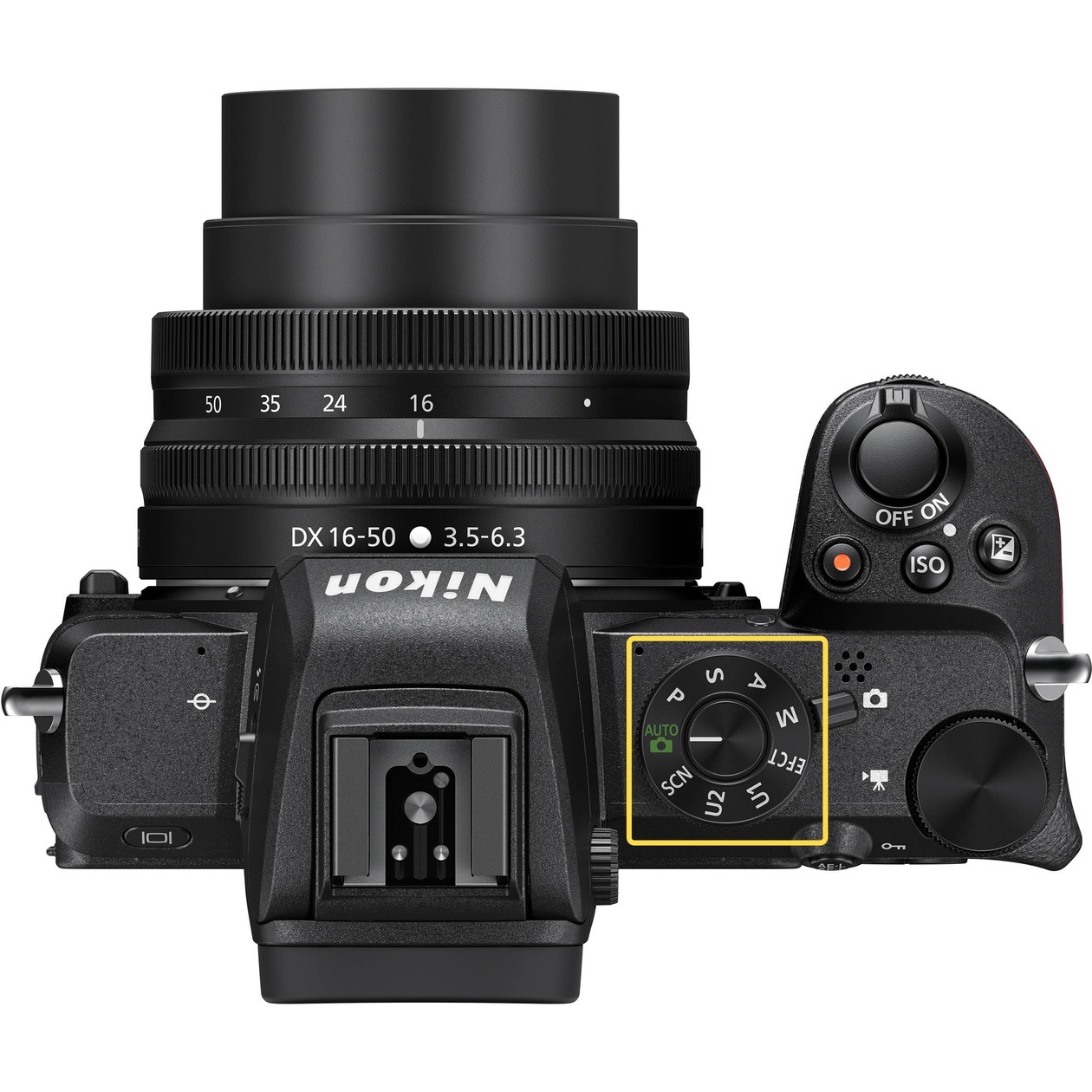
In manual mode M we control all the shooting parameters ourselves. Although it is the most demanding mode, plenty of photographers choose it precisely because they, not the automation, control everything. Mode M is used for subjects where you need to set every exposure parameter precisely: shutter speed, aperture and ISO. These include studio work with flash, landscape, architecture and interior photography, and product photography. For fast-moving shoots in natural light, mode A is still the better choice. In general, when the subject moves fast, what you need to control first is not the aperture but the shutter speed. In that case, switch to S (shutter priority) and pick the value at which motion in your subjects stays sharp. Modes side by side: aperture priority, shutter priority or manual.
How aperture affects the picture
Brightness in manual mode. Obviously, more light passes through the lens through a wide opening than through a small one. So the aperture can be used to adjust the brightness of the picture. On a sunny day, for example, you may need to close the aperture down so as not to overexpose the frame. In poor light, on the contrary, it is better to open the aperture wider, so that as much light as possible passes through the lens and the picture comes out bright and clean.
Remember that the aperture is balanced against the shutter speed (the exposure time). So when you adjust the aperture by hand in mode A, you can watch the camera pick a matching shutter speed. To get a bright frame with a closed aperture, the camera lengthens the shutter speed, so that enough light reaches the sensor through the small opening over a longer time. And as you open the aperture in mode A, you will see the camera start to shorten the shutter speed.
Depth of field. Everything would be very simple if aperture affected only brightness. But it also affects depth of field: the distance along the axis between you and infinity that will be sharp in the picture. Details outside the depth of field stay blurred. The wider the aperture, the shallower the depth of field, all else being equal. Depth of field also depends on the shooting distance (the closer, the shallower) and the focal length of the lens (the longer, the shallower).
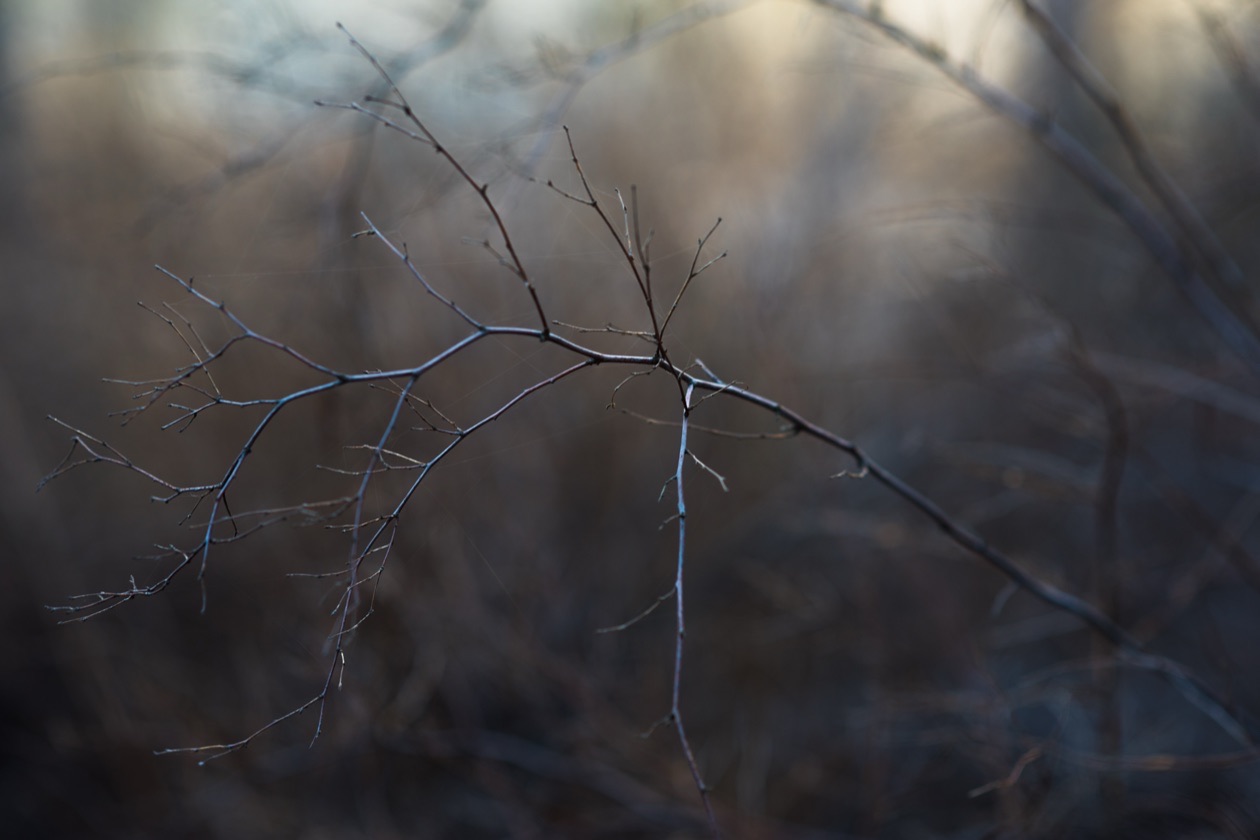
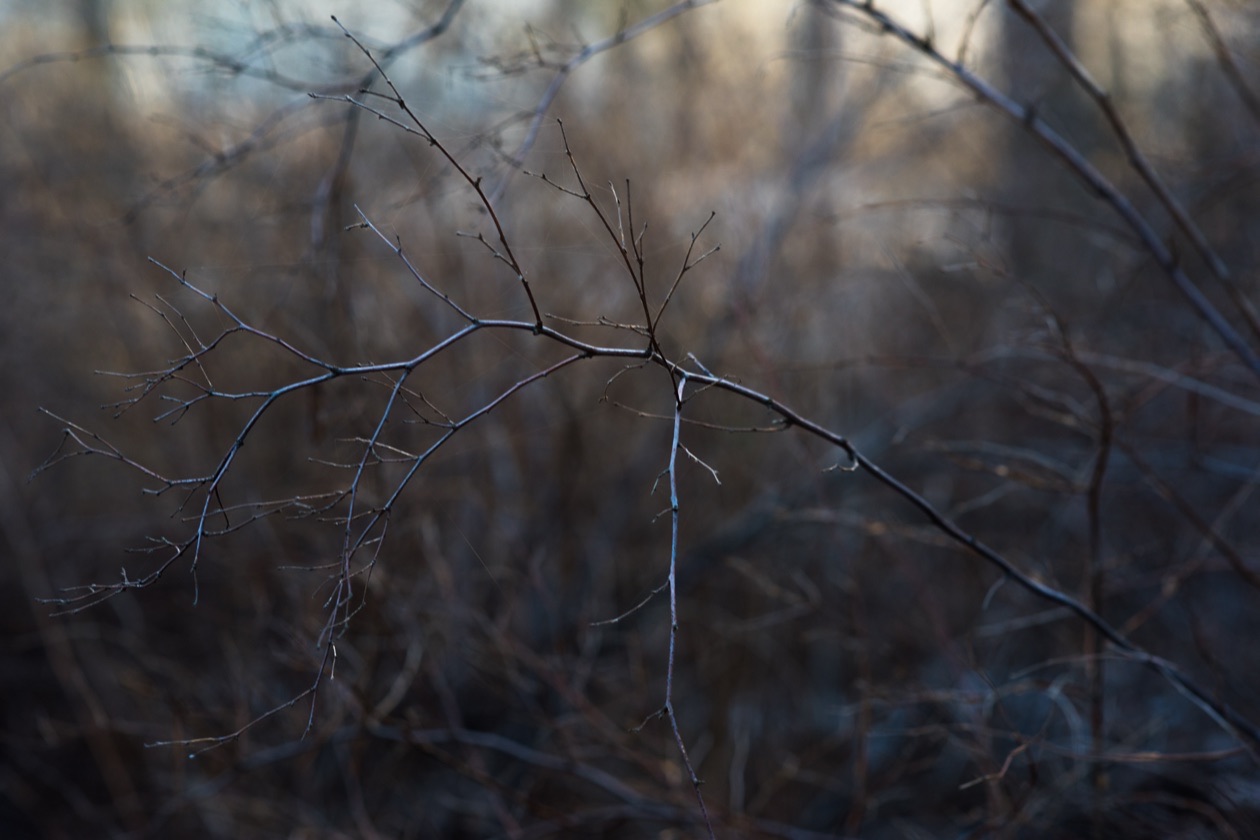
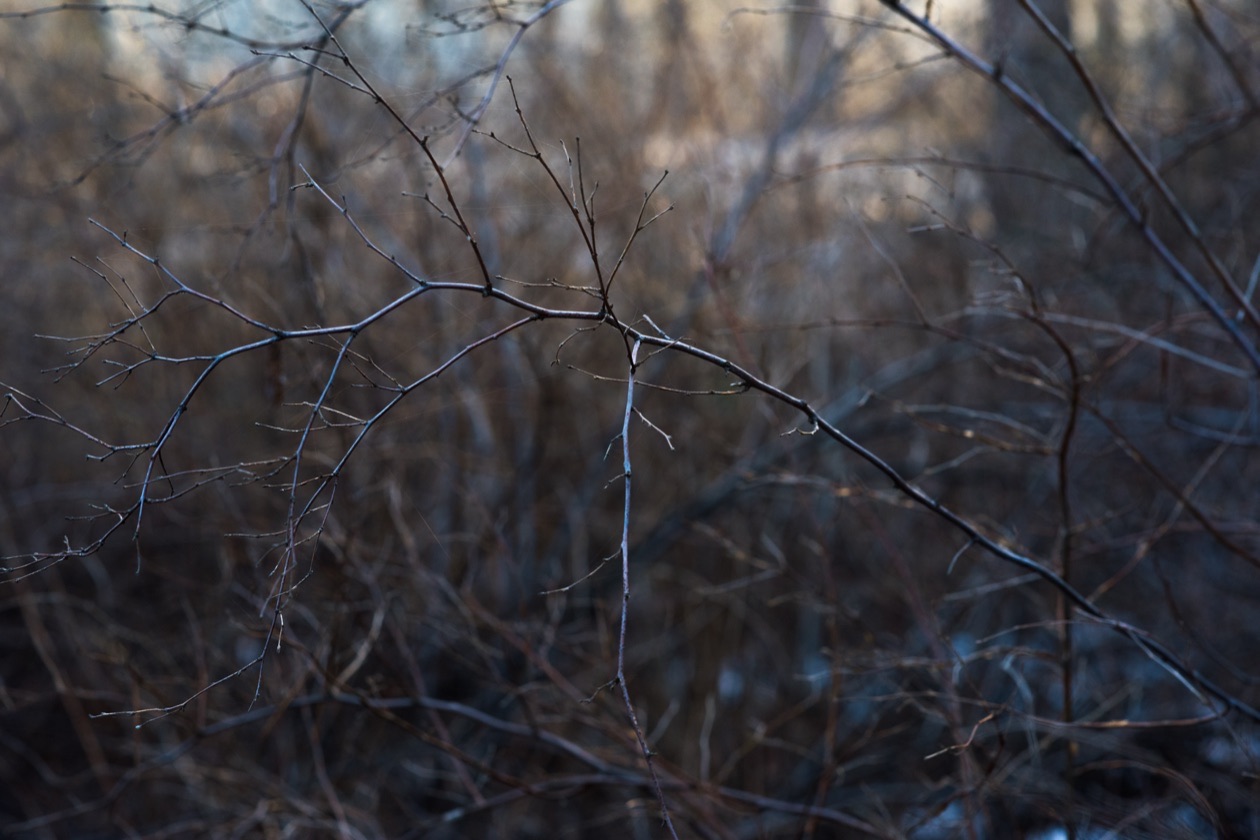
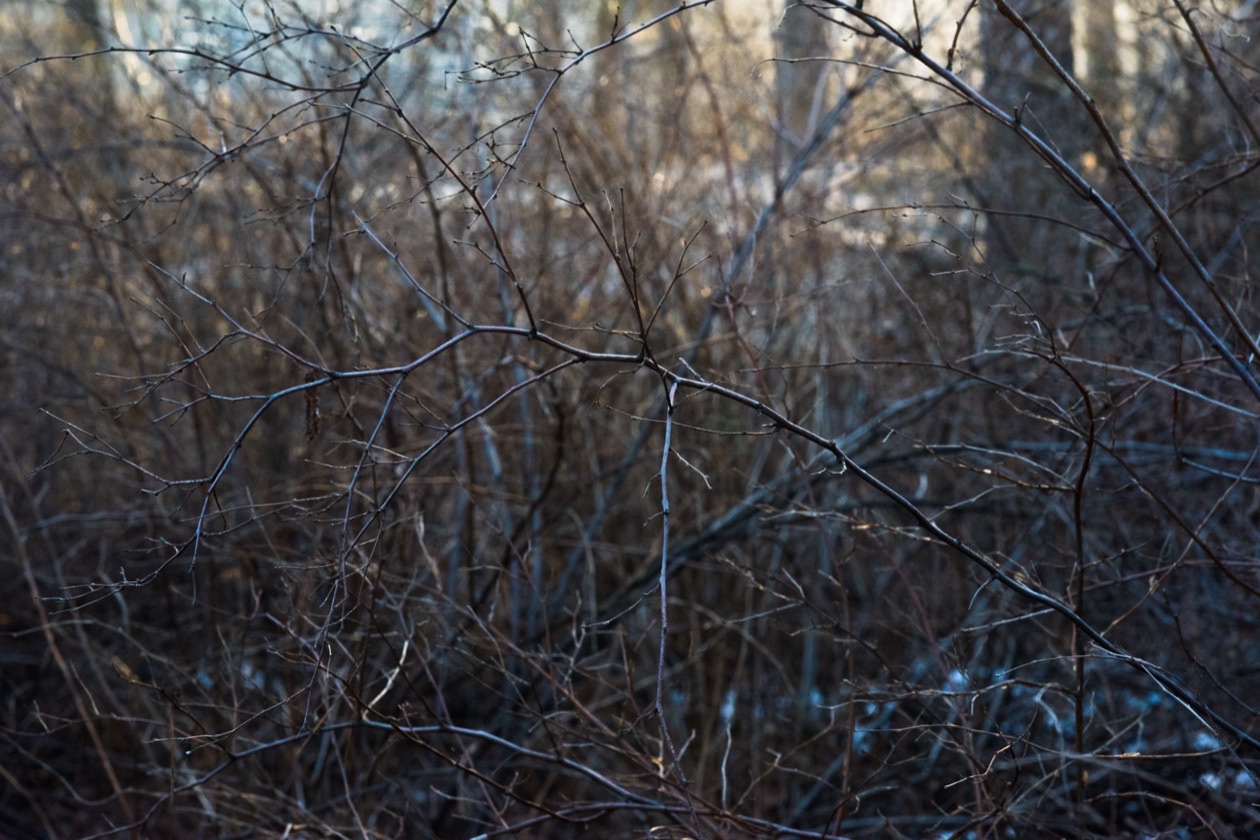
With shallow depth of field we can isolate the main subject in the frame, and for that we need an open aperture. But sometimes you want everything in the photo to be sharp, and then the aperture should be closed. This is where the difficulties begin: a closed aperture can make the shutter speed too long, and the photos come out blurred. The critical value is roughly 1/60 s: at longer shutter speeds the risk of camera shake is very high.
There are two ways out. You can raise the sensitivity: the higher the ISO, the shorter the shutter speed, but the more digital noise. Or you can act like a true professional and use a tripod, shooting at low ISO without digital noise. With the camera on a solid support, even shutter speeds of tens of seconds become available, and everything in the photo stays sharp because the camera does not tremble in your hands. This option suits still subjects. How shutter speed and ISO trade against each other is in what shutter speed is and what ISO is.
Maximum aperture: the speed of a lens
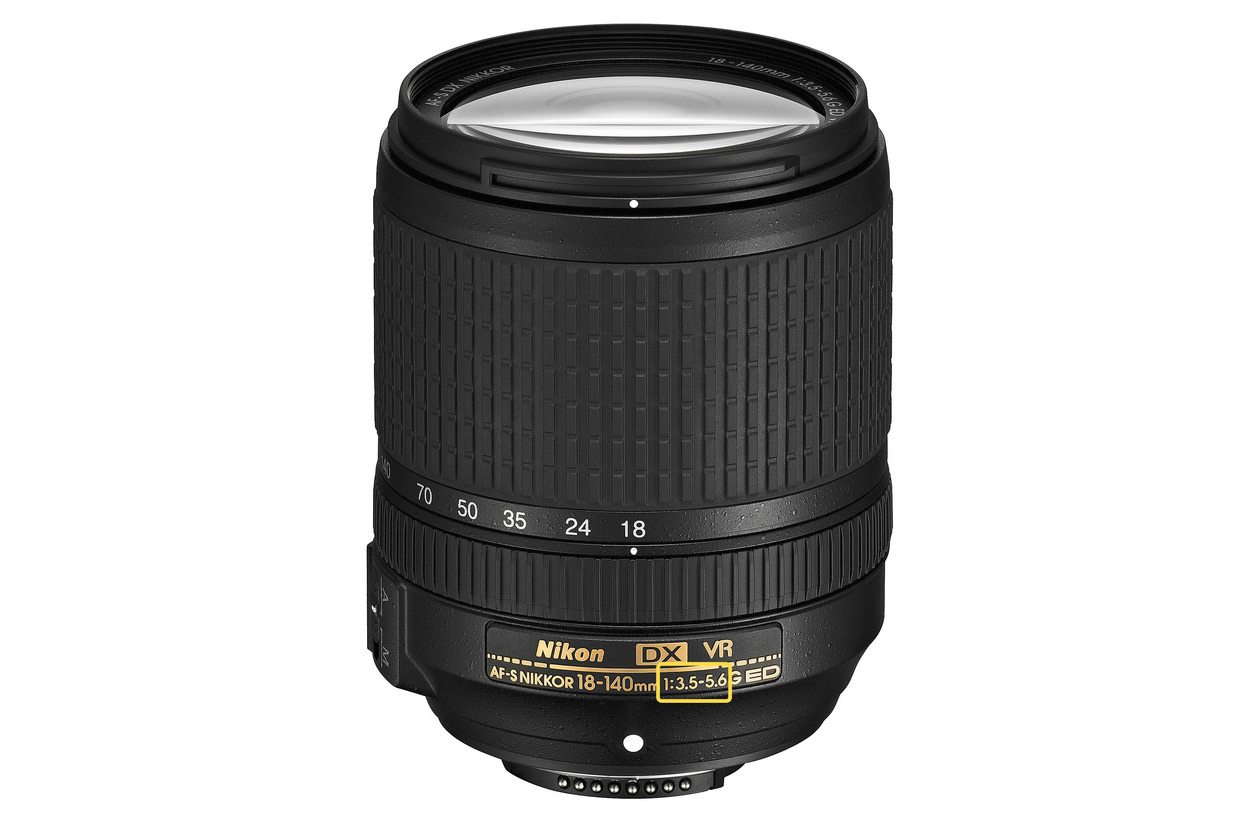
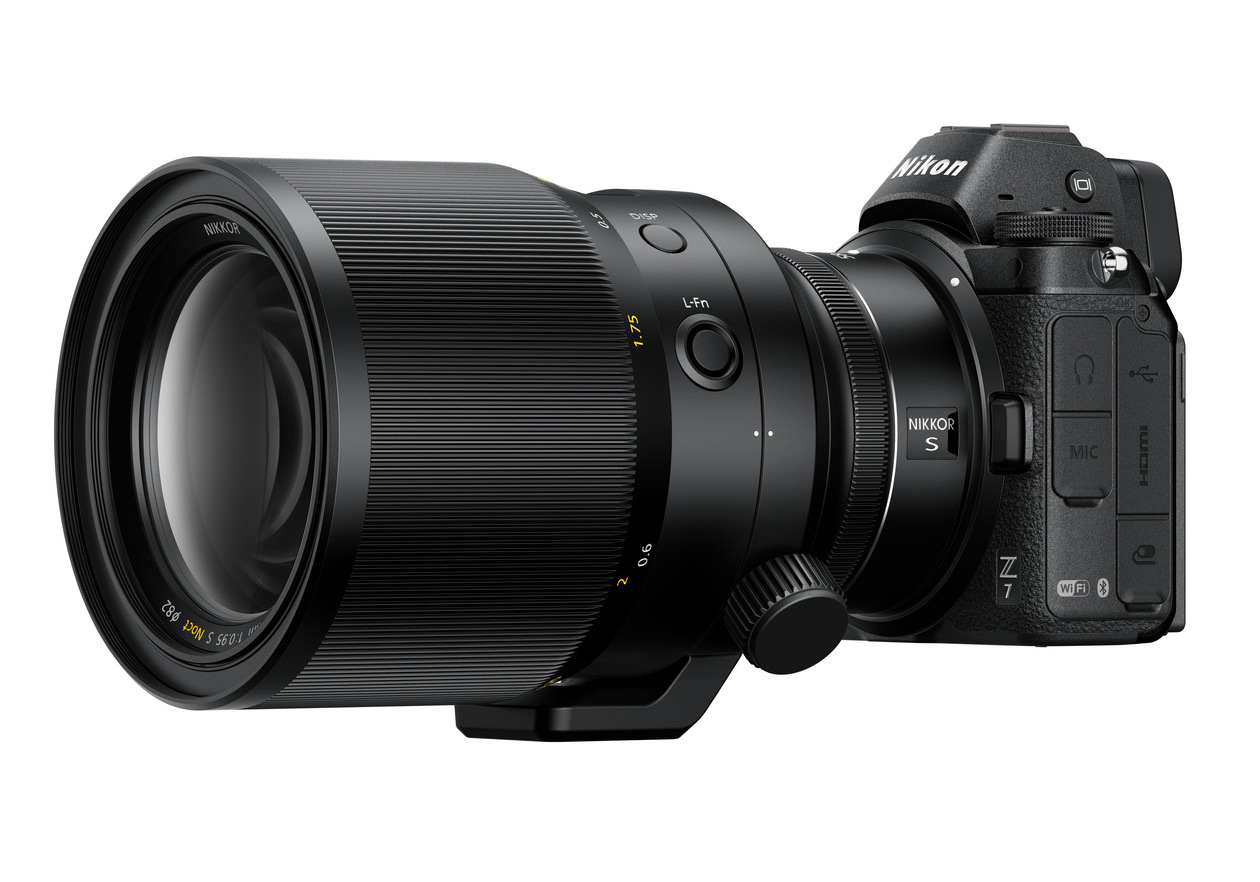
The aperture can be opened up to a certain value, which differs between lens models. One lens opens to f/3.5, another to f/2.8, and there are lenses that open to f/1.4. Photographers call this widest aperture value the maximum aperture, or the speed of the lens.
The wider a lens opens, the more light it passes. By the way, do not confuse the maximum aperture with sensitivity (ISO): they are different parameters!
A fast lens can shoot in poor light without raising ISO much. For example, if a lens with a maximum aperture of f/5.6 needs ISO 6400 to shoot in room light at 1/60 s, an f/1.4 lens handles the same job at ISO 400. The difference in digital noise between these ISO values is huge! Pictures at ISO 400 will be much cleaner. No wonder photographers love fast lenses and are convinced there is no such thing as too much speed.
Editor's note: the arithmetic holds exactly. From f/5.6 to f/1.4 is 4 stops, (5.6/1.4)² = 16 times the light, and from ISO 400 to ISO 6400 is also 4 stops.
But remember that the wider the aperture, the shallower the depth of field. So a fast lens takes learning: you will need to master very precise focusing. If you have only just got a camera, do not rush to switch to fast lenses; shoot with the kit lens first. Kit lenses usually have a modest maximum aperture (typically f/3.5–f/5.6), so the photographer shoots at a relatively narrow aperture, where focusing errors are hidden by a fairly large depth of field. The low speed of a kit lens is a kind of help for a beginner: with such lenses you do not have to focus perfectly.
Buying advice (editor's note): Start with the kit zoom. When it holds you back in poor light or you want stronger background blur, the cheapest step up is a prime lens at f/1.8 for your camera's mount: 3⅓ stops more light than a kit zoom at f/5.6. An f/1.4 prime adds about ⅔ stop more, and lenses beyond that, such as f/0.95, are large specialist tools.
Aperture and lens sharpness
Let us look at how aperture affects the detail of the picture. Absolutely any lens, fast ones above all, gives slightly weaker picture quality wide open than at values around f/5.6–f/11. This comes from the design of the optics and the laws of physics. With current lenses, though, the drop in sharpness wide open can be almost invisible, as with Nikkor Z lenses: they are all very sharp wide open, but if you look closely, they are still sharper stopped down. Old and inexpensive lenses, on the other hand, can give a frankly soft, "soapy" picture in such situations. The right fix is to replace such a lens with something better, but if that is not possible, simply stop the aperture down a few stops.
Say your lens has a maximum aperture of f/2.8: stop it down to f/5.6. On a closed aperture the detail of any lens increases. Distortions such as chromatic aberration, colored fringes around contrasting objects, go away as well. Any lens test confirms all of the above.
But from around f/11 the reverse process begins: diffraction starts to reduce the sharpness of the picture, and if you close the aperture "all the way", you risk a soft image without fine detail. This holds for nearly every lens.
English-speaking photographers have the term sweet spot: the aperture value at which their lens gives the sharpest picture. Find that value on your lens and use it when you need the best possible sharpness.
How to set the aperture
To finish, here are a few simple, specific tips for setting the aperture in different situations.
| Situation | Aperture | Why |
|---|---|---|
| Family reportage, children at home | Let the camera choose, or f/3.5–f/5.6 on a kit lens | Motion matters more: set 1/125–1/500 s first; avoid f/1.4–f/1.8 on fast primes without experience |
| Group portrait | f/5.6–f/11 | Enough depth of field for every face at one distance |
| Posed portrait | Widest aperture, or slightly stopped down on a fast prime | Separates the model from a blurred background; stopping down a little adds detail |
| Landscape, architecture, interior | f/11–f/16, or the lens's sweet spot without a foreground | Depth for front and back; smaller apertures lose sharpness to diffraction |
| Products and objects | f/8–f/16, or wide open for a creative study | The whole object within the depth of field |
- Family reportage, amateur shooting of children. Here it is better to hand the aperture over to the camera. Remember that when there is motion in the frame, the shutter speed matters more than the aperture. Find the values at which subjects do not blur from their own movement (roughly 1/125–1/500 s). If you want to control the aperture strictly, first of all get enough depth of field to fit the main characters into it and to cover small focusing errors. Without enough experience, avoid apertures around f/1.4–f/1.8 on fast primes in such situations. A kit lens with a modest maximum aperture lets you forget about setting the aperture altogether at first: just leave it open at f/3.5–f/5.6, which gives enough depth of field for this kind of shooting. Remember that a good photo session starts with good light. The best frames come outdoors in daylight. If you must shoot in a poorly lit room, use an external flash pointed at the ceiling.
- Group portrait. If you want everyone sharp, ask the group to stand at roughly the same distance from the camera and stop down to f/5.6–f/11, so that the depth of field covers every face.
- Posed portrait. The model is posing for us, so we can calmly work on the aesthetics of the photo. A beautiful portrait frequently needs the model separated from the background, which calls for shallow depth of field and a blurred background. You can shoot at the widest aperture. With a fast prime, you can close down a little to increase detail and remove chromatic aberration.
- Landscape, architecture, interior. First, work from the depth of field you want. If the frame has a foreground and a background, the depth of field must be enough to include every element of the composition, so the aperture has to be closed to f/11–f/16. Do not go further, because diffraction lowers sharpness. If there is no foreground and you are simply shooting a distant subject, still do not use the widest aperture: find your lens's sweet spot and use that value for the best sharpness. In this kind of photography the minimum ISO is used for the best picture quality, so shooting at a closed aperture makes a tripod nearly mandatory.
- Objects. As above, everything depends on the task. To fit the whole object into the depth of field, photographers use closed apertures, f/8–f/16. For a creative study with a blurred background, use an open aperture. Again, for the best results shoot from a tripod at minimum ISO.
All of the above is a starting point for creativity and experiment, not an axiom: over time every photographer finds the settings that work for them. In the end, the aperture value you choose depends on the depth of field or background blur you need, on too little or too much light, and on which values give the sharpest picture on your lens.
Verdict
Editor's note: aperture is the setting to choose first whenever the background or the zone of sharpness matters, which covers portraits, landscapes and products. Learn three numbers on your own lens: its maximum aperture (the most light and blur it can give), its sweet spot (usually somewhere from f/5.6 to f/11) and the f/11–f/16 limit beyond which diffraction costs sharpness. Then let the shutter speed and ISO fill in the light, as the exposure triangle explains.
Frequently asked questions
- What is aperture in photography?
- Aperture is the opening in the lens through which light reaches the sensor. It is formed by a set of blades that close and open to change its diameter. A wider opening lets in more light and gives shallower depth of field with a more blurred background; a narrower opening lets in less light and keeps more of the scene sharp.
- What is an f-stop?
- An f-stop is a step on the aperture scale, written as f/ followed by a number, such as f/2.8 or f/8. The number is the denominator of a fraction, so a smaller number means a wider opening. Each full stop on the standard scale (f/1.4, f/2, f/2.8, f/4, f/5.6, f/8, f/11, f/16) halves the light reaching the sensor.
- Is f/1.8 or f/16 a bigger aperture?
- f/1.8 is the bigger aperture. The f-number is a fraction with the numerator dropped, so f/1.8 is a much wider opening than f/16. A classic beginner mistake is to set the largest number to open the aperture fully, which actually closes it all the way. From f/1.8 to f/16 is about 6⅓ stops, so f/16 lets in roughly 1/80 of the light.
- What is the sharpest aperture of a lens?
- Almost any lens is a little softer wide open than around f/5.6 to f/11, and from about f/11 onward diffraction starts to reduce sharpness again. The value at which a particular lens gives its sharpest picture is called its sweet spot. Find it for your lens and use it when you need the highest sharpness, for example in landscapes.
- What does the maximum aperture in a lens name mean?
- It is the widest aperture the lens opens to, the figure after the focal length in its name, such as f/1.4 or f/3.5–5.6. A zoom can have a variable maximum aperture, for example f/3.5 at the short end and f/5.6 at the long end. Do not confuse it with ISO sensitivity: the maximum aperture is a property of the lens.
- What aperture should I use for portraits and landscapes?
- For a posed portrait with a blurred background, shoot wide open or close down slightly on a fast prime to gain detail. For a group portrait, use f/5.6 to f/11 so every face is within the depth of field. For landscapes with foreground and background, use f/11 to f/16, but no smaller, because of diffraction, and a tripod at minimum ISO.
Sources
- F-number, Wikipedia (2026)
- Depth of field, Wikipedia (2026)
- Diffraction-limited system, Wikipedia (2026)
- EOS M50 Mark II manual: Aperture-Priority AE Mode (Av), Canon (2026)
- ILCE-7SM3 Help Guide: Using the mode dial, Sony (2026)