What is a kit lens, and is it any good?
by Konstantin Voronov · Photography Tips
As an Amazon Associate I earn from qualifying purchases. Links to Amazon on this page are affiliate links.
In short: A kit lens is the inexpensive zoom a manufacturer sells in one box with a camera, typically an 18-55 mm or 16-50 mm on APS-C and a 24-70 mm on full frame. It is built to be cheap, light and versatile, and modern ones are sharp, stabilized and quiet. Keep it until you hit a specific limit (reach, low light, background blur), then buy the lens that fixes that limit.
One of the main advantages of system cameras, DSLRs and mirrorless alike, is interchangeable lenses. Photographers can choose lenses for their tasks: one gives an extremely wide angle of view, another brings distant objects close, a third lets you shoot in poor light or make beautiful portraits. Such choice is good. But a beginner finds it hard to settle on anything, and a person buying a first camera frequently does not know what they will photograph.
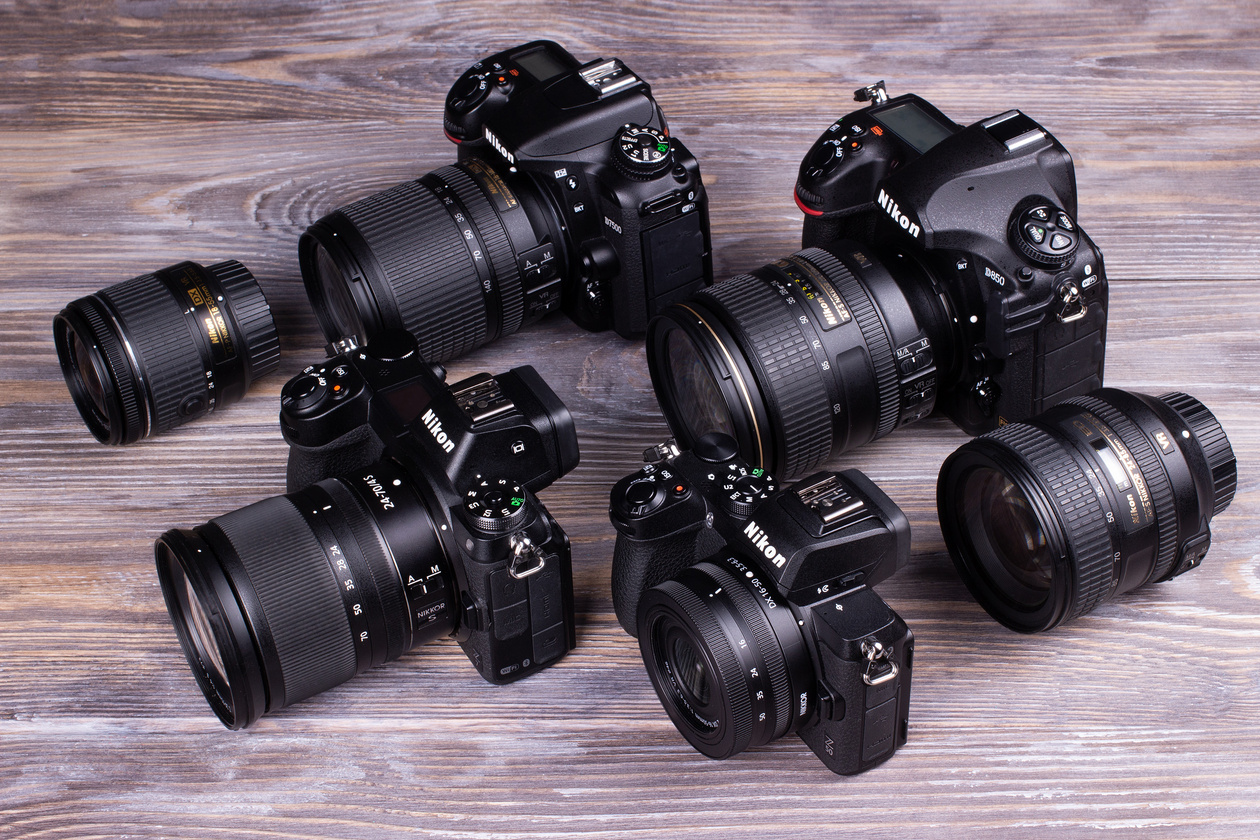
Readers regularly ask us to help them choose one lens to shoot landscapes, portraits, reportage and macro at once. There is little to advise, because each of those genres needs its own specialized lens. So is there a universal lens that handles every task, costs little, and is light and compact? The answer is simple: the manufacturer has already put it in the box with the camera.
What is a kit lens?
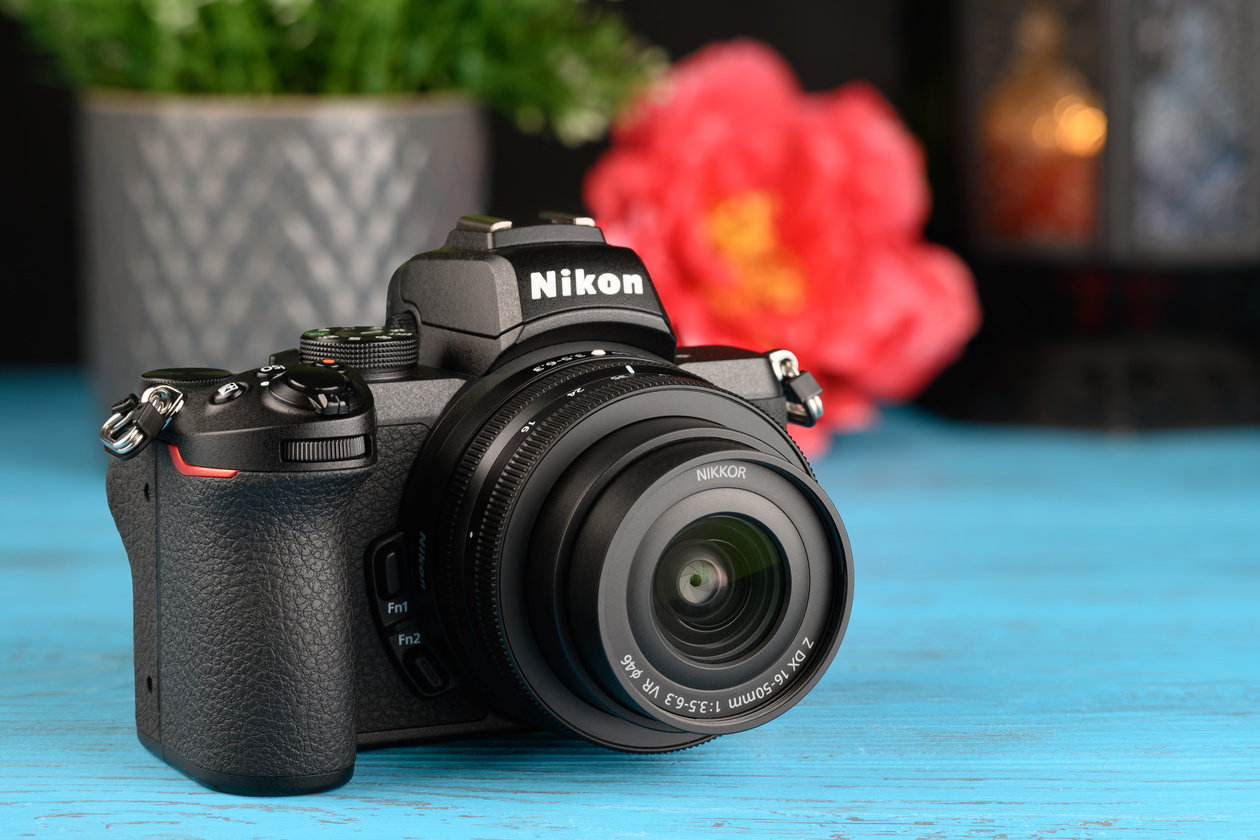
A kit lens is the inexpensive, general-purpose lens that comes in the box with a camera. Such a set is called a kit, which gives the lens its name. The kit is an official configuration planned by the manufacturer: a camera plus an inexpensive universal lens that is the best way to start working with that camera, usually shipped together in one box. A kit is always noticeably cheaper than the same items bought separately, which is a big win for a beginner.
Editor's note. According to the Wikipedia entry on kit lenses, kit lenses were originally of normal focal length; more recently they tend to be inexpensive zooms that run from a moderate wide angle to a short telephoto. Our guide to types of camera lenses explains those ranges.
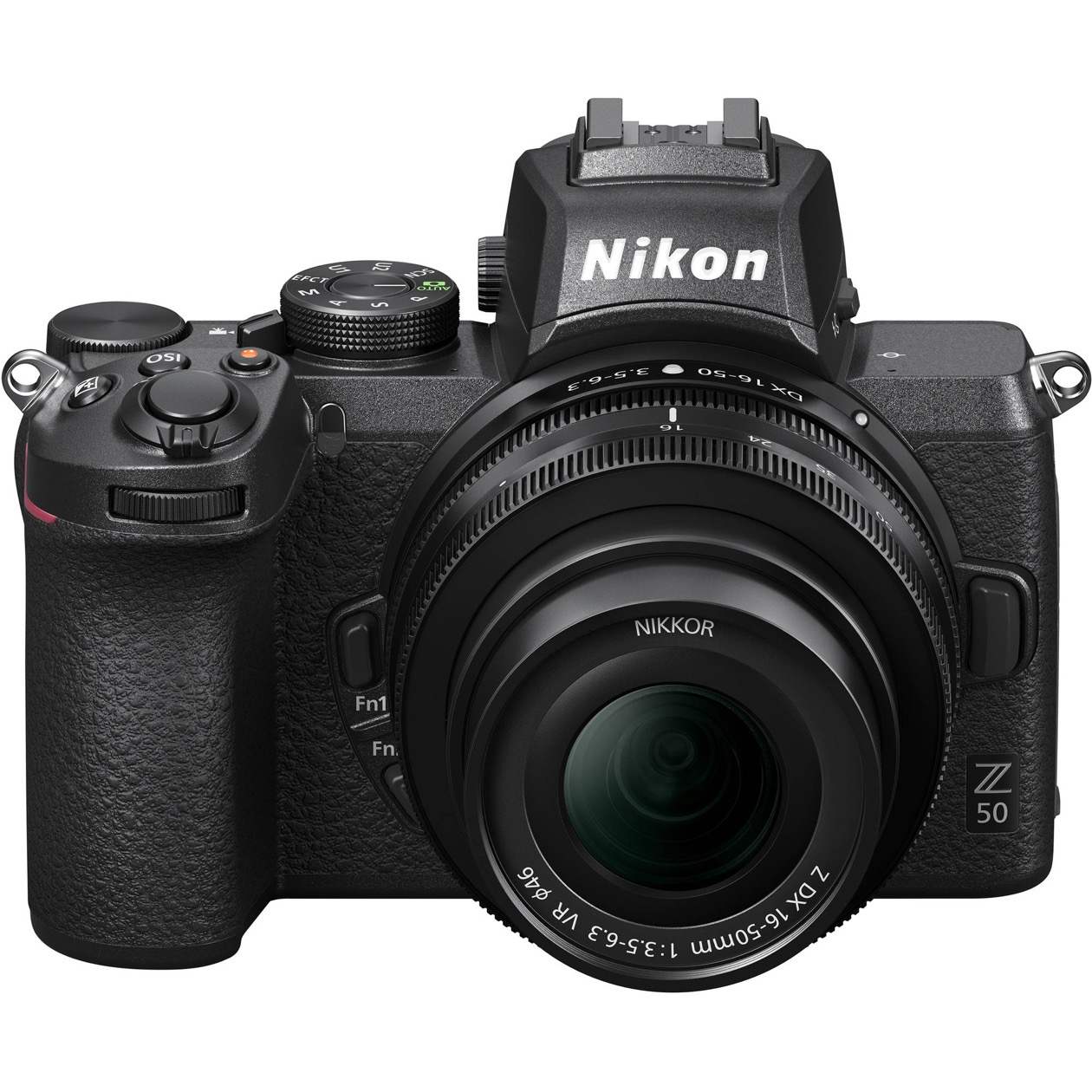
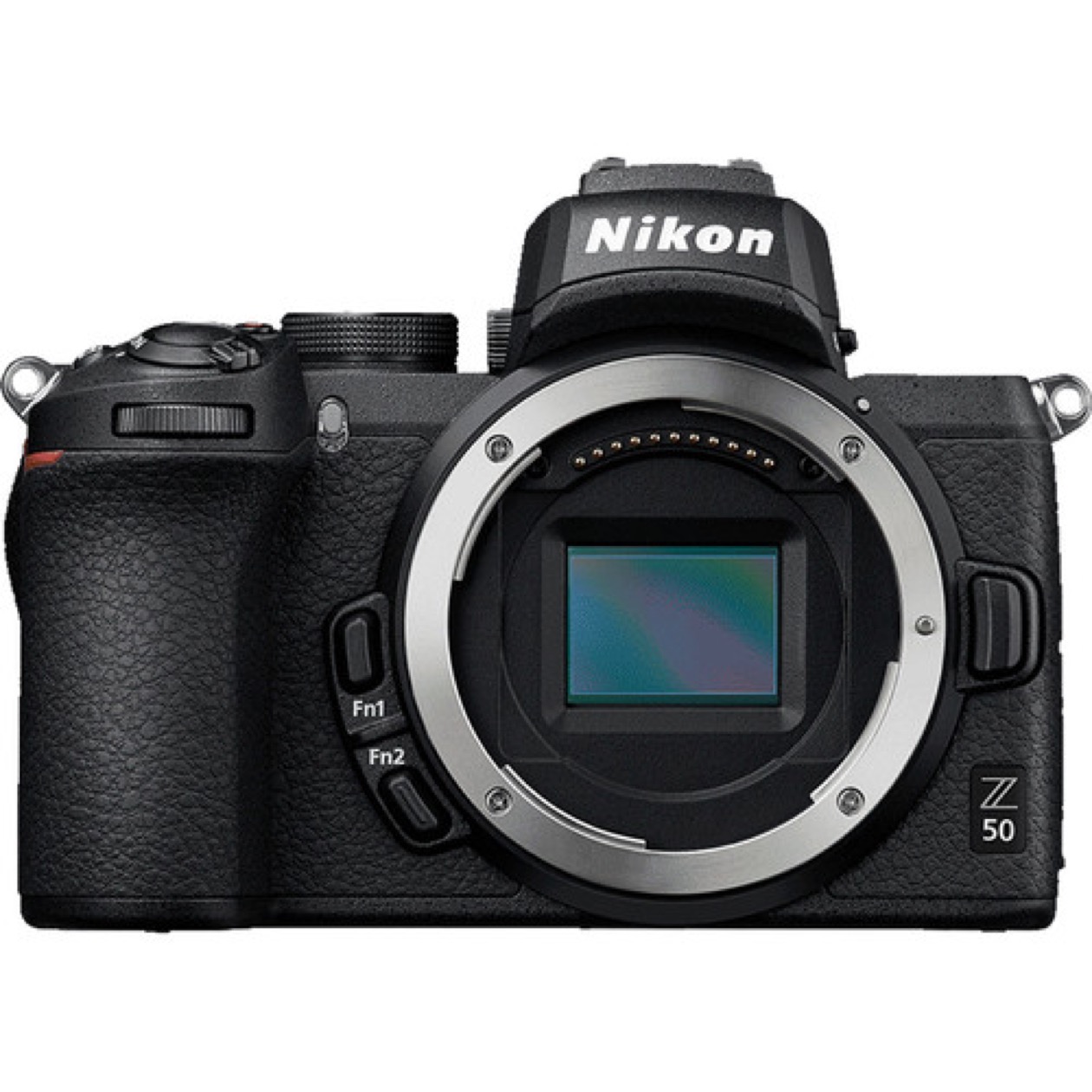
Body only, adapter kits and double kits
Note that cameras are also sold body only. That means no lens comes with the camera. Photographers who already own a set of lenses and only need a new "body" (as photographers call the camera without a lens) choose this option.
Certain kits include accessories as well as a lens. This matters when a maker introduces a new mount: older lenses can be fitted to the new cameras through an adapter, so Nikon, for example, has offered its Z mirrorless cameras in kits with the FTZ adapter for F-mount lenses. Our article on old lenses on the Nikon Z system shows what such an adapter can do.
There are also "double" kits, in which the camera comes with two lenses at once. As a rule, these are the universal kit lens and a compact telephoto zoom that brings distant objects much closer, such as the NIKKOR Z DX 50-250mm f/4.5-6.3 VR in Nikon's Z 50 double kit.
One camera can also be sold with different kit lenses, and the kit description must say which one is included. A DSLR might come with a compact 18-55 mm lens or with a larger 18-140 mm lens with a longer zoom range, for example. Check the lens name before you compare prices.
What makes a good kit lens?
A good kit lens is cheap, versatile, compact, modern and forgiving. Plenty of photographers began their creative path with a kit lens and associate it with a lot of emotions: first shoots, first mistakes, first successes. Yet photographers tend to blame their failures on the lens and credit their successes to their own skill alone, which is why kit lenses collect so much dismissive criticism. A kit lens is no obstacle to fine, high-quality pictures, and plenty of photographers prove it in practice. These are the key qualities a kit lens should have:
- Affordability. Until a person is immersed in photography, the advantages of expensive top-end lenses are not clear to them. They need something inexpensive to learn on and gain experience with.
- Versatility. Different lenses give different angles of view. A kit lens should let a beginner shoot both wide views and distant objects. A universal zoom can be used anywhere: family photos, reportage, travel, product and landscape photography.
- Compactness. As a photography teacher, I know how frequently beginners complain that their lens is too big and therefore awkward. Whatever the size of their lens, they always want it smaller and lighter. So kit lenses are not made large: they should fit easily into a handbag.
- Modern technology. Keen photographic artists happily use soft, 50-year-old primes with no zoom and no autofocus. A beginner who wants great shots at the press of one button is unlikely to enjoy that. So modern kit lenses get the latest technology, if in simplified form to keep the price down: they almost always have fast, completely silent autofocus suited to both photo and video, image stabilization and advanced optical designs.
- Forgiveness. A beginner will inevitably make mistakes setting up the camera, and in auto mode the automation sometimes makes them too. The lens can soften the consequences: optical stabilization greatly reduces the number of frames blurred by a wrongly set shutter speed and extends what the lens can do in poor light.

A slow maximum aperture is not a flaw in a kit lens. At wide apertures such as f/2.8 or f/1.8, depth of field becomes very shallow and it is easy to miss focus. A kit lens simply will not open that wide, so depth of field stays relatively deep, which hides focusing errors. For the same reason, no kit lens is suited to strong background blur. For that job, a specialized fast portrait lens or a professional zoom with an f/2.8 aperture is a far better buy, and our guide to prime lenses explains the options.
Is a kit lens good enough? A side-by-side sharpness test
A modern kit lens is good enough for most photography, and its weak point is the edge of the frame at the widest aperture. Certain kit lenses deserve to be bought on their own and used as a general-purpose lens. To check, we ran an express test: each lens shot the same scene at a middle focal length (50 mm on full frame, 35 mm on APS-C), once at its widest aperture, where every lens gives its weakest image, and once at f/8, where all modern lenses show their best sharpness.


Even at its widest aperture, the latest 18-55 mm kit lens gives enough sharpness in the center of the frame (look at the little stone house), while at the edges sharpness stays low even at f/8 (look closely at the details of the old wooden block). The table sums up the six Nikon kit lenses we tested in 2020: two for APS-C DSLRs, two for full-frame DSLRs and two for Z mirrorless cameras.
Editor's note. The equivalent column multiplies APS-C focal lengths by 1.5; the zoom ratio is the long end divided by the short end. The last column records whether the lens still appears on Nikon's global lineup pages for F-mount and Z-mount lenses on October 26, 2026.
| Lens | Camera type | Full-frame equivalent | Zoom ratio | What the test showed | On Nikon's lineup page, 2026 |
|---|---|---|---|---|---|
| AF-P DX NIKKOR 18-55mm f/3.5-5.6G VR | APS-C DSLR | 27-82.5 mm | 3.1x | Sharp center wide open, soft edges even at f/8; collapsible; silent AF-P motor | Not listed |
| AF-S DX NIKKOR 18-140mm f/3.5-5.6G ED VR | APS-C DSLR | 27-210 mm | 7.8x | A little sharper than the 18-55 wide open, center and edges; best in mid zoom | Listed |
| AF-S NIKKOR 24-85mm f/3.5-4.5G ED VR | Full-frame DSLR | 24-85 mm | 3.5x | Weak detail wide open on high-resolution bodies; much better at f/8 to f/11 | Listed |
| AF-S NIKKOR 24-120mm f/4G ED VR | Full-frame DSLR | 24-120 mm | 5x | Detail similar to the 24-85, soft corners; constant f/4 and more zoom | Listed |
| NIKKOR Z 24-70mm f/4 S | Full-frame mirrorless | 24-70 mm | 2.9x | Very fast, silent AF; no focus breathing; no lens VR (stabilization is in the camera) | Listed |
| NIKKOR Z DX 16-50mm f/3.5-6.3 VR | APS-C mirrorless | 24-75 mm | 3.1x | Better detail than the DSLR kit lenses; good flare resistance; f/6.3 at the long end | Listed |
APS-C DSLR kit lenses: 18-55 mm and 18-140 mm
A huge number of 18-55 mm kit lenses have been released since the dawn of digital photography. The latest generation gives far higher image quality than the 18-55 mm kit lenses of the 2000s. The one we tested has a collapsible design for extra compactness, and its key advantage is the AF-P stepping focus motor: the camera focuses quickly and accurately, and in video the focus drive leaves no sound on the recording. It has image stabilization too. There is also a version without optical stabilization: it lacks the letters VR in its name, which is how Nikon marks optical image stabilization. Both versions give the same image quality, and the one without stabilization is cheaper, but choose the stabilized version: in a lot of situations it saves frames from blur.
The 18-140 mm differs from the classic 18-55 mm in a much longer zoom range. If you frequently photograph distant subjects, shoot reportage or product photos, it is a good choice. The longer zoom made the lens bigger: by kit standards it is large, though it also looks more professional. The model is not new; it has been on the market since 2013, and its price has come down over that time. Its focus motor is an AF-S type, so the sound of the motor will be audible in video; the way around that is an external microphone, if the camera has a socket for one. It has a stabilizer, a major plus. In 2020 we rated it the best kit lens for Nikon's APS-C DSLRs: versatile, inexpensive and stabilized.

Full-frame DSLR kit lenses: 24-85 mm and 24-120 mm
Kit lenses designed for cropped cameras can, in Nikon's case, be mounted on full-frame cameras. But that way you will not use the camera's full potential: the picture is cropped to the DX format, or, if you turn the crop off, you simply see black areas at the edges of the frame. Our APS-C vs full frame guide explains why. So full-frame cameras get their own kit lenses.
The 24-85 mm is a compact, inexpensive lens released as the kit lens for full-frame DSLRs. It is a simple, versatile tool that handles most photographic tasks, with optical stabilization. On the downside, its detail is relatively weak, which shows clearly at wide apertures, especially on high-resolution cameras. Image quality improves easily when you stop down to f/8 to f/11. If you need an inexpensive and, above all, compact lens, this model will suit you.
The 24-120 mm f/4 is a more versatile and advanced model. It has a longer zoom range and a constant f/4 maximum aperture, an excellent figure for a kit lens, plus a stabilizer. It cannot claim record detail, especially in the corners, and in image quality it matches the 24-85 mm while adding zoom and the constant aperture. Zooms with wider apertures and better detail exist, but they cost far more and are unlikely to be sold as kit lenses. It performs well on cameras of up to 24 megapixels. It is frequently bought separately and used for professional work, because it offers excellent value, and its range lets this one lens replace two or three lenses with shorter zoom ranges.

Mirrorless kit lenses: 24-70 mm f/4 and 16-50 mm
Mirrorless cameras have their own lenses, designed to use their new capabilities and their new mount. The 24-70 mm f/4 is a compact universal lens for full-frame mirrorless cameras, with very fast and completely silent autofocus. It has no built-in optical stabilization, because the full-frame Z 6 and Z 7 cameras it shipped with stabilize the image in the camera by shifting the sensor. Unlike the DSLR lenses above, it has no focus breathing (a change in the angle of view as the focusing distance changes). This small all-rounder is a worthy first, and perhaps only, lens for your camera. It is good for any task, and it is especially handy for travel because it is compact and light: Nikon lists it at about 500 g (1 lb 1.7 oz).
The 16-50 mm was Nikon's newest kit lens in 2020, released with the company's first DX-format mirrorless camera, the Z 50. Collapsed, it is so compact that it deserves the name "pancake", and compactness is what plenty of amateur photographers want. Despite its small size, it gives excellent detail, higher than the DSLR kit lenses. It also resists flare well, which has always been a problem for kit lenses, and its wider 16 mm angle of view is useful for reportage and landscapes.
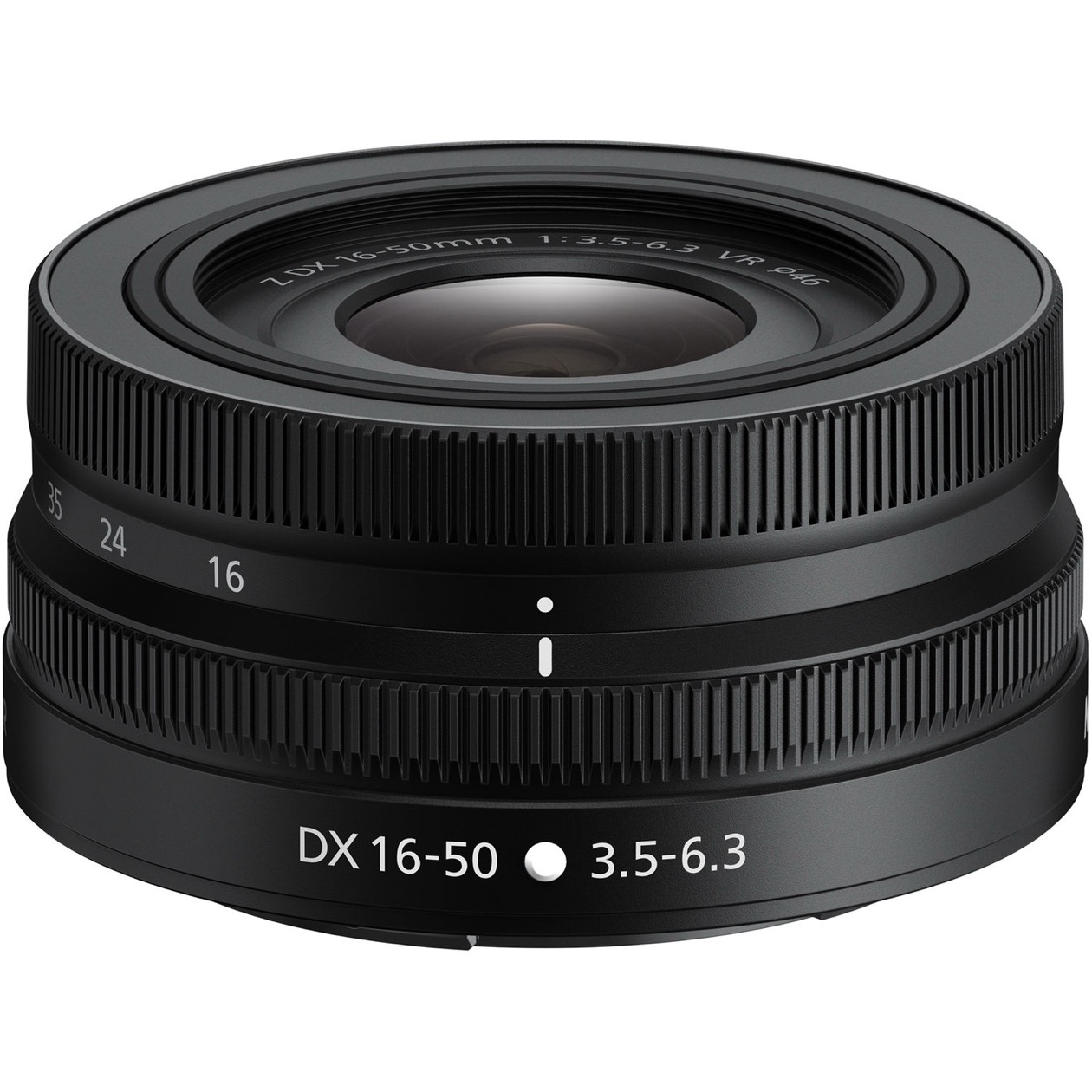
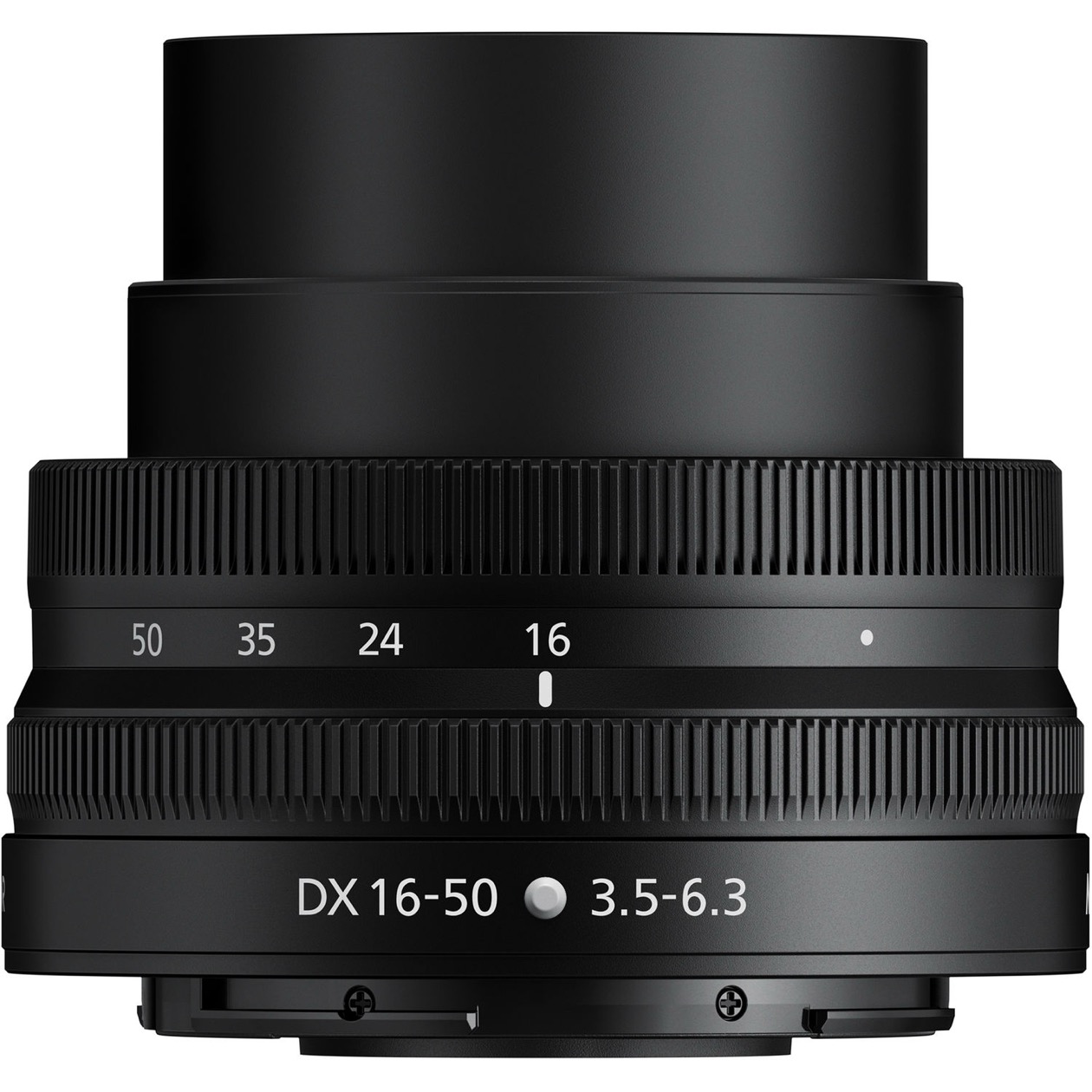
Editor's note: the 16-50 mm in 2026. Nikon still lists the NIKKOR Z DX 16-50mm f/3.5-6.3 VR. Its current specifications: a weight of about 135 g (4.8 oz), a 24-75 mm full-frame equivalent angle of view, a 0.2 m (0.66 ft) minimum focus distance, a 46 mm filter thread, and stabilization rated at 4.5 stops. The same recipe shows up outside Nikon: Fujifilm calls its XC15-45mmF3.5-5.6 OIS PZ the smallest and lightest zoom for its X series, at 135 g, 23-69 mm equivalent and 44.2 mm long when collapsed. When you buy filters for a kit lens, check its thread size first; our lens filters guide explains the markings.
Does f/6.3 instead of f/5.6 matter?
Hardly: the difference is about a third of a stop, and the brightness change is barely visible. The 16-50 mm has a slow maximum aperture at full zoom, f/6.3, the price of its compactness. That is only 0.3 EV less than the familiar f/5.6. To the eye, the difference in brightness between frames shot at those two apertures is barely visible and will certainly not be a fundamental limitation for a photographer. We checked the f/5.6 vs f/6.3 difference, with all other settings unchanged, on an 18-140 mm lens mounted on a Z 50 through the FTZ adapter.


Editor's note: the math. The difference in stops between two f-numbers is 2 × log2(6.3 ÷ 5.6) = 0.34 EV, about a third of a stop. One EV is a doubling of the light, as the exposure value entry explains.
Should you keep the kit lens or upgrade?
Keep it until a specific limit stops you. A kit lens is almost always a photographer's first lens, and you can get superb frames with a modern one. As always, what matters most is not which lens is on your camera but your inspiration and your wish to create.
Editor's note: our verdict. Upgrade for a reason you can name. Here is what we recommend for each limit:
| What holds you back | What to buy | Why |
|---|---|---|
| Nothing yet: first camera | A camera kit with its kit lens | Cheaper than body plus lens bought separately |
| Distant subjects: sports, animals | A telephoto zoom, or a double kit from the start | Covers what the kit zoom cannot reach |
| Changing lenses on trips | A superzoom such as an 18-140 mm on APS-C or a 24-120 mm f/4 on full frame | One lens replaces two or three |
| Low light, background blur | A 35 mm f/1.8 on APS-C or a 50 mm f/1.8 on full frame | About three stops brighter than f/5.6 |
| Frame edges, detail on a high-resolution body | A professional 24-70 mm f/2.8 zoom | Better detail and a wider constant aperture |
Before you buy, follow these steps:
- Find the limit. Look through your recent photos and note which shots failed and why: too far away, too dark, background too busy.
- Check the focal lengths. See which end of the zoom you use most; the types of camera lenses guide maps focal lengths to uses.
- Match the mount and format. Buy lenses for your camera's mount, and prefer full-frame lenses only if you plan to move to a full-frame body.
- Keep the kit lens anyway. It stays a light, versatile travel lens and a useful backup.
Our verdict: For a first camera, buy the kit: the lens costs little extra and modern kit zooms are sharp at f/8, stabilized and quiet. Upgrade only for a named limit: reach (telephoto zoom), range (superzoom) or light and background blur (a fast 35 mm or 50 mm prime). For specific bodies, our list of mirrorless cameras under $1,000 dates from 2021, so check that each model is still sold.
Frequently asked questions
- What is a kit lens?
- A kit lens is the inexpensive general-purpose zoom that a manufacturer sells in one box with a camera, as an official bundle. Today it is usually a compact standard zoom such as an 18-55 mm or 16-50 mm on APS-C, or a 24-70 mm on full frame. The kit is always noticeably cheaper than buying the same camera and lens separately.
- Is a kit lens good enough?
- For learning, travel and everyday photos, yes. A modern kit lens has fast, quiet autofocus and usually image stabilization, and it covers wide views and moderately distant subjects. Its limits are a slow maximum aperture, which makes strong background blur hard, and soft frame edges at wide apertures. Stopping down to around f/8 brings most kit lenses to their sharpest.
- Should I buy a camera with the kit lens or body only?
- Buy the kit if this is your first camera or you own no lenses for that mount: the bundle costs noticeably less than the camera and lens bought separately. Buy body only if you already own lenses that fit, or plan to buy a better zoom or a prime straight away. The body-only option exists for exactly those photographers.
- What is a double kit?
- A double kit is a bundle with two lenses instead of one: usually the general-purpose kit zoom plus a compact telephoto zoom for distant subjects, such as a 50-250 mm for an APS-C camera. It suits beginners who already know they want to photograph sports, animals or other faraway subjects as well as everyday scenes.
- Can you use an APS-C kit lens on a full-frame camera?
- On Nikon cameras you can mount a DX (APS-C) kit lens on a full-frame body, but you will not use the full sensor. The camera crops the picture to the DX format, or, if you switch that crop off, you get black areas at the edges of the frame. That is why full-frame cameras come with their own kit lenses, such as 24-70 mm zooms.
- What lens should I buy after the kit lens?
- Buy for the limit you keep hitting. If you need more reach, add a telephoto zoom. If you want more range in one lens, choose a superzoom such as an 18-140 mm. If you want blurred backgrounds and better low-light shots, add a fast prime: a 35 mm f/1.8 on APS-C or a 50 mm f/1.8 on full frame, both about three stops brighter than a kit zoom.
Sources
- Kit lens, Wikipedia contributors (2026)
- NIKKOR Z DX 16-50mm f/3.5-6.3 VR specifications, Nikon Corporation (2026)
- NIKKOR Z 24-70mm f/4 S specifications, Nikon Corporation (2026)
- Z mount lenses lineup, Nikon Corporation (2026)
- F mount lenses lineup, Nikon Corporation (2026)
- XC15-45mmF3.5-5.6 OIS PZ specifications, Fujifilm (2026)
- Exposure value, Wikipedia contributors (2026)
Originally published on Prophotos.ru.