What is a prime lens? Prime vs zoom in 2026
by Georgy Romanov · Photography Tips
As an Amazon Associate I earn from qualifying purchases. Links to Amazon on this page are affiliate links.
In short: A prime lens has one fixed focal length, so it cannot zoom. In exchange it is sharper, faster and frequently lighter than a zoom of similar quality. A 50 mm f/1.8 gathers more than three stops more light than a kit zoom at 50 mm. Buy a 50 mm prime for a full-frame camera, a 35 mm prime for APS-C, and an 85 mm when you want a portrait lens.
Zoom lenses are prized for convenience and versatility, yet a photographer's life holds plenty of situations in which a prime, a lens with a fixed focal length, beats a zoom. It is also the most common answer to the question of which lens to buy to replace or complement the kit lens that came with your camera.
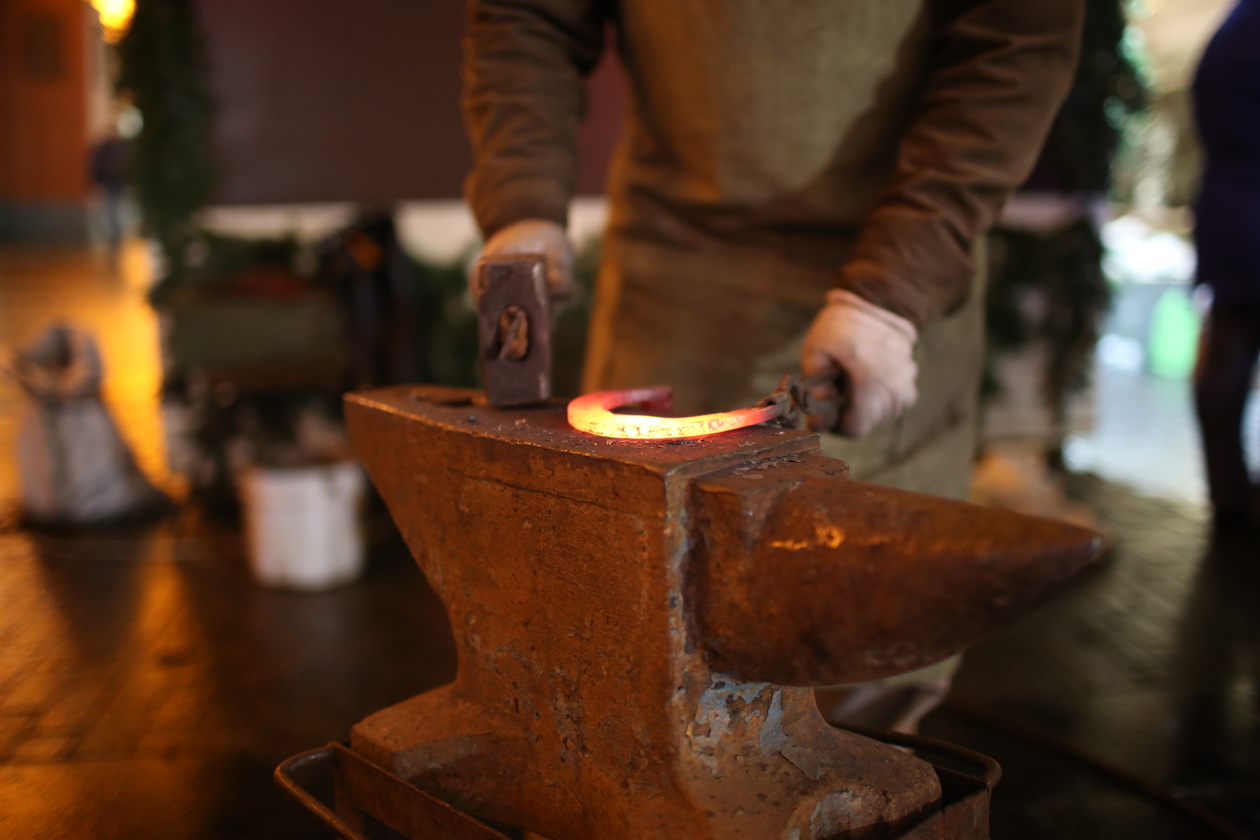
What is a prime lens?
A prime lens is a lens with a fixed focal length: a 35 mm lens is always 35 mm, and a 50 mm lens is always 50 mm. It cannot change its angle of view or "zoom in and out", so you frame the shot by moving closer or farther away. A zoom lens, by contrast, has a variable focal length. Photographers also call primes "fixed lenses" or simply "fixes", and the most famous prime of all, the 50 mm lens, has its own nickname: the "fifty".
Editor's note. The term has a second, older meaning in optics, the main lens in a combination system, but in everyday photography "prime" means fixed focal length. Primes are typically fast, with a maximum aperture from f/2.8 to f/1.2, according to the prime lens entry on Wikipedia.
Prime vs zoom lens: what does a prime do better?
Whichever way you look at it, even an inexpensive prime is not inferior in image quality to the most expensive zoom. Quality here means not only equally high sharpness across the whole frame and at every aperture, but also the level of distortion, vignetting and other aberrations. Beyond that, primes are lighter, smaller and faster, and the last point is far from trivial.
For example, a standard kit zoom at 50 mm has a maximum aperture of f/5.6. Any 50 mm prime opens to f/1.8 or wider. That is more than three stops of exposure! To make it concrete: where the kit lens would need ISO 3200, a prime like this lets you shoot at a sensitivity below ISO 400.
Editor's note: the stops, computed. One stop doubles the light, and the difference in stops between two f-numbers is 2 × log2(N1 ÷ N2). The ISO column shows what the kit zoom's ISO 3200 at f/5.6 becomes at each aperture, at the same shutter speed: 3200 × (N ÷ 5.6)². Our guide to aperture and f-stops explains the f-number scale.
| Aperture | Stops brighter than f/5.6 | ISO needed instead of ISO 3200 |
|---|---|---|
| f/4 (quality standard zoom) | 0.97 | 1633 |
| f/2.8 | 2.0 | 800 |
| f/2 | 2.97 | 408 |
| f/1.8 | 3.27 | 331 |
| f/1.4 | 4.0 | 200 |
| f/1.2 | 4.44 | 147 |
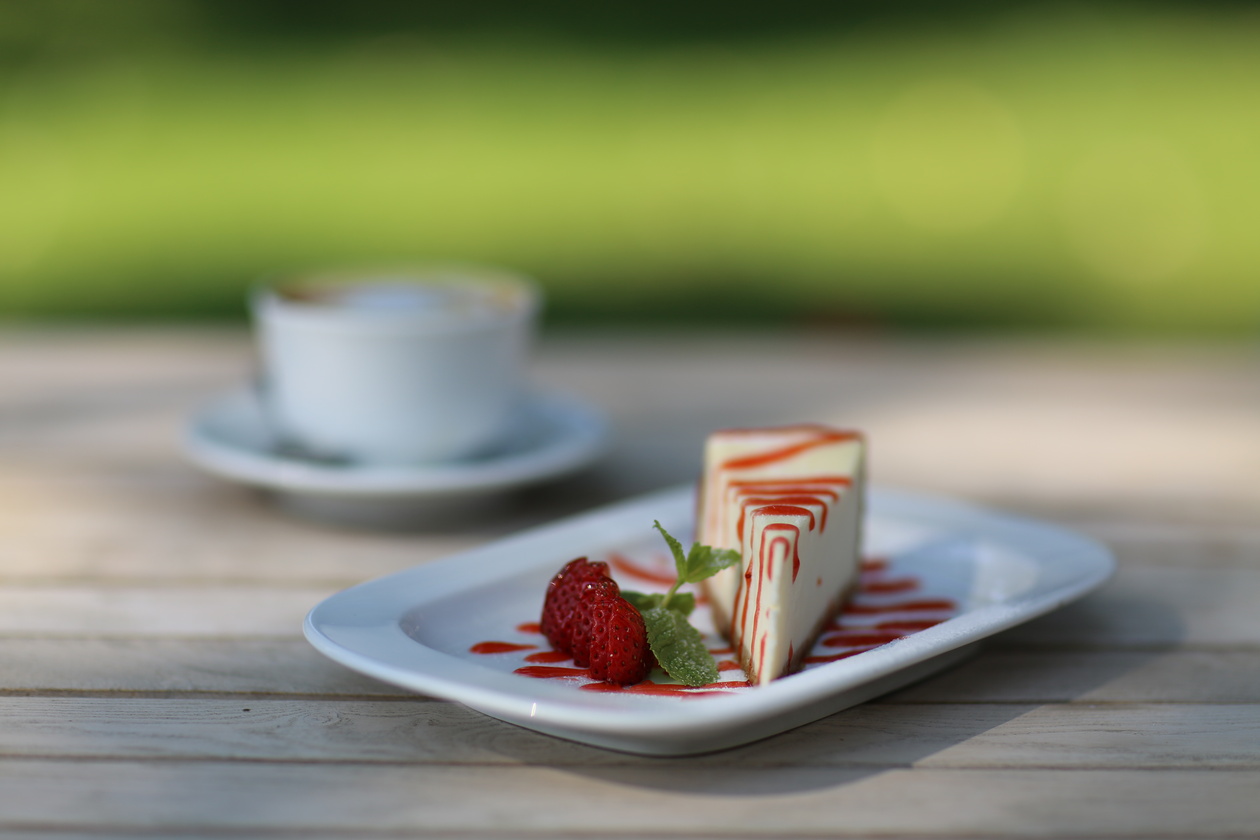
A second advantage of a wide aperture is shallower depth of field. With a thinner zone of sharpness you can make more emotional and interesting pictures by putting the accent on one plane of the scene and blurring the rest beautifully. A prime also develops a creative approach to photography: it limits your choice of subjects, and it makes you think harder about where to put the accents in the frame.

Are primes really lighter? Editor's note with today's specifications
The claim that primes are lighter holds against zooms of comparable quality, not against the smallest kit zooms. We took weights from the manufacturers' current specification pages.
| Lens | Type | Maximum aperture | Weight |
|---|---|---|---|
| Nikon AF-S NIKKOR 50mm f/1.8G | Full-frame prime (DSLR) | f/1.8 | 185 g (6.6 oz) |
| NIKKOR Z 40mm f/2 | Full-frame prime (mirrorless) | f/2 | 170 g (6 oz) |
| NIKKOR Z 50mm f/1.8 S | Full-frame prime (mirrorless) | f/1.8 | 415 g (14.7 oz) |
| Fujifilm XF35mmF1.4 R | APS-C prime | f/1.4 | 187 g (6.6 oz) |
| NIKKOR Z 24-70mm f/4 S | Full-frame standard zoom | f/4 | 500 g (1 lb 1.7 oz) |
| NIKKOR Z DX 16-50mm f/3.5-6.3 VR | APS-C kit zoom | f/3.5-6.3 | 135 g (4.8 oz) |
The Z 40mm f/2 weighs about a third of the Z 24-70mm f/4 S (170 ÷ 500 = 0.34) and is two stops faster (2 × log2(4 ÷ 2) = 2). The tiny collapsible kit zoom is lighter than any of these primes, but at 50 mm it stops at f/6.3, 3.6 stops slower than f/1.8. Premium primes such as the Z 50mm f/1.8 S give up part of the weight advantage: Nikon designed that lens for sharp detail across the entire frame.
Which prime lens should you choose?
Choosing a prime can truly make your head spin: in the range from 18 to 55 mm alone there can be at least six of them. Where to start? Not long ago, in the film era, most cameras came with a 50 mm prime, the "fifty". That focal length is considered "normal", meaning it gives an angle of view roughly equal to the field of view of the human eye, and more experienced photographers frequently recommend buying a fifty to go with a standard zoom. There is a good deal of truth in that advice.
Editor's note: prime focal lengths on each format, computed. Multiply the focal length by the format's crop factor to get the full-frame equivalent: 1.5 for most APS-C cameras, 1.6 for Canon APS-C and 2 for Micro Four Thirds, per the crop factor table. Our APS-C vs full frame guide explains why.
| Prime type | Full frame | APS-C (× 1.5) | Micro Four Thirds (× 2) |
|---|---|---|---|
| Moderate wide angle | 35 mm (or 30 mm) | 23 mm = 34.5 mm equiv. | 17 mm = 34 mm equiv. |
| Wide angle | 20 mm | 14 mm = 21 mm equiv. | 14 mm = 28 mm equiv. |
| Normal | 50 mm | 35 mm = 52.5 mm equiv. | 25 mm = 50 mm equiv. |
| Portrait | 85 mm | 56 mm = 84 mm equiv. | 45 mm = 90 mm equiv. |
The classic 50 mm lens
The 50 mm was originally the general-purpose focal length for full frame, and in the film era most interchangeable-lens cameras came with exactly this lens. Inexpensive 50 mm primes, such as the Nikon AF-S NIKKOR 50mm f/1.8G and the equivalent f/1.8 fifties from other makers, share a lot: they follow the optical designs that are "classic" for such lenses, they are simple, and they are optically superb.
On a cropped sensor, though (and most amateur cameras use APS-C or even Four Thirds sensors), the crop factor turns them into moderate telephotos with an equivalent focal length of 75 to 100 mm. That is an ideal focal length for medium and moderately tight portraits, and the pleasant background blur these lenses give helps the photographer too. So on a cropped sensor, a 50 mm lens is an almost ideal portrait lens.

If your camera is not full frame, we recommend trying this focal length with the lens you already own before buying a 50 mm. Set your kit lens to 50 mm, judge the angle of view, and shoot like that for a day or two. If it does not feel uncomfortable, go ahead and buy one of the inexpensive fifties for your system; you will not regret it. If that focal length feels limiting, you should most likely look at 35 mm lenses. On amateur DSLRs and mirrorless cameras with an APS-C sensor, these lenses are "normal", giving an angle of view roughly equal to that of the human eye.
Normal primes for APS-C cameras: the 35 mm
On an APS-C camera, a 35 mm prime such as the Nikon AF-S DX NIKKOR 35mm f/1.8G or the Fujifilm XF35mmF1.4 R becomes a "standard" lens with a familiar angle of view. Fujifilm lists the XF35mmF1.4 R as 53 mm in 35 mm-format equivalent, which matches 35 × 1.5 = 52.5 mm.
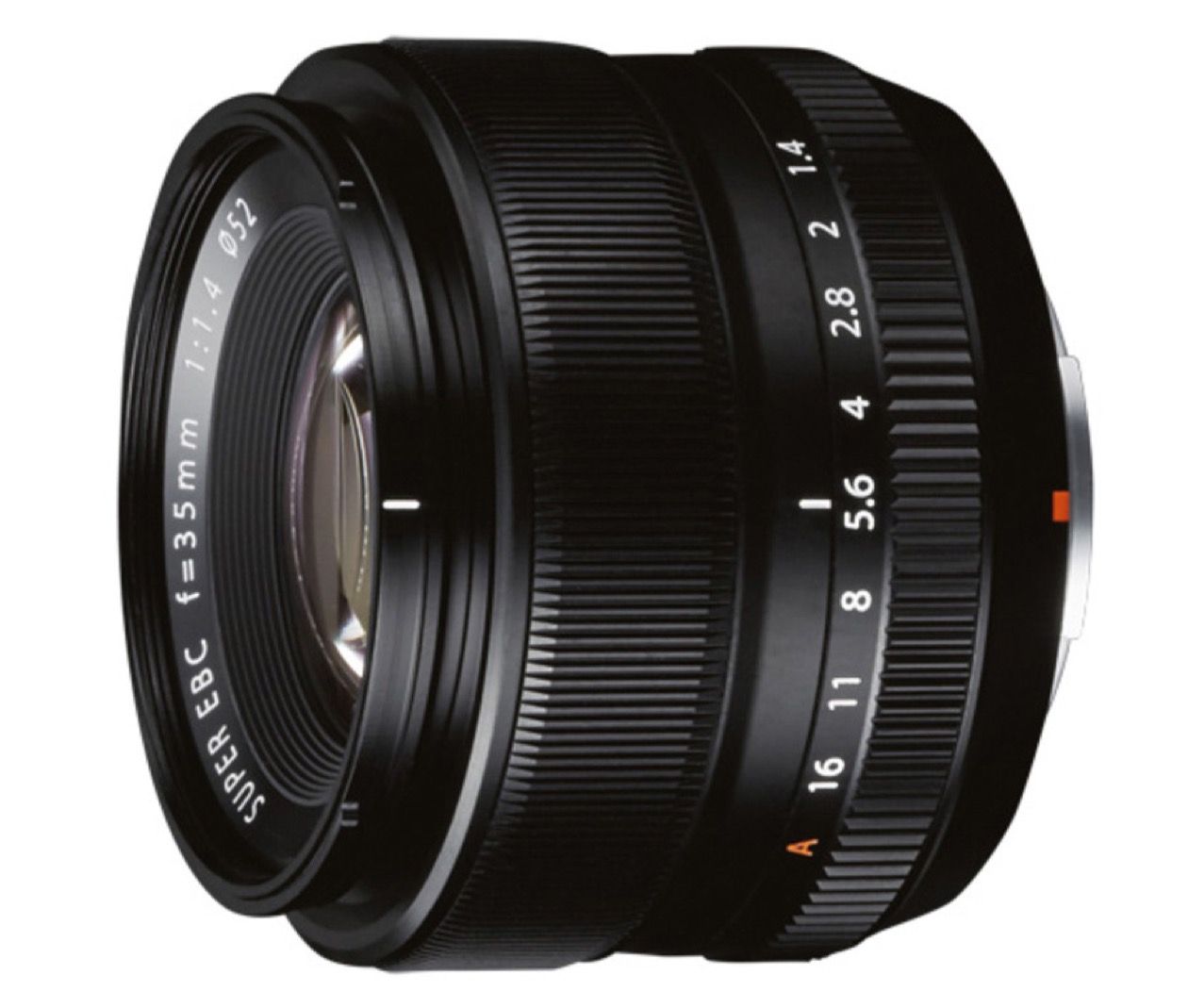
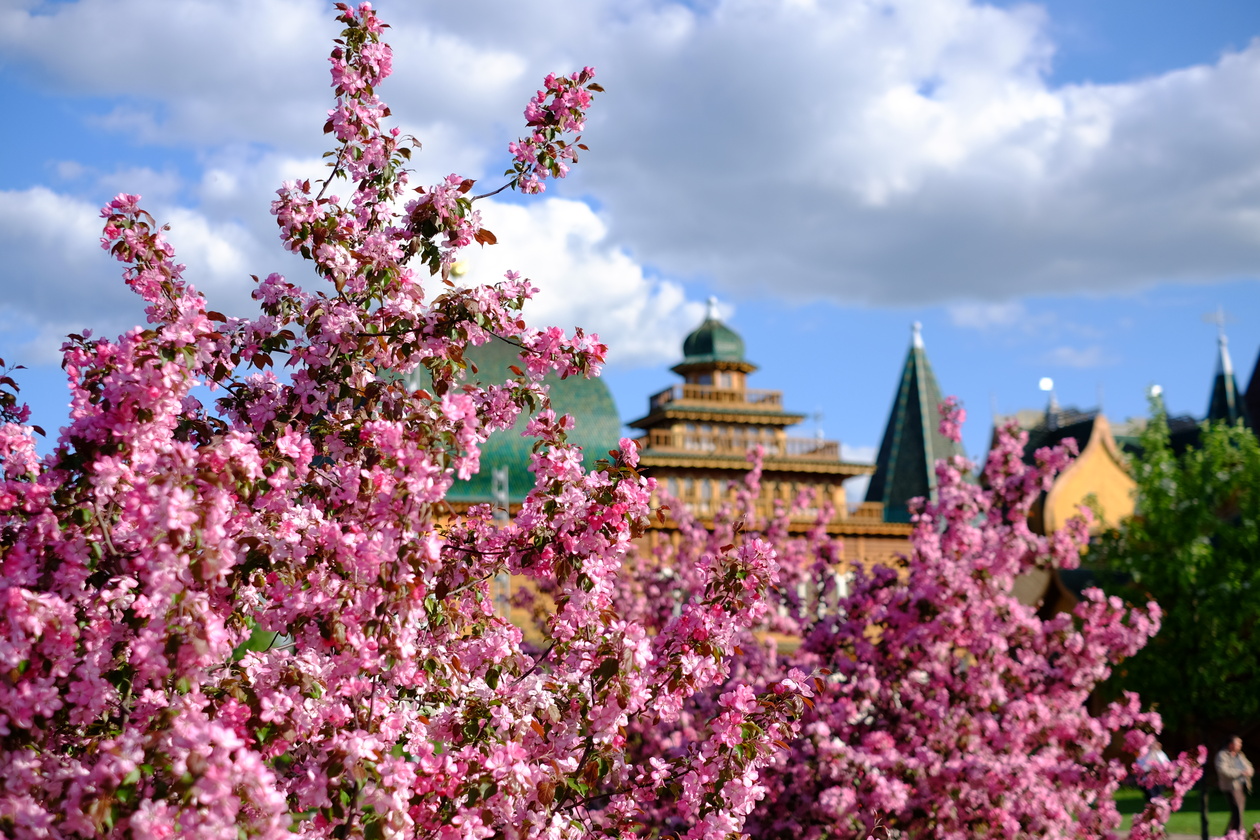
The range of subjects these lenses handle is wide, so plenty of amateur photographers prefer this focal length for everyday shooting. It lets you stay a little apart, without shooting too tight, and still be in the thick of things. That matters most in genre and street photography, in travel photography and in reportage. These lenses are also excellent for full-length and waist-up portraits. The one thing such a lens cannot do is fit everything happening around you into the frame. Moderate wide-angle lenses handle that job.

Moderate wide-angle primes
If you want to give people more room in the frame, so that your photos "breathe" and convey the atmosphere and the space around, your choice is a 35 mm or even a 30 mm lens on full frame, or its equivalent on a cropped sensor: about 23 or 24 mm on APS-C (34.5 to 36 mm equivalent) and 17 mm on Micro Four Thirds (34 mm equivalent).
Wide-angle primes
Wide-angle lenses are another group of primes, with focal lengths around 20 mm on full frame and around 14 to 16 mm on APS-C. The Fujifilm XF14mmF2.8 R, for example, frames like a 21 mm lens on full frame. The undoubted strength of wide-angle lenses is their ability to convey dynamics on a flat image. Thanks to the wider view, it is fairly easy to get expressive pictures, and playing with the shooting position only strengthens the effect. These lenses are excellent for landscapes, architecture and sports, and of course for anyone who likes photographing themselves in front of the sights. The wide-angle lens guide covers how to use them.
Portrait primes
No discussion of primes can skip the classic portrait lenses: inexpensive 85 mm f/1.8 primes on full frame, and their equivalents on smaller sensors, such as 45 mm f/1.8 primes on Micro Four Thirds and 56 mm f/1.2 primes on APS-C. All of them share a fast maximum aperture, made not so much for shooting in poor light as for creating a beautiful background blur: bokeh.
Another trait of portrait lenses is a relatively long focal length, real or equivalent. It renders the features of the face and body without optical distortion, and the optical designs of these lenses are calculated so that at the widest aperture the skin looks natural and smoother. The 85mm lens guide goes deeper into the portrait focal length.
How do you find "your" focal length?
The hardest thing about primes is finding your own focal length. You will hear plenty of arguments for and against each one. Listen to all of them, but decide based only on your own reasons. For a long time, the moderately wide 35 mm on full frame was considered a kind of starting point for photographers. It became popular because it captures events and people in everyday life from a balanced middle-ground point of view.
If you have a standard zoom, simply practice:
- Fix the zoom. Set 28 mm on an APS-C camera or 35 mm on full frame, and forget that you have a zoom at all.
- Shoot for a while. Over time you may want a wider angle, or a narrower one.
- Check your data. A second method is to collect data from your own photos with analyzer programs, which read the EXIF information of your pictures and plot it as charts. There you can see which focal length you use most.
- Buy the prime that matches. With those two answers, you can pick the prime that best fits your goals.
Verdict: which prime lens should you buy first?
Editor's note: our verdict. The world of primes is rich, but you do not need the whole set to enjoy it: owning a single prime is enough. Here are the buying tiers we recommend, by camera format and use.
| You shoot with | First prime | Why |
|---|---|---|
| Full frame, everyday and travel | 50 mm f/1.8 | The classic normal lens, light and inexpensive |
| Full frame, street and reportage | 35 mm f/1.8 | Moderate wide angle, the long-standing starting point |
| Full frame, portraits | 85 mm f/1.8 | Natural facial proportions and soft bokeh |
| APS-C, everyday | 35 mm f/1.8 or f/1.4 | The normal lens for APS-C, about 52.5 mm equivalent |
| APS-C, portraits | 50 mm f/1.8 | Frames like a 75 mm lens on full frame |
| Micro Four Thirds, everyday | 25 mm f/1.8 | 50 mm equivalent |
| Micro Four Thirds, portraits | 45 mm f/1.8 | 90 mm equivalent |
Our pick: if you have only a kit zoom, the best first prime is the inexpensive normal lens for your format: a 50 mm f/1.8 on full frame, a 35 mm f/1.8 on APS-C, a 25 mm f/1.8 on Micro Four Thirds. Run the 50 mm test on your kit zoom first; if the view feels tight, go one step wider.
You can take the advice of seasoned photographers and choose a fifty, or trust your inner voice and start looking at the world through a wider angle. Whatever you choose, a prime will become an indispensable helper and change the way you look at the world and at photography as a whole. If you are still deciding between a prime and a better zoom, our guides to types of camera lenses and the kit lens set out the trade-offs.
Frequently asked questions
- What is a prime lens?
- A prime lens is a lens with one fixed focal length, such as 35 mm or 50 mm, so it cannot zoom. To change the framing you move closer or farther away. In exchange, primes are typically faster than zooms, with maximum apertures from about f/2.8 to f/1.2, and even inexpensive primes match the image quality of expensive zooms.
- Prime vs zoom lens, which is better?
- A zoom is better for convenience: one lens covers wide views and distant subjects. A prime is better for image quality, low light and background blur. A 50 mm f/1.8 prime gathers more than three stops more light than a kit zoom at 50 mm and f/5.6, so where the zoom needs ISO 3200, the prime gets by with under ISO 400.
- What is a 50mm lens good for?
- On a full-frame camera a 50 mm lens is the classic normal lens, with an angle of view close to human vision, good for everyday shooting, travel and full-length portraits. On an APS-C or Micro Four Thirds camera, the crop factor turns it into a short telephoto of 75 to 100 mm equivalent, an almost ideal portrait lens with soft background blur.
- Should I buy a 35mm or a 50mm prime lens?
- Test first. Set your kit zoom to 50 mm and shoot only at that setting for a day or two. If the view does not feel limiting, a 50 mm prime will suit you. If it feels too tight, choose a 35 mm lens, which is the normal lens on APS-C cameras and a moderate wide angle on full frame, popular for street, travel and reportage.
- Why are prime lenses better in low light?
- Primes have wider maximum apertures. Each full stop doubles the light, and f/1.8 is 3.3 stops brighter than f/5.6, the aperture of a typical kit zoom at its long end. That lets you use a faster shutter speed or a lower ISO, roughly ISO 330 instead of ISO 3200, for the same exposure, with less noise and less motion blur.
- What are the disadvantages of a prime lens?
- A prime cannot change its angle of view, so you must move to frame the shot, and one prime cannot cover both wide scenes and distant subjects. Covering a full range takes two or more primes, which costs more and means changing lenses. A premium fast prime can also outweigh a small kit zoom: Nikon lists 415 g for its NIKKOR Z 50mm f/1.8 S and 135 g for its Z DX 16-50mm kit zoom.
Sources
- Prime lens, Wikipedia contributors (2026)
- Crop factor, Wikipedia contributors (2026)
- AF-S NIKKOR 50mm f/1.8G specifications, Nikon Corporation (2026)
- NIKKOR Z 40mm f/2 specifications, Nikon Corporation (2026)
- NIKKOR Z 50mm f/1.8 S specifications, Nikon Corporation (2026)
- NIKKOR Z 24-70mm f/4 S specifications, Nikon Corporation (2026)
- NIKKOR Z DX 16-50mm f/3.5-6.3 VR specifications, Nikon Corporation (2026)
- XF35mmF1.4 R specifications, Fujifilm (2026)
- XF14mmF2.8 R specifications, Fujifilm (2026)
Originally published on Prophotos.ru.