What is a wide-angle lens? How to use one
by Konstantin Voronov and Renat Mansurov · Photography Tips
As an Amazon Associate I earn from qualifying purchases. Links to Amazon on this page are affiliate links.
In short: A wide-angle lens is any lens shorter than a normal lens: 35 mm or less on full frame. Below 24 mm on full frame (about 15 mm on APS-C) it becomes ultra-wide, covering more than 80 degrees diagonally. Use it to fit a cramped room or a whole landscape into the frame, and get close to your foreground, or everything ends up small.
This is a guide to shooting with wide and ultra-wide lenses, from the 14 mm zoom on a full-frame camera to the ultra-wide module on a phone. The same rules apply to both: the main camera on nearly every current smartphone is a wide-angle lens, and the second camera is usually an ultra-wide one. Learn how a wide lens treats space and perspective, and both work for you.
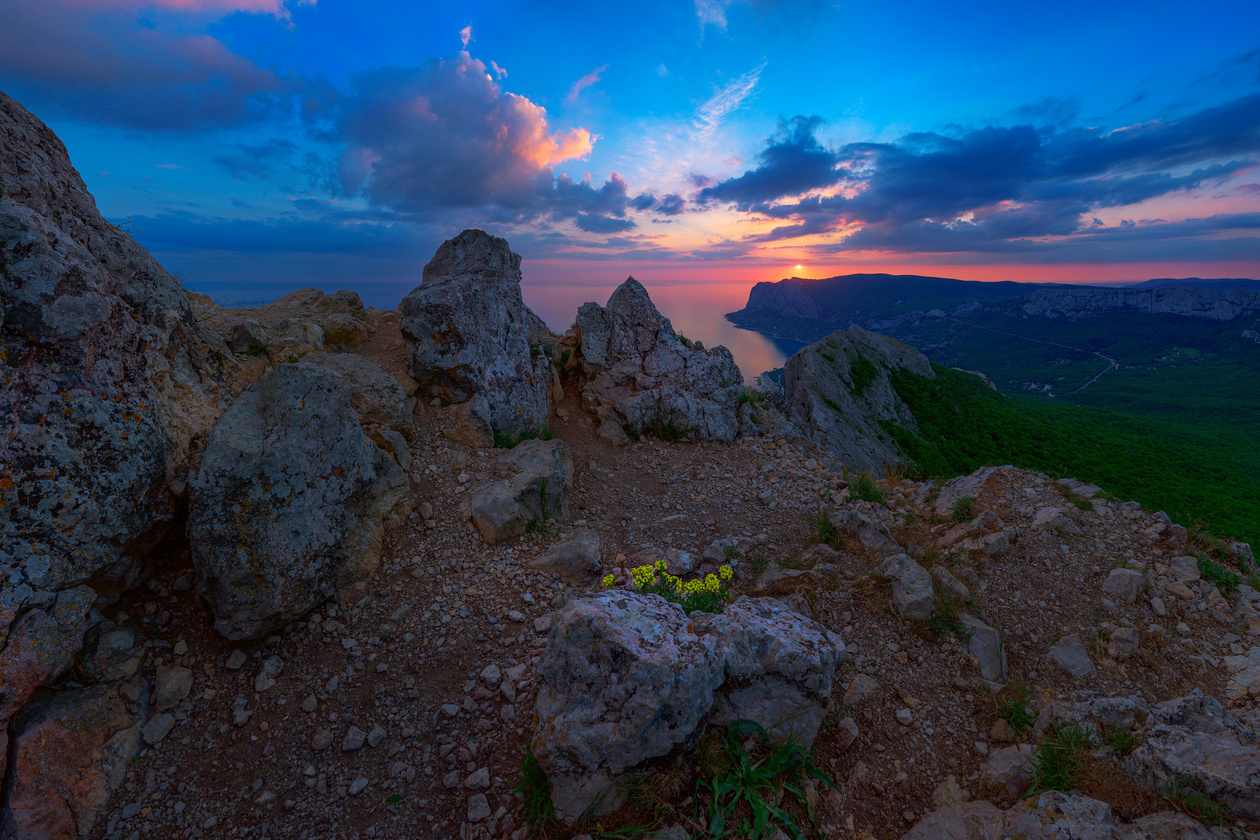
What is a wide-angle lens?
A wide-angle lens has a focal length noticeably shorter than a normal lens, so it takes in a wider angle of view. An ultra-wide lens, for a full-frame camera, is one shorter than 24 mm with an angle of view above 80 degrees across the frame diagonal. On an APS-C camera, the same class starts at about 15 mm.
Editor's note: wide, ultra-wide and normal. On full frame, whose 36 x 24 mm frame has a 43.3 mm diagonal, the normal lens adopted by most makers is 50 mm, and by custom a lens of 35 mm or less counts as wide-angle, with ultra-wide starting below 24 mm. On APS-C, divide by the crop factor of 1.5: wide-angle is about 23 mm or shorter and ultra-wide about 15 mm or shorter. The APS-C vs full frame guide explains the crop factor in full, and the types of camera lenses overview places wide lenses among the other classes.
Angle of view by focal length
Editor's note. The table gives the diagonal angle of view, computed as 2 × arctan(sensor diagonal ÷ (2 × focal length)), for full frame (43.27 mm diagonal) and APS-C (23.5 x 15.6 mm, 28.21 mm diagonal). The last column is the full-frame focal length that frames the same way as the APS-C lens (focal length × 1.5).
| Focal length | Full frame | APS-C | APS-C frames like |
|---|---|---|---|
| 10 mm | 130.4° | 109.3° | 15 mm |
| 14 mm | 114.2° | 90.4° | 21 mm |
| 16 mm | 107.0° | 82.8° | 24 mm |
| 18 mm | 100.5° | 76.2° | 27 mm |
| 20 mm | 94.5° | 70.4° | 30 mm |
| 24 mm | 84.1° | 60.9° | 36 mm |
| 28 mm | 75.4° | 53.5° | 42 mm |
| 35 mm | 63.4° | 43.9° | 52.5 mm |
| 50 mm | 46.8° | 31.5° | 75 mm |
The numbers show why the 24 mm line matters: at 24 mm full frame passes 80 degrees (84.1°), and on APS-C a 15 mm lens reaches 86.5°. A 16 mm lens that covers 107.0° on full frame covers only 82.8° on an APS-C body, so full-frame ultra-wides lose much of their reach on a crop camera. That is why makers design separate ultra-wide lenses for APS-C, typically starting at 10 mm.
Wide-angle vs normal lens: the same room at 50 mm and 14 mm
The wide lens wins whenever you cannot step back. Indoors you want a wider view, but a wall or a piece of furniture stops you. That is where an ultra-wide lens earns its place in wedding, reportage and interior photography.
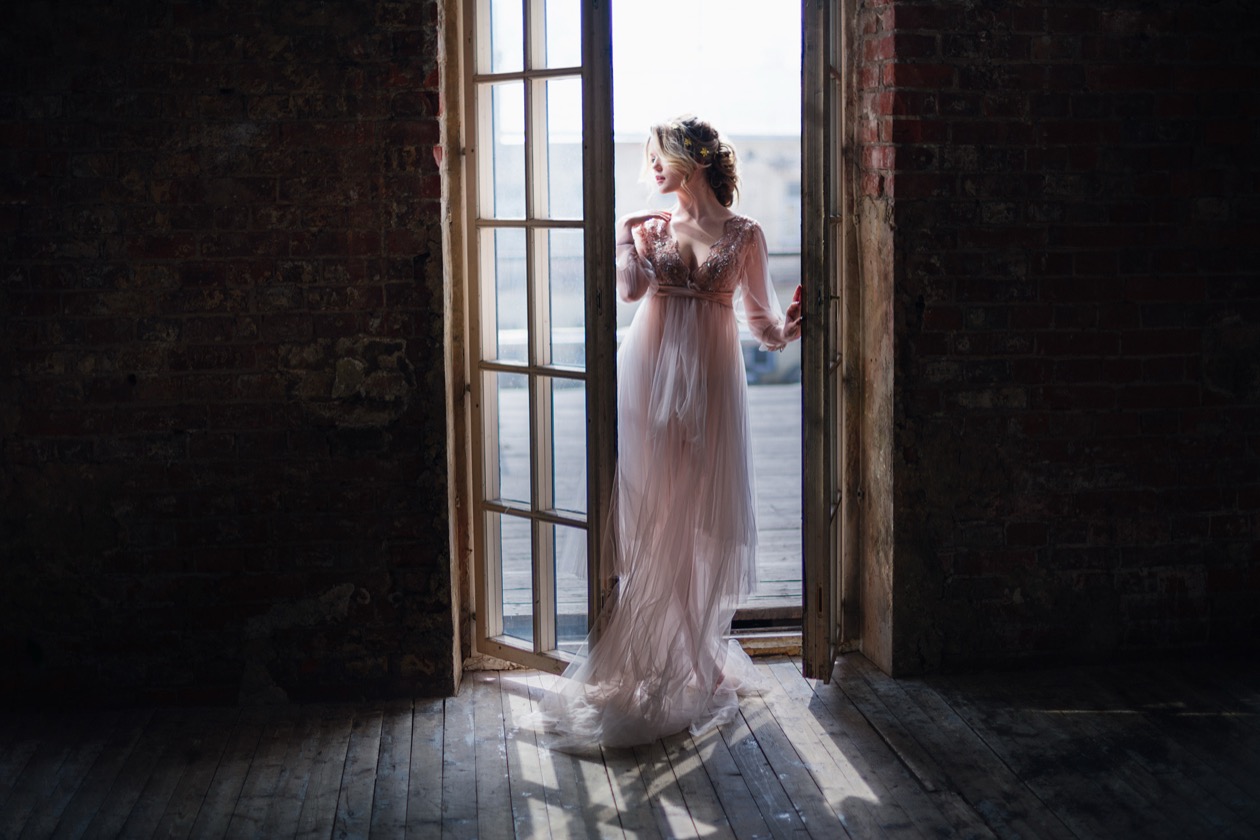
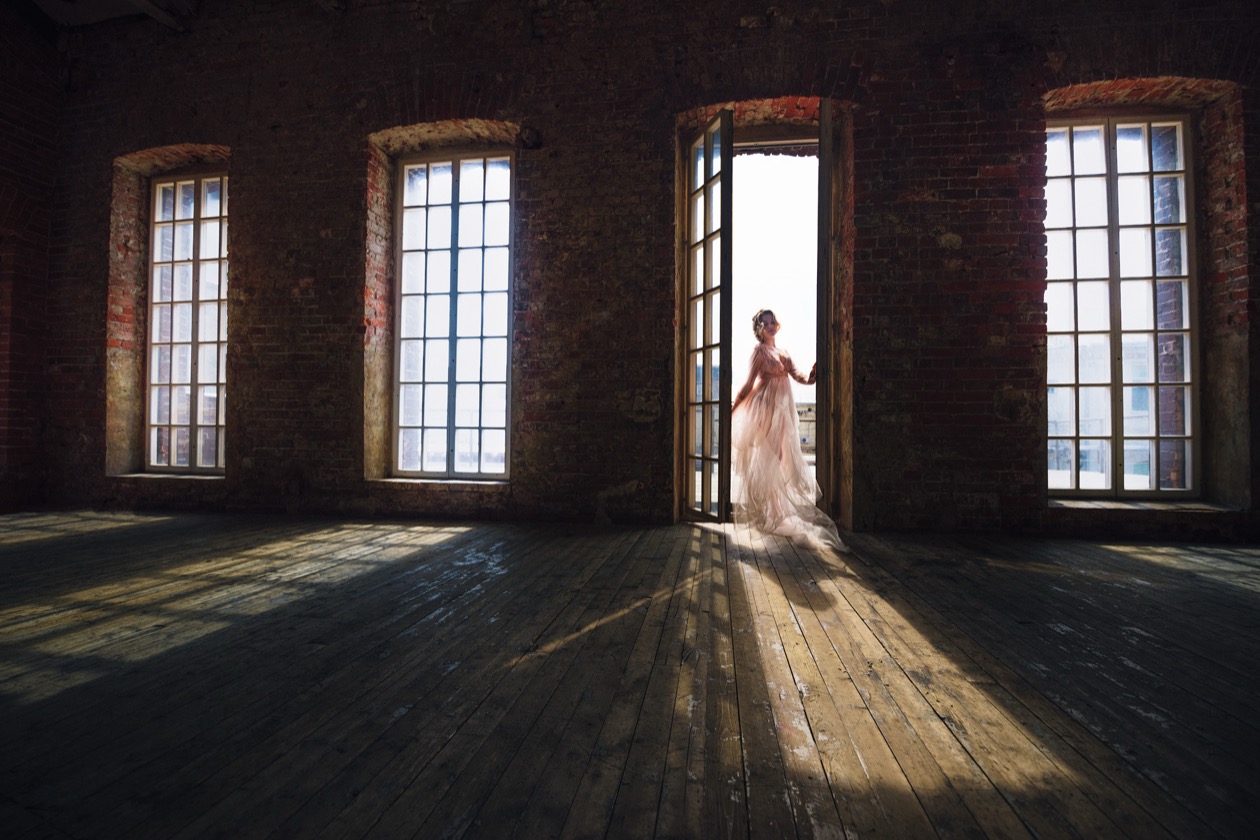
Editor's note. On full frame the two frames above differ by 46.8° against 114.2° diagonally. The 14 mm frame shows the windows, the floor and the light falling across it, which the 50 mm frame leaves out entirely.
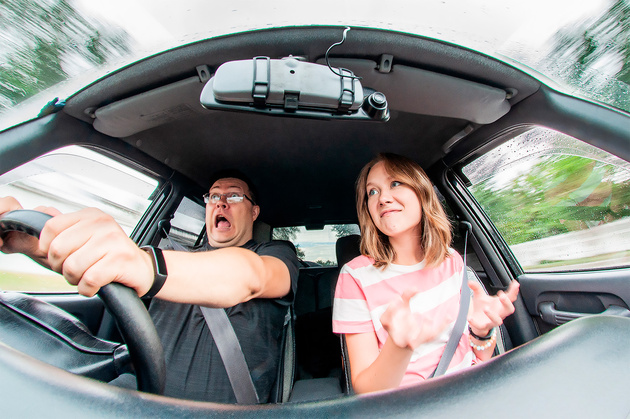
The point also holds in tight outdoor and everyday spaces. Inside a car, an ultra-wide lens can show the driver, the passenger and the road through the windows in one frame from the dashboard.
Why get closer with a wide-angle lens?
Because a wide lens shrinks everything that is not close. Robert Capa, one of the best-known photojournalists of the mid-twentieth century, put it simply: if your pictures are not good enough, you were not close enough. With an ultra-wide lens this is a technical fact. Step back and every object in the frame becomes equally small; step in and the nearest one dominates.
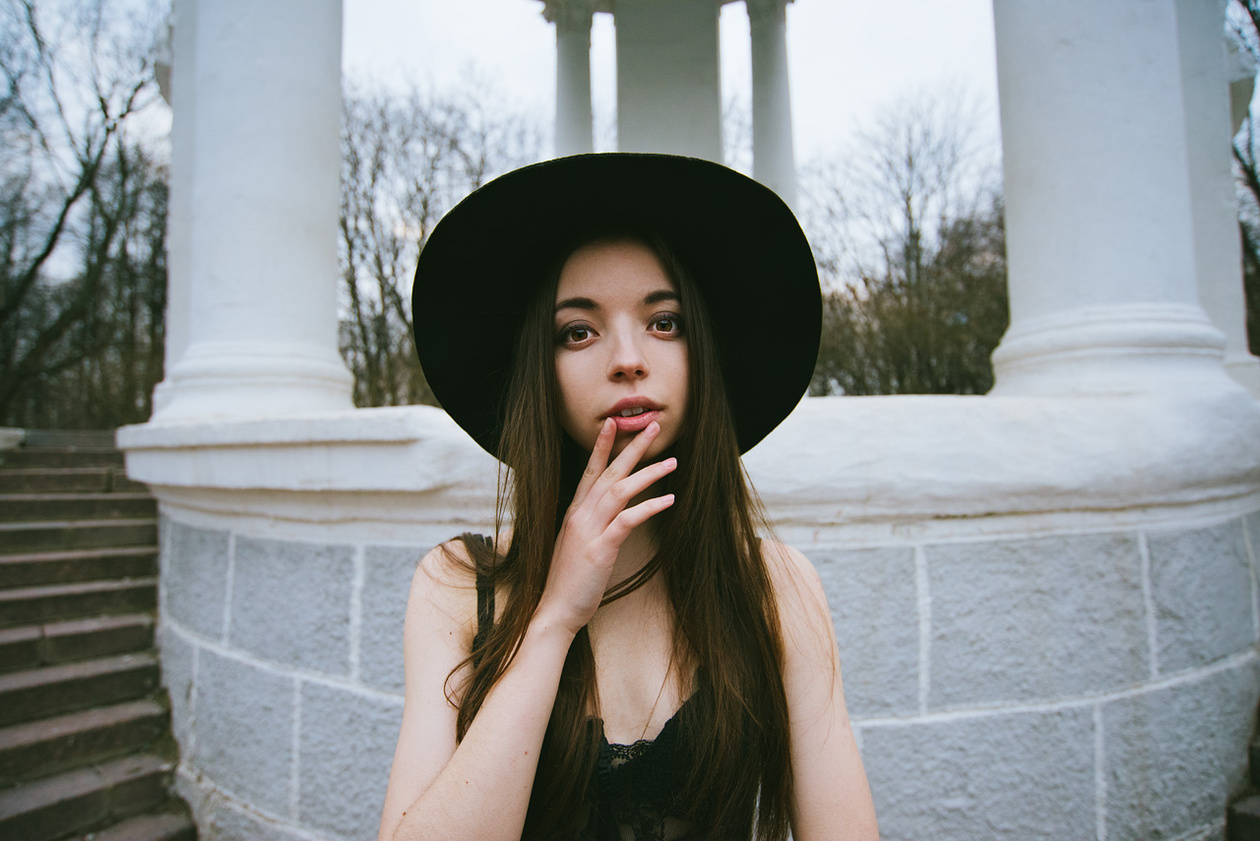
The standard advice is to always look for a foreground. A plain scene stays plain from eye level. Move the camera so that something close takes up part of the frame, and the distance between near and far objects controls how much space each one gets.
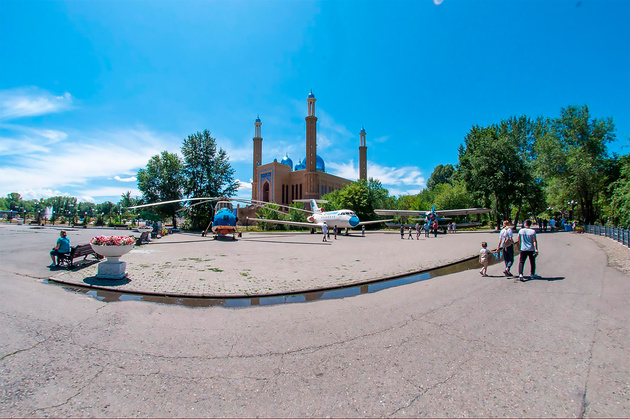
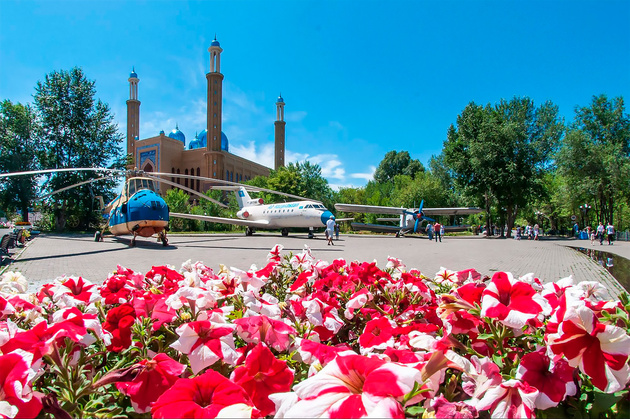
Choose the viewpoint deliberately and the scene splits into planes, near, middle and far, which shows its depth. The foreground can also carry details that help tell the story, like the coiled rope on the pier below.

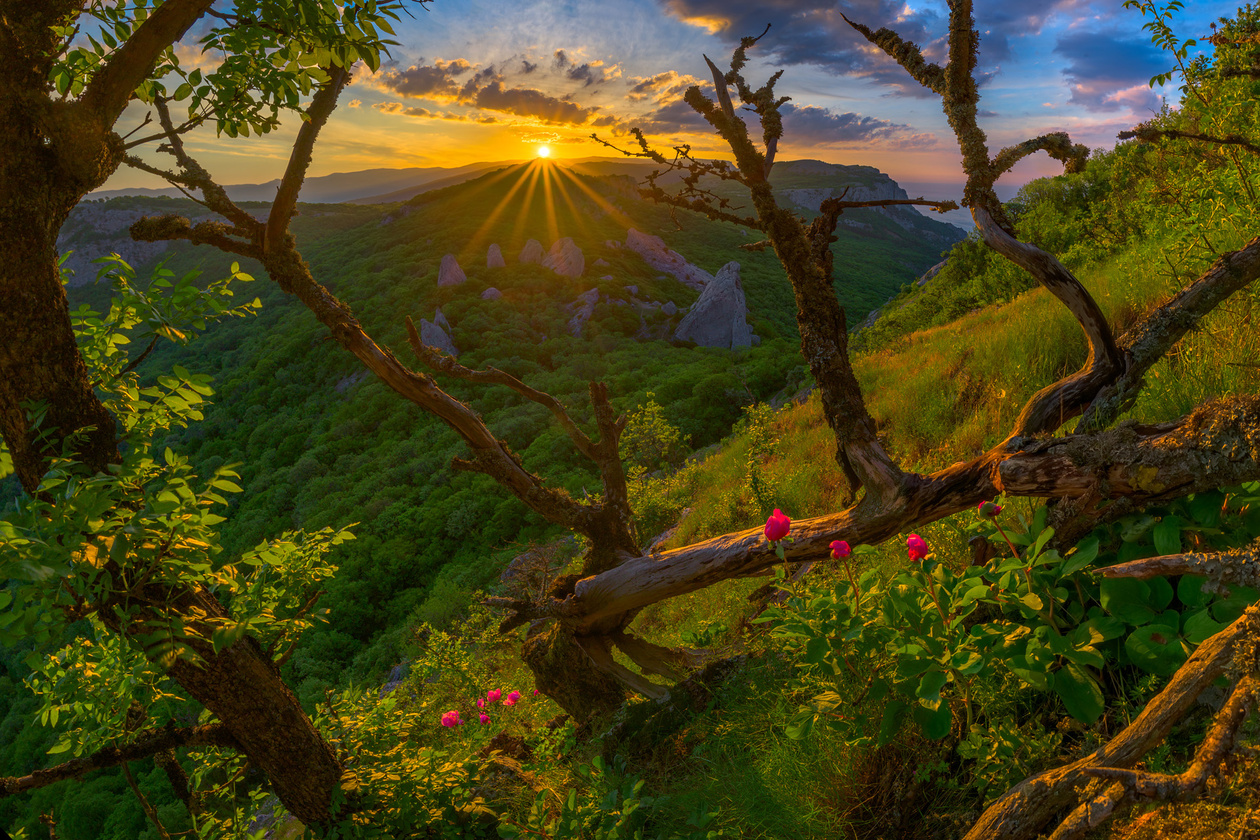
One practical warning: with a wide lens your own shadow ends up in the frame more easily than with a normal lens. Check the bottom of the frame whenever the sun is behind you.
Wide-angle distortion: perspective and lens distortion
Wide lenses show two different kinds of distortion, and only one of them is the lens's fault.
Perspective distortion comes from the wide view and the short shooting distance. Nearby objects look larger than life and distant ones shrink fast. It is unavoidable with a wide lens, and it grows the closer you get and the wider the lens. Lines running away from you, such as roads, bridges and rails, look dramatic because of it.
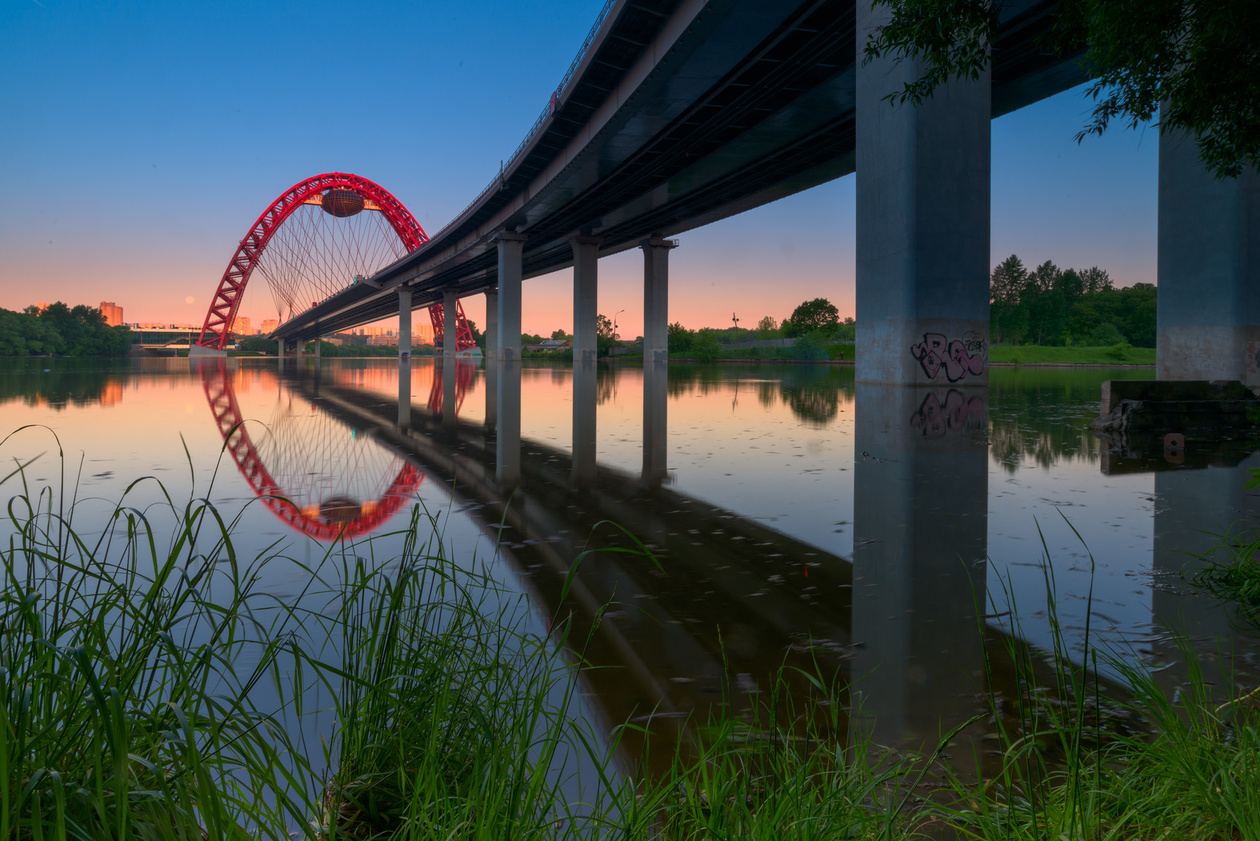
With people, watch that it does not break the figure or the face. Waist-up portraits work fine at a moderately wide angle, but no closer. With a fast wide lens you can even blur the background a little.
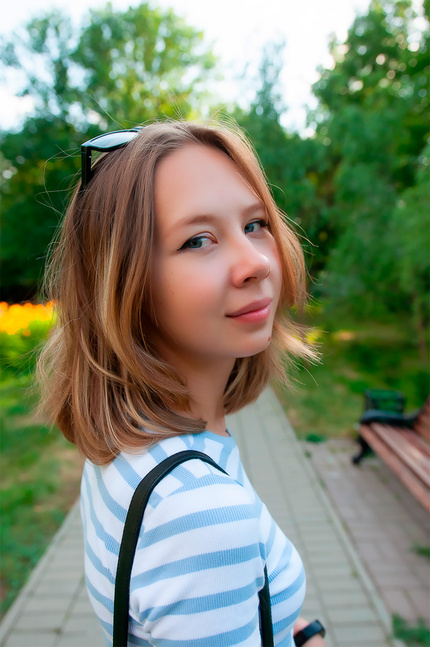
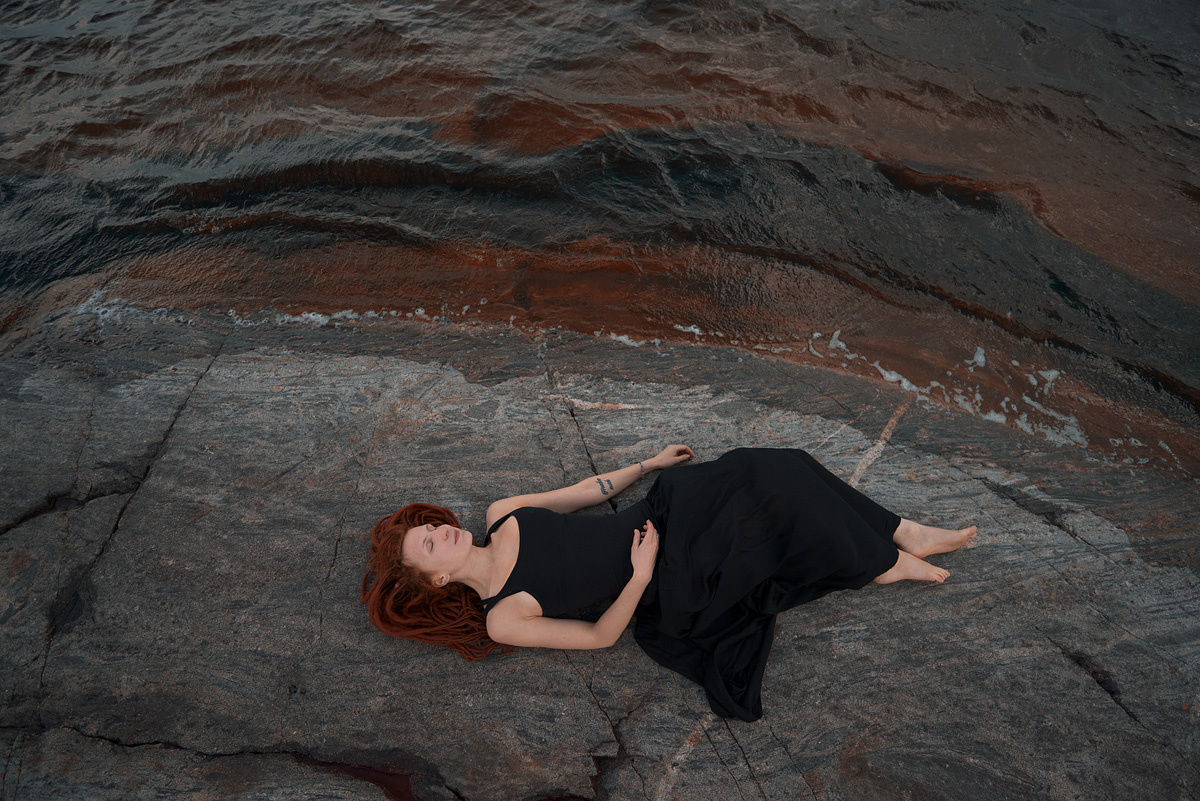
Full-length shots are the safer choice: place the person inside the scene and keep classic portraits for a longer lens, such as an 85 mm lens.
To see how distance controls size, compare two frames from the same lens. When the camera moves from a few steps away to almost touching the stone figure, it grows from one figure in a row to the main subject.
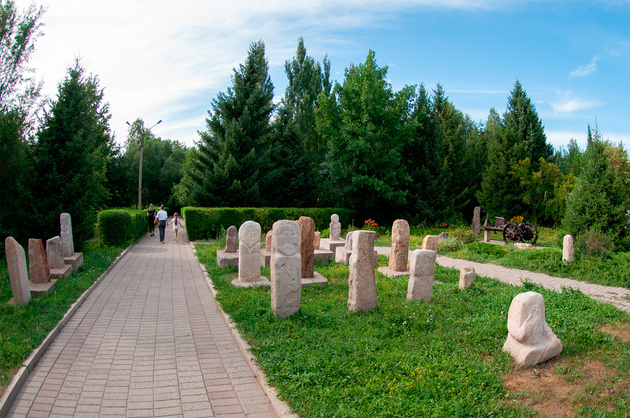
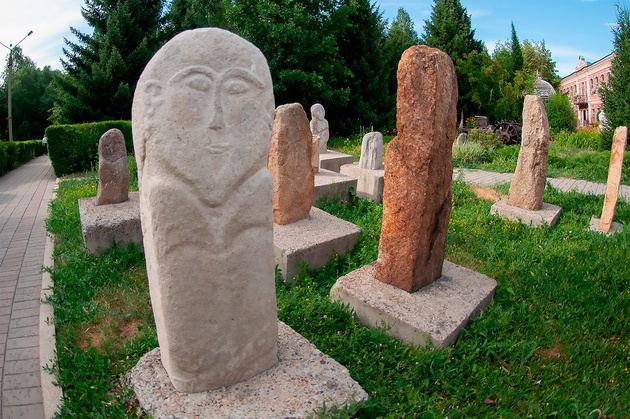
To place a model against a background, start with the large background objects. Compose the frame for the background first, then put the model in front of the lens. The distance from the camera decides how big the person appears.
Lens distortion is a defect of the lens itself: straight lines bow, especially near the frame edges. It is very unwelcome in architecture, where nobody wants a bent house or a twisted interior. A good ultra-wide lens should keep straight lines straight.
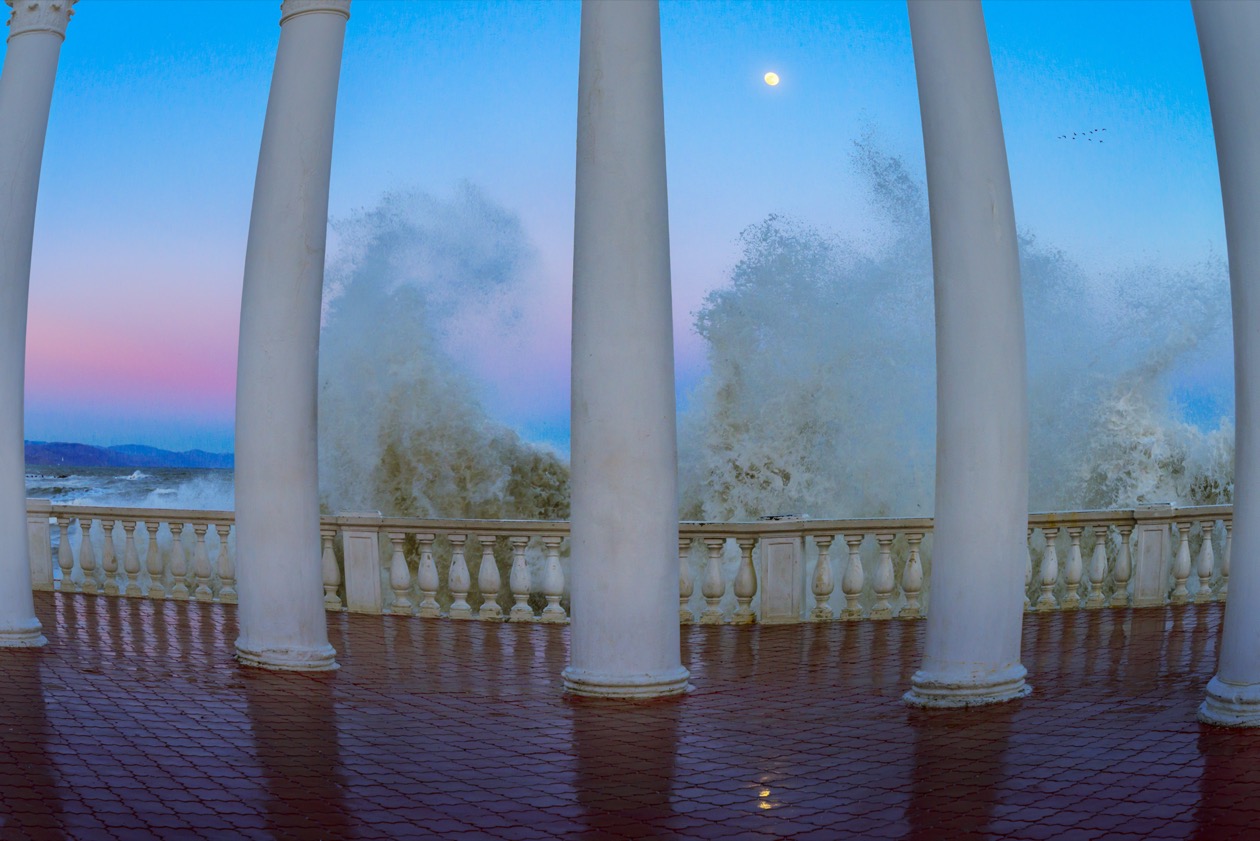
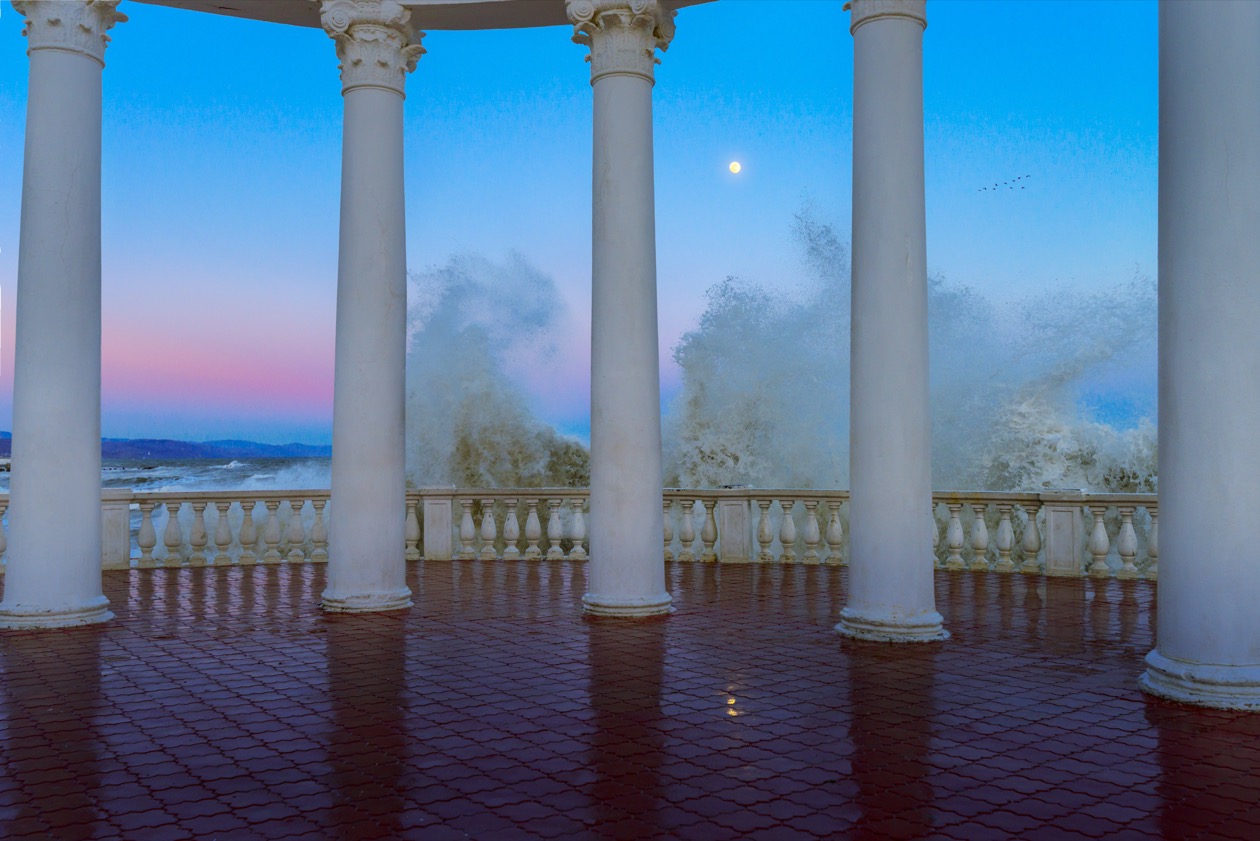
A fisheye keeps that curvature on purpose: in a fisheye lens distortion is left uncorrected for its visual effect.
How to keep lines straight with a wide-angle lens
Keep the camera level and parallel to the ground when the scene has straight lines. A frame taken at a slight angle is hard to fix in an editor, so set the camera precisely while you shoot. In the first frame below, the camera points slightly up at the sky and the building leans; in the second, it is level and the lines stay true.
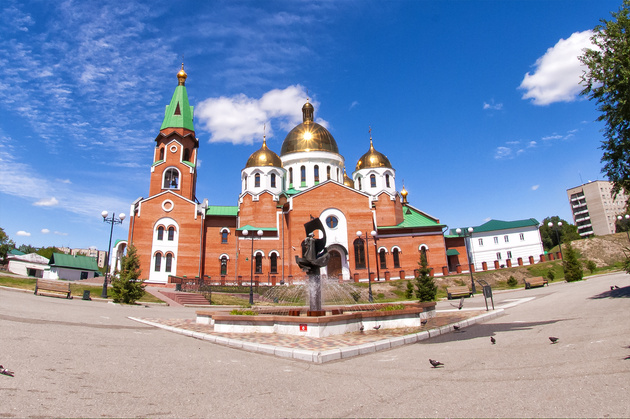
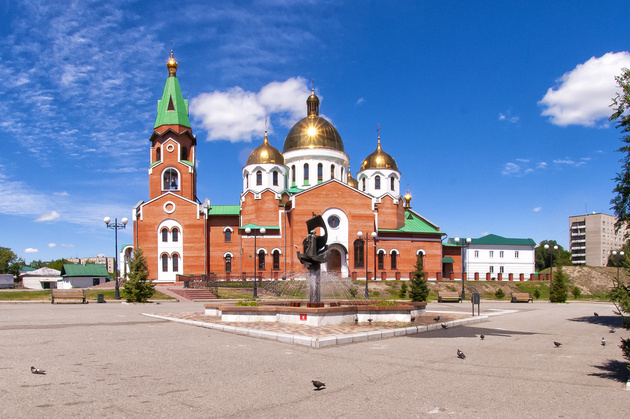
Rule of thumb: for buildings, level the camera and step back or raise the camera instead of tilting it. For people, keep faces away from the frame edges and keep the lens at least an arm's length away. For everything else, find a foreground within a meter or two (3 to 7 ft) of the lens.
Composition: emphasis, low angles and frames
A wide lens rewards purpose. Move away from "fit everything in" toward deciding what the viewer should see first, then get closer to whatever should look biggest. Arrange the objects by size so the composition stays balanced, and decide which parts of the space get more room and which get less. A yellow arrow sign that distracts from across the frame becomes a leading line when the lens moves close to it.
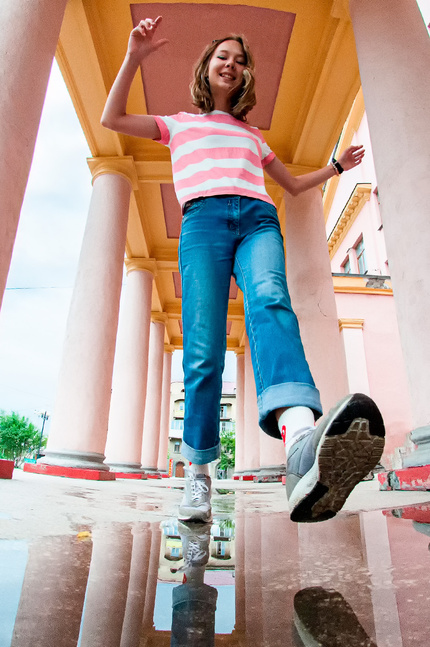
Low viewpoints. What is a puddle to everyone else is a whole subject for a photographer with a wide lens. Shooting from low down and including more ground draws the viewer in, and a close detail in front can complete the composition or become its center.

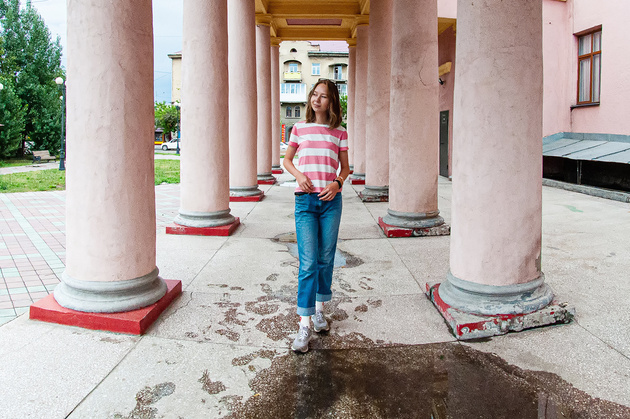
Frames and lines. Arches and doorways frame the main subject, provided the frame fits the meaning of the picture. Converging lines and strong geometry belong to the wide lens: look for tunnels, stairs and railings, and let the lines lead to your subject.
Sometimes the rules can be broken. A portrait taken about 10 cm (4 in) from the model's nose, with very strong distortion, can make a comic picture. The main rule of a wide lens stays the same: get closer and experiment. These composition ideas also work at normal focal lengths; the wide lens only makes the effects stronger.
Wide-angle lenses for landscapes and the night sky
For landscapes the ultra-wide is the main tool. Photographers use every focal length for landscapes, even telephotos, but to fit the whole scene rather than pieces of it you need a wide lens.
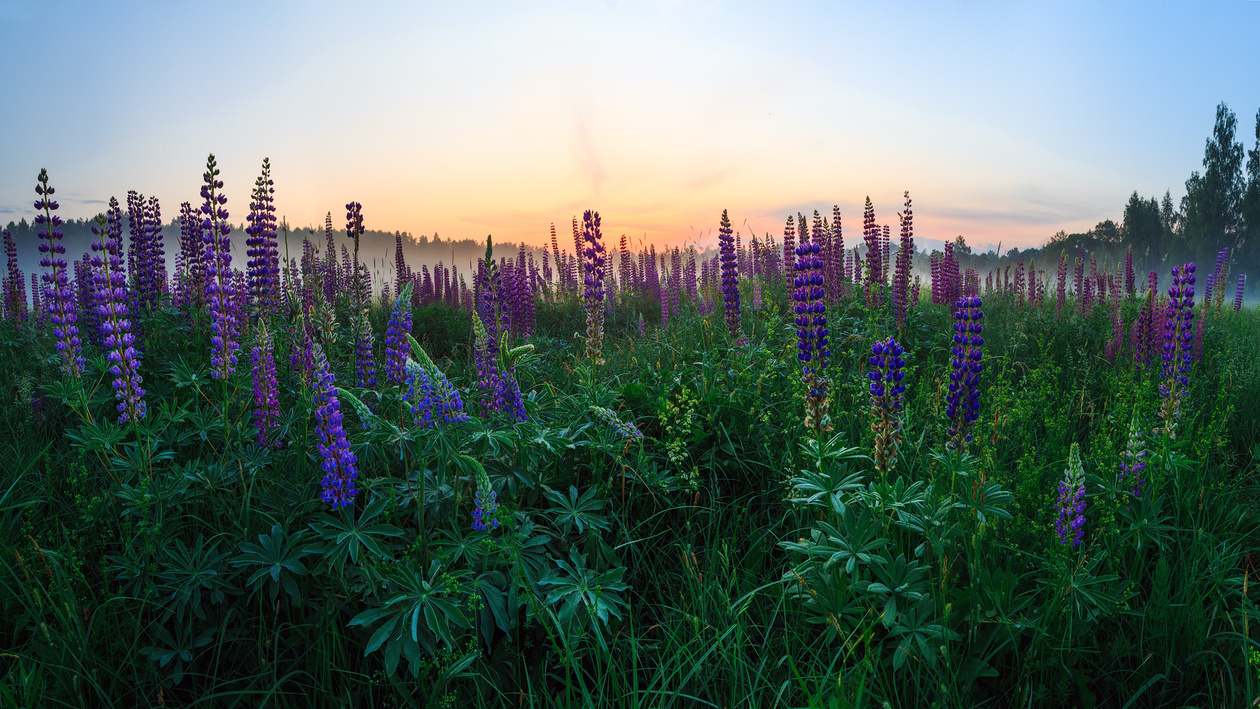
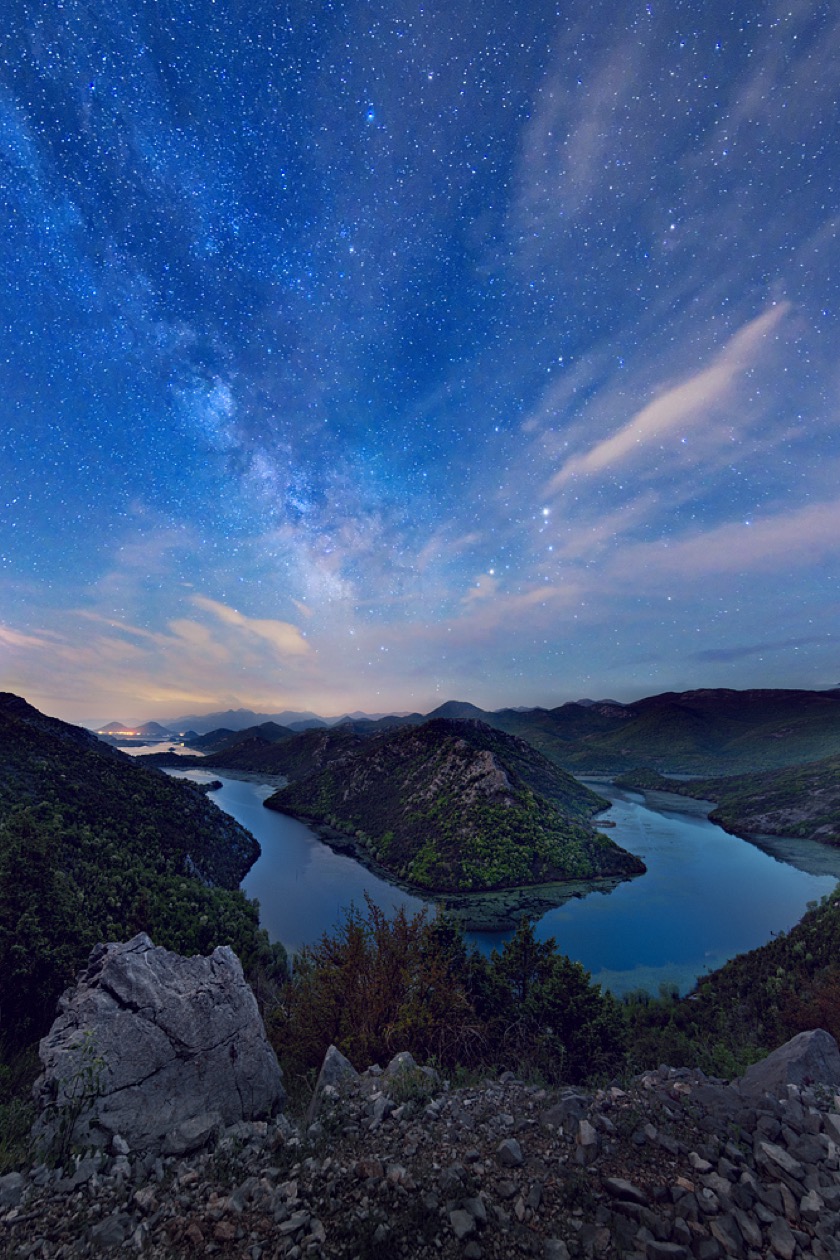
Night-sky and aurora photography follows the same logic: photographers want as much sky in the frame as possible. It also works at the technical limit of the gear. To gather the most light from faint stars, the lens needs a wide maximum aperture and good sharpness right into the corners. Fast ultra-wide zooms at f/2.8 and fast primes such as a 20 mm f/1.8 suit this job.
Which wide-angle lens should you buy?
Editor's note: our verdict. The typical ultra-wide choices, using the source's lens classes and their facts:
| Lens type | Typical example | What it gives | The trade-off |
|---|---|---|---|
| Fast full-frame zoom | 14-24 mm f/2.8 | Widest view, best for the night sky and interiors | Nearly 1 kg (2.2 lb); a bulging front element takes no screw-in filters |
| Stabilized full-frame zoom | 16-35 mm f/4 | Hand-held landscapes at 1/4 to 1/2 s; 77 mm screw-in filters on the classic model | One stop slower, slightly narrower view |
| Budget full-frame zoom | 18-35 mm f/3.5-4.5 | Small and light, good image quality, the travel choice | Slower aperture, 18 mm is less wide |
| APS-C ultra-wide zoom | 10-20 mm or 10-24 mm | Ultra-wide view on a crop body; a stabilized 10-20 mm weighs 230 g (8.1 oz) | Too dark for stars at f/4.5-5.6 |
| Fast wide prime | 20 mm f/1.8 | Night sky and low light at low cost | One focal length only |
Today's mirrorless zooms have narrowed the filter trade-off. Nikon's NIKKOR Z 14-30mm f/4 S, for example, weighs about 485 g and takes front filters despite starting at 14 mm; Nikon describes it as the first filter-attachable ultra-wide zoom covering 14 mm among full-frame lenses as of January 2019, and on an APS-C body it frames like a 21-45 mm lens.
Pick by what you shoot:
- Interiors, real estate, events: an ultra-wide zoom such as a 16-35 mm f/4, or a 14-24 mm f/2.8 if you need the light.
- Night sky and aurora: a 20 mm f/1.8 prime or an f/2.8 ultra-wide zoom.
- Travel and landscapes on APS-C: an APS-C ultra-wide zoom of 10-20 mm.
- Filters: match the thread size printed on the lens, and read our guides to lens filters and UV filters. On ultra-wides a polarizer can darken the sky unevenly.
Our pick: for most people an f/4 ultra-wide zoom covering 16 mm (10 mm on APS-C) is the first wide lens to buy: light, filter-friendly and wide enough for rooms and landscapes. Choose f/2.8 or a fast 20 mm prime only if night-sky shooting is the reason you want it.
An ultra-wide lens is an unusual creative tool, and good frames with it take practice. Start with one rule from this guide, get closer to your foreground, and add the others as they become habits.
Frequently asked questions
- What is a wide-angle lens?
- A wide-angle lens has a shorter focal length than a normal lens, so it takes in a wider angle of view. On a full-frame camera, a lens of 35 mm or shorter is called wide-angle by custom, and below 24 mm it is ultra-wide. It lets you show a whole room, street or landscape from a short distance.
- What focal length is an ultra-wide-angle lens?
- On a full-frame camera, an ultra-wide lens is shorter than 24 mm and covers more than 80 degrees across the frame diagonal. On an APS-C camera the line sits at about 15 mm, because the smaller sensor narrows the view by a crop factor of 1.5. Common ultra-wide zooms cover 14 to 24 mm on full frame and 10 to 20 mm on APS-C.
- What is the difference between a wide-angle lens and a normal lens?
- Angle of view and perspective. A 50 mm normal lens on full frame covers about 47 degrees diagonally, close to how we notice a scene. A 24 mm lens covers 84 degrees and a 14 mm lens 114 degrees, so near objects look much larger than distant ones. A wide lens needs a strong foreground; a normal lens frames the subject plainly.
- Are wide-angle lenses good for portraits?
- For environmental portraits, yes: full-length figures and waist-up shots placed in their surroundings work well at moderate wide angles. For close head-and-shoulders portraits, no. At short distances whatever sits nearest the lens, such as the nose or a hand, grows out of proportion. Stay at least an arm's length away, keep faces away from the frame edges, and use a longer lens for classic portraits.
- Why do buildings lean in wide-angle photos?
- Because the camera is tilted. When a wide-angle lens points even slightly up, vertical lines converge and buildings seem to fall backward; the wider the lens, the stronger the effect. Hold the camera level and parallel to the facade. Lens distortion is a separate problem: cheaper wide lenses bow straight lines, while good rectilinear lenses keep them straight.
- Can you use filters on an ultra-wide lens?
- On most ultra-wide zooms, yes: lenses like a 16-35 mm f/4 take ordinary screw-in filters. Lenses with a bulging front element, such as the classic 14-24 mm f/2.8 zooms, need a bulky holder system instead. On very wide lenses a polarizer can darken one part of the sky more than another, so check the frame before shooting.
Sources
- Wide-angle lens, Wikipedia (2026)
- Angle of view (photography), Wikipedia (2026)
- Crop factor, Wikipedia (2026)
- NIKKOR Z 14-30mm f/4 S, Nikon Corporation (2026)