Types of camera lenses and when to use each
by Konstantin Voronov · Photography Tips
As an Amazon Associate I earn from qualifying purchases. Links to Amazon on this page are affiliate links.
In short: Lenses are sorted first by angle of view, which follows from focal length. On a full-frame camera, ultra-wide lenses are shorter than 24 mm, wide-angle lenses run about 24-35 mm, normal lenses 40-60 mm and telephoto lenses start at about 70 mm. Portrait and macro lenses are short telephotos built for one job, and every lens is either a zoom or a prime.
The lens decides more about a photo than the camera does. Beginners frequently spend weeks choosing a camera body and then pay little attention to lenses, yet interchangeable lenses are the whole point of a mirrorless or SLR camera: they let you pick the lens that suits the job. It is the lens that sets the angle of view, the level of detail, the depth of field and the look of the background blur (bokeh). The lens also affects color rendering and contrast.
The camera supplies a high-resolution sensor, low noise and fast autofocus. How good an image reaches that sensor is the lens's job. To put it figuratively, the lens is the photographer's brush: with the right brush, a painter can paint a fine picture.
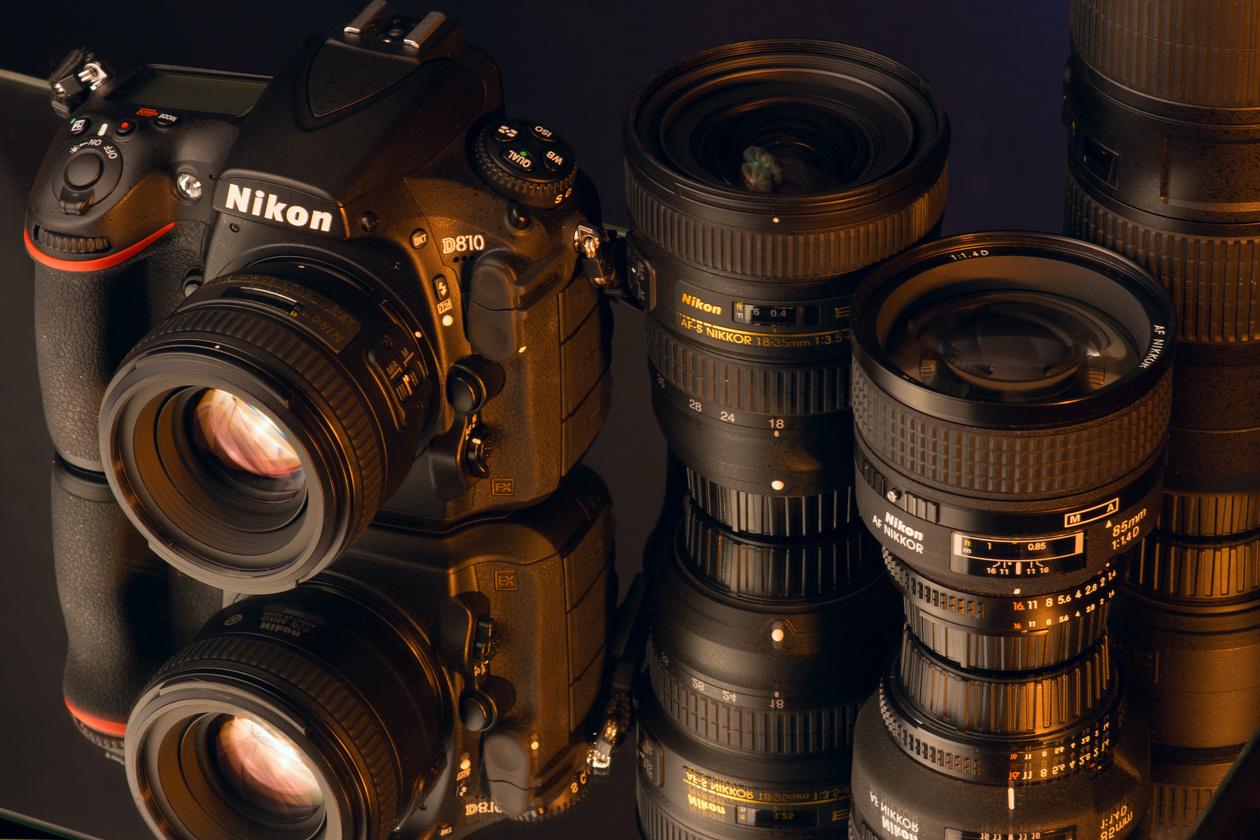
What are the different types of camera lenses?
Photographers classify lenses mainly by angle of view, and since the angle of view depends on focal length, the two are used together. The main types are ultra-wide-angle lenses (fisheye lenses are a special kind of them), wide-angle lenses, normal lenses and telephoto lenses, which split into moderate telephotos and super-telephotos. Portrait and macro lenses are telephoto types built for specific kinds of shooting. The classification is approximate: there are no sharp, absolute borders between the categories, because it rests above all on photographers' experience.
Zoom lenses work across a range of focal lengths, so one zoom can belong to two or more categories at once. Kit zooms with an 18-55 mm range, for example, cover both wide-angle and normal focal lengths, and superzooms with ranges such as 18-300 mm cover everything from wide-angle to telephoto. That versatility is paid for with maximum aperture, the beauty of the background blur and sometimes sharpness.
| Lens type | Diagonal angle of view | Full frame | APS-C | Micro Four Thirds (÷ 2) | Typical uses |
|---|---|---|---|---|---|
| Ultra-wide-angle | 80° to 180° | under 24 mm | under 16 mm | under 12 mm | Landscapes, interiors, architecture |
| Wide-angle | 50° to 80° | 24-35 mm | 16-24 mm | 12-17.5 mm | Landscapes, travel, reportage, portraits in tight rooms |
| Normal (standard) | 40° to 50° | 40-60 mm | 28-40 mm | 20-30 mm | Any genre; everyday shooting |
| Moderate telephoto | 35° and narrower | 70-200 mm | 50-150 mm | 35-100 mm | Portraits, reportage, sport, landscapes |
| Super-telephoto | about 12° down to a few degrees | over 200 mm | over 150 mm | over 100 mm | Wild birds and animals, football from the stands |
Editor's note. The Micro Four Thirds column is the full-frame range divided by that format's crop factor of 2; the 12° figure is the computed diagonal angle of a 200 mm lens on full frame. The angle ranges are rounded, so the computed angles in the next section do not fit them exactly: a 24 mm lens computes to 84°, right on the ultra-wide border, and a 40 mm lens to 57°.
How is a lens's angle of view measured?
A photograph is a rectangle, so a lens has three angles of view: across the diagonal (1), the horizontal (2) and the vertical (3). Each manufacturer decides which one to state in the specifications, but most give the diagonal angle, the widest of the three. All angles in this article are diagonal. The angle depends on focal length, measured in millimeters: the longer the focal length, the narrower the angle of view, and the shorter the focal length, the wider it is.
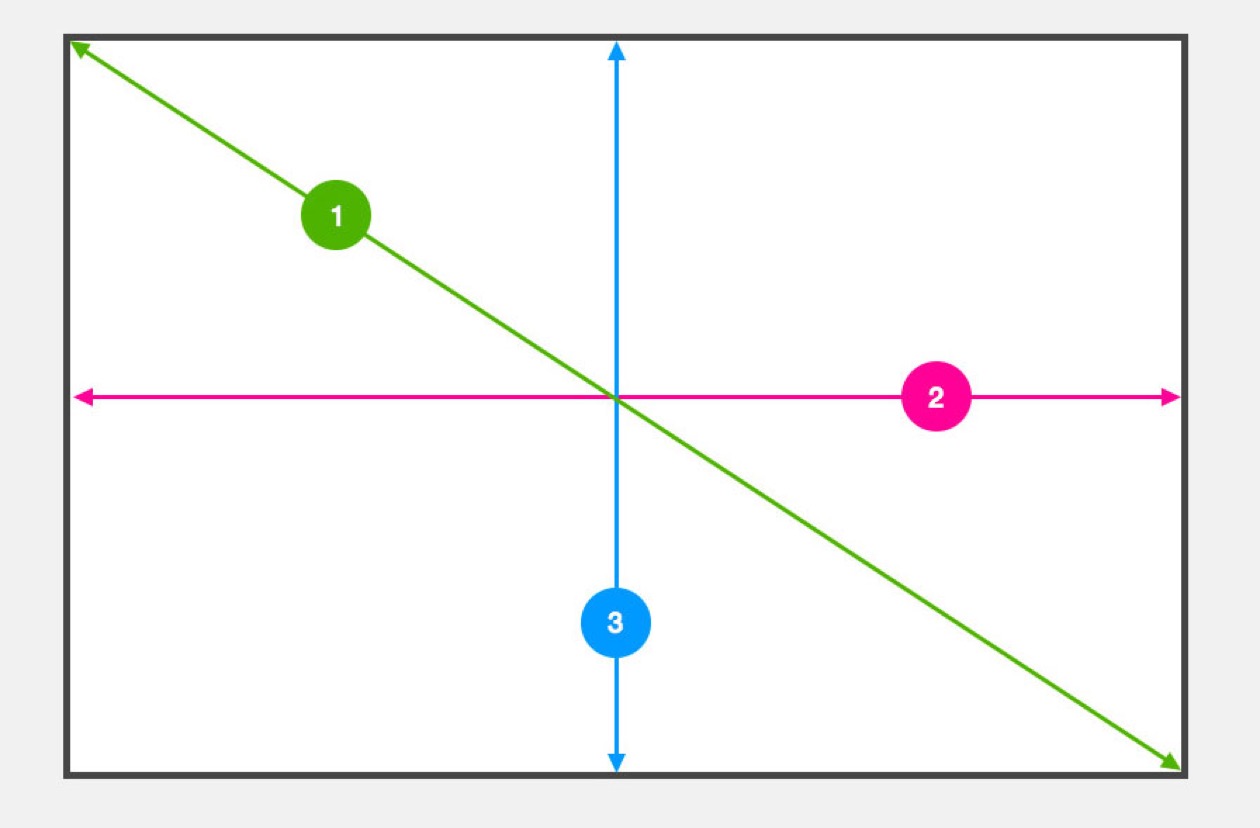
A short focal length gives a wide angle of view, which lets you show a broad panorama. A long focal length gives a narrow angle of view, which draws the viewer to distant objects, such as the silhouette of a high-rise far away. Specific numbers depend on the size of your camera's sensor, which is why the table above gives separate ranges for full frame and APS-C. Our guide to APS-C vs full frame explains the crop factor and equivalent focal length in detail.
Editor's note: diagonal angle of view, computed. The diagonal angle of view is 2 × arctan(sensor diagonal ÷ (2 × focal length)), per the angle of view formula. The full-frame diagonal (36 x 24 mm) is 43.27 mm and the APS-C diagonal (23.5 x 15.6 mm) is 28.21 mm. As a check, Nikon states 47° on full frame and 31°30' on APS-C for its NIKKOR Z 50mm f/1.8 S, matching the 50 mm row.
| Focal length | Full frame | APS-C | Type on full frame |
|---|---|---|---|
| 14 mm | 114.2° | 90.4° | Ultra-wide |
| 16 mm | 107.0° | 82.8° | Ultra-wide |
| 20 mm | 94.5° | 70.4° | Ultra-wide |
| 24 mm | 84.1° | 60.9° | Wide (border) |
| 35 mm | 63.4° | 43.9° | Wide |
| 50 mm | 46.8° | 31.5° | Normal |
| 85 mm | 28.6° | 18.8° | Moderate telephoto (portrait) |
| 135 mm | 18.2° | 11.9° | Moderate telephoto (portrait) |
| 200 mm | 12.3° | 8.1° | Moderate telephoto |
| 300 mm | 8.2° | 5.4° | Super-telephoto |
| 600 mm | 4.1° | 2.7° | Super-telephoto |
How do focal length and distance change perspective?
Lenses with different angles of view do not simply "zoom in and out". Because each angle of view dictates a different shooting distance, each lens renders perspective differently and shows the proportions of objects differently. Say we want a waist-up portrait. In the frames below, the photographer kept the person the same size in the frame with lenses of different focal lengths, stepping farther back for each longer lens. Watch the proportions of the young woman's face, and watch the mountains behind her too.
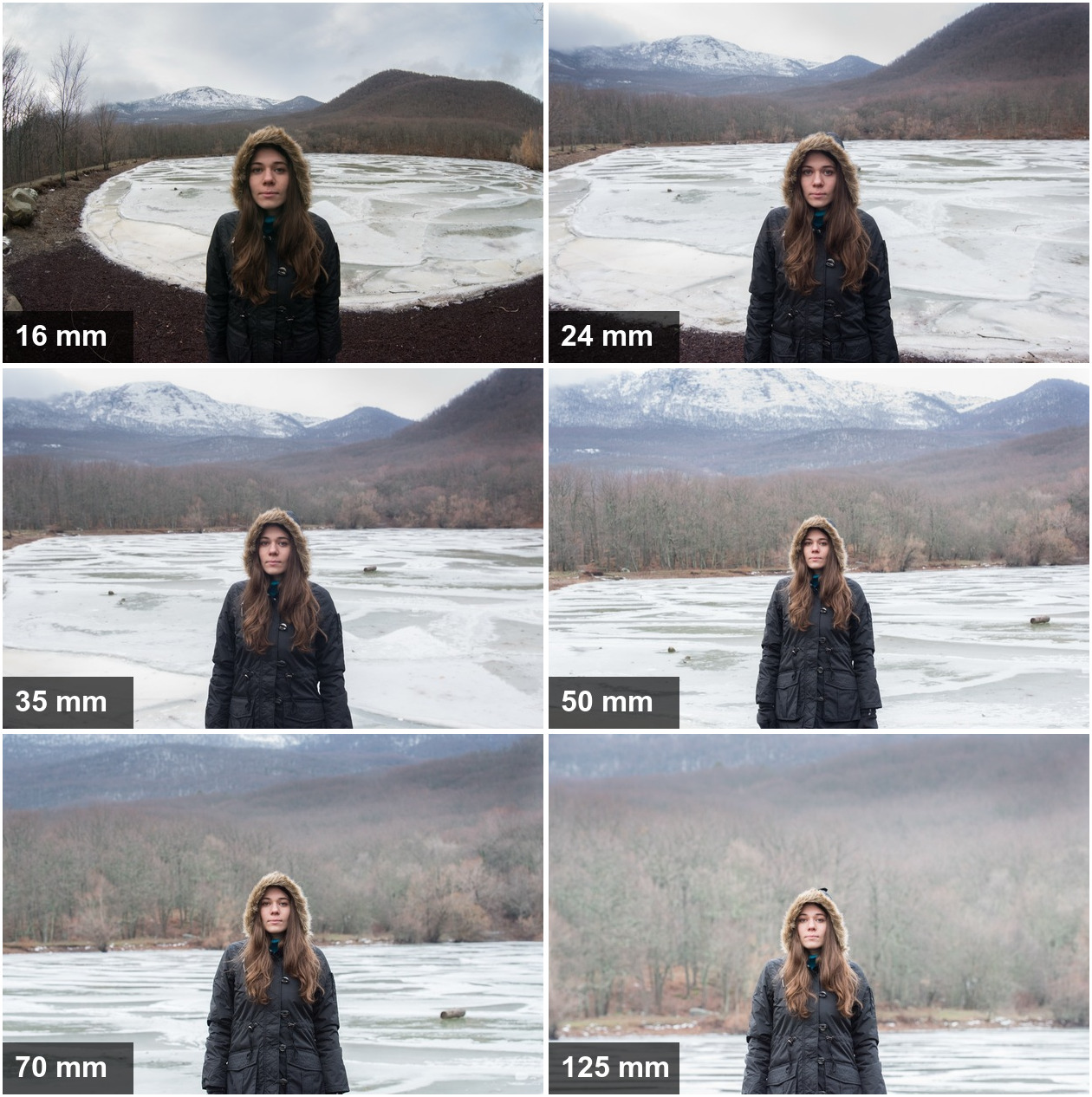
At a short focal length, the far shore of the frozen lake and the mountains above it seem very far away. The longer the focal length, the more that space is visually "compressed", and the background with the far shore grows larger. The cause is the shooting distance: each longer lens made the photographer step back to keep the same framing. The angle of view only decides how much of the scene fits. The telephoto lens guide proves it with a computed table.
Why talk about shooting distance and not only angle of view? The next example was taken with the same 16 mm lens, but the person was photographed from a long distance, so his proportions are not distorted.
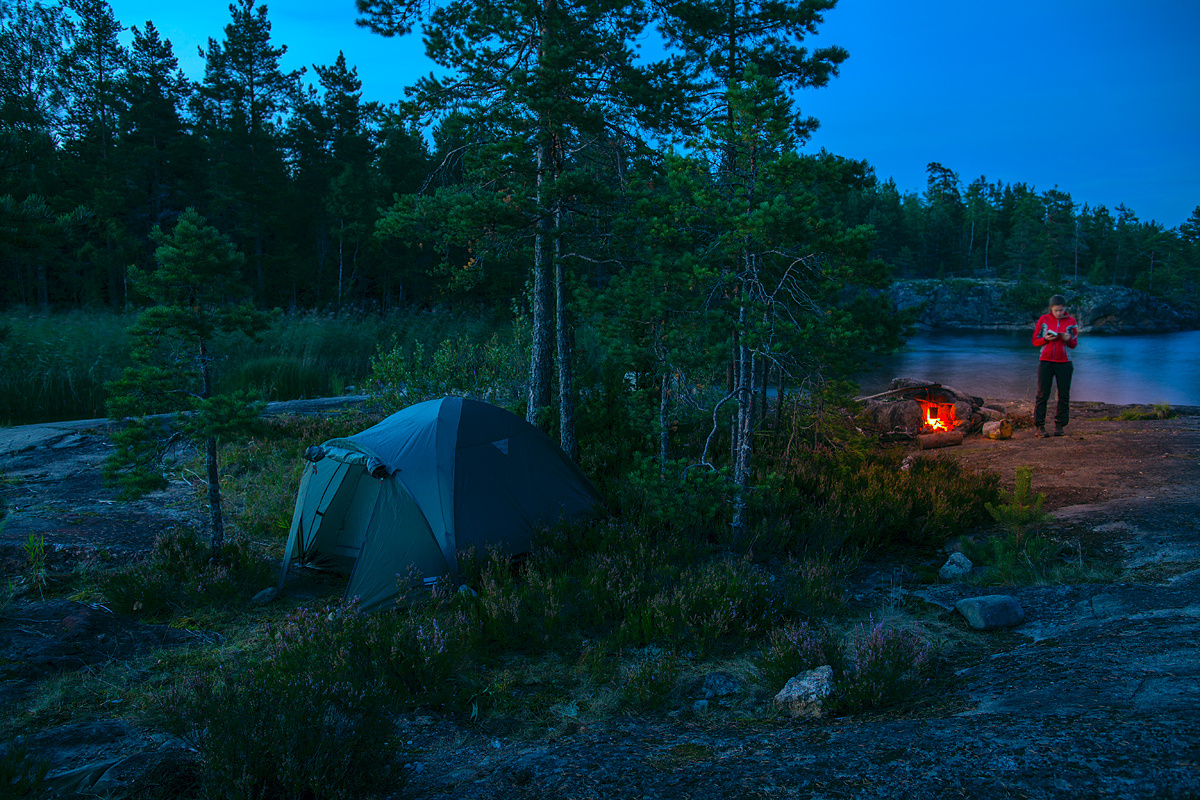
Here is the same idea in diagrams. What changes the proportions of objects relative to each other (the rendering of perspective) is above all the shooting distance. The angle of view of the lens only sets how large the subject appears in the frame.
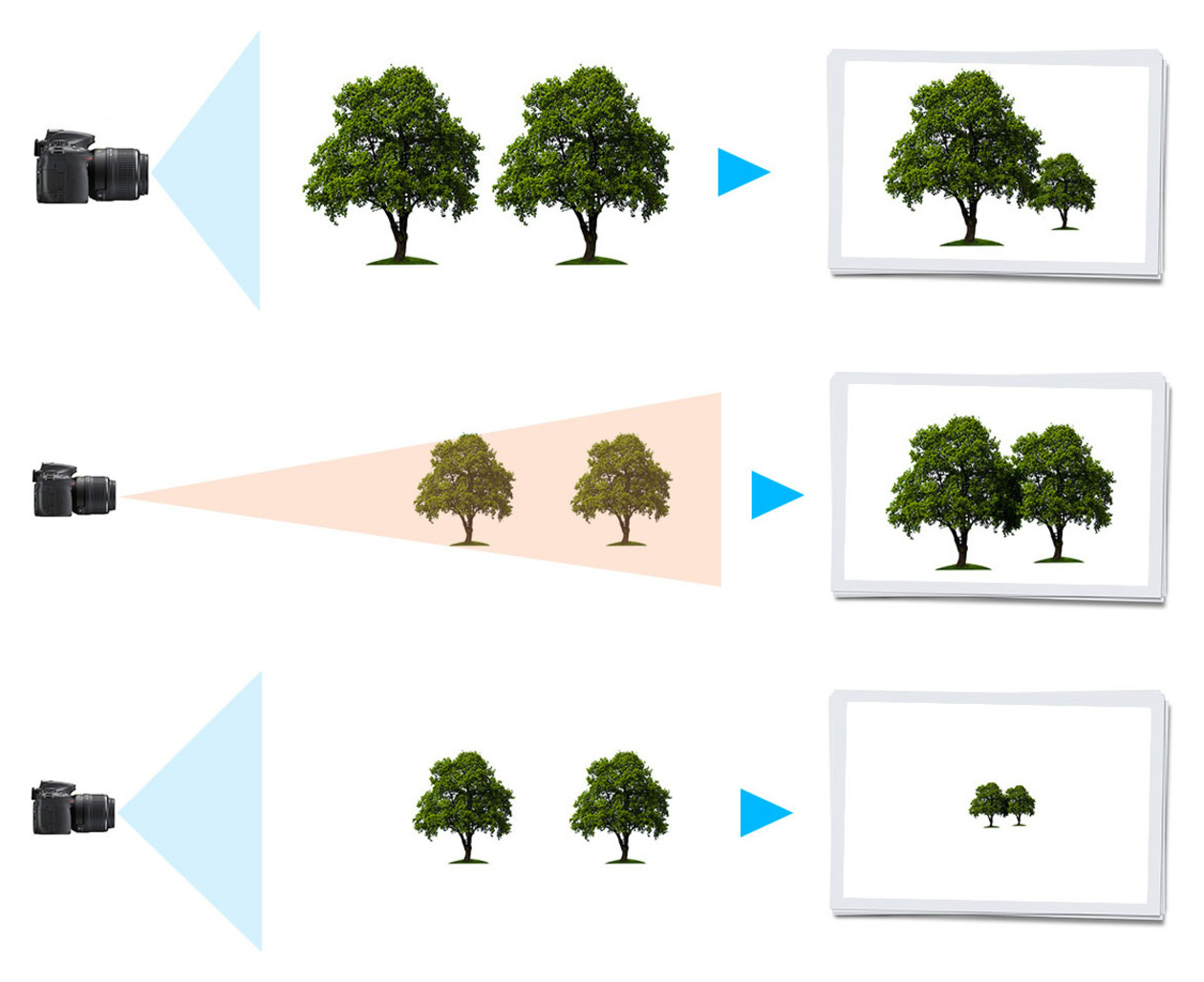
A simple conclusion follows, and we will come back to it: to keep a person or an object from looking distorted when you shoot with a wide-angle lens, shoot from farther away, for example a full-length portrait.
What is an ultra-wide-angle lens?
Lenses with an angle of view from 80 to 180 degrees are called ultra-wide-angle lenses. The name explains itself: these lenses give the widest angle of view there is. On full frame, ultra-wide-angle means focal lengths shorter than 24 mm; on APS-C cameras, shorter than 16 mm. Ultra-wide lenses are used most in landscape, interior and architectural photography, in other words wherever their extremely wide angle of view is needed. Our wide-angle lens guide goes deeper into both groups.

Because their angle of view is so wide, ultra-wide lenses render perspective in a special way: everything close to the lens becomes very large, and everything farther away becomes very small. Photograph a person like this and the proportions of the face and body can be distorted. That is why portraits are rarely shot with ultra-wide lenses, unless you want to give your subject a huge nose, as happened with the dog below. This can hurt a picture or help it: the dog photo came out funny precisely because of the enlarged nose. Think about the picture's subject, its style and its mood first, and pick the focal length to suit them, not the other way around.
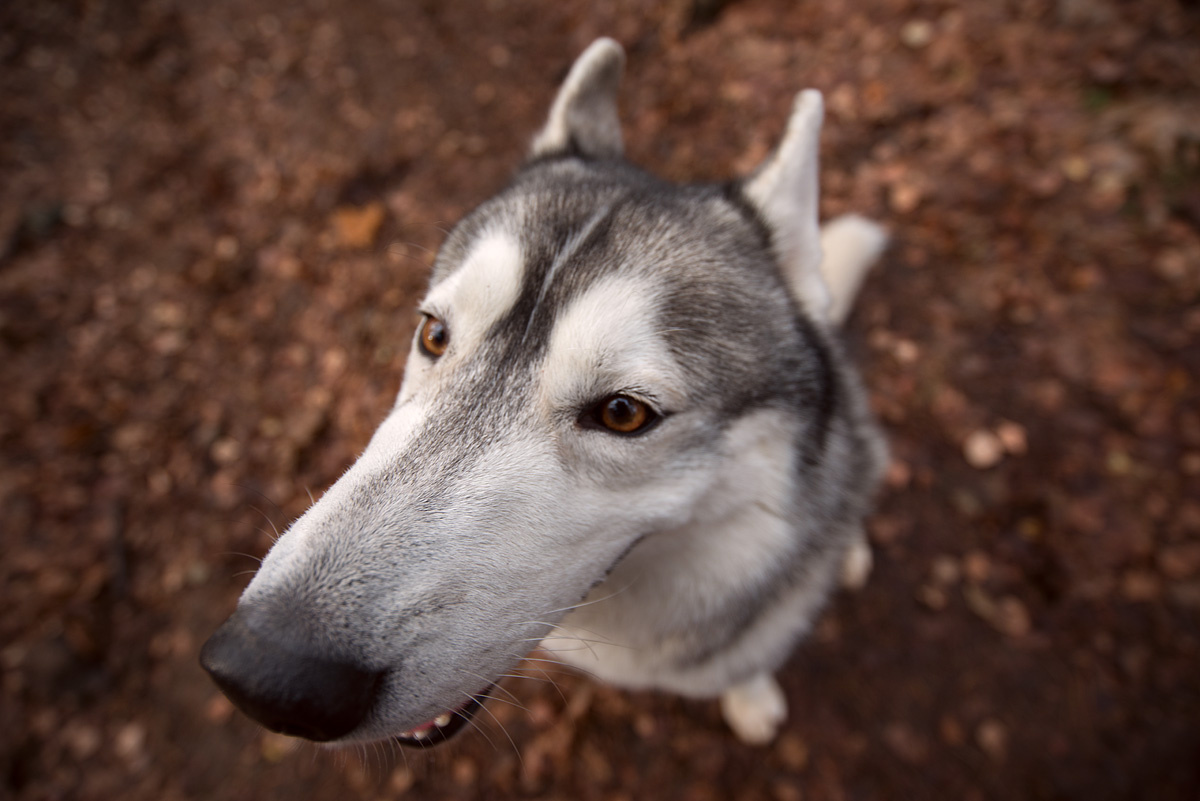
To avoid distorting people with an ultra-wide lens, photograph them from a distance rather than in close-up. Wedding photographers use this approach, as does anyone who wants to combine a portrait and a landscape in one frame. One more practical point: on ultra-wide lenses a polarizing filter can darken one part of the sky more than another, as our polarizing filter guide explains.
Fisheye lenses
A fisheye lens is a separate kind of ultra-wide lens that distorts the image in a particular way, much like a door peephole. When designing these lenses, the manufacturer deliberately leaves the distortion uncorrected. Distortion is a type of geometric error found in all short-focal-length lenses, but in every lens except fisheyes it is corrected by the optical design. As a rule, a fisheye gives an angle of view close to 180 degrees. Because it does not render the geometry of space accurately, a fisheye is used mainly for creative shots.
You cannot get the fisheye effect in editing: the effect depends on the extremely wide angle of view, so warping a frame shot with an ordinary, narrower lens only breaks its geometry. Fisheyes come in two kinds. A diagonal fisheye gives about 180 degrees across the diagonal and fills the whole frame. A circular fisheye gives a round image in the middle of the frame and leaves the corners black. A full-frame fisheye mounted on an APS-C camera gives a narrower angle of view, so makers build separate fisheyes for APS-C: around 16 mm is a full-frame diagonal fisheye, and around 10.5 mm is its APS-C counterpart. The fisheye lens guide covers both kinds with examples.
What is a wide-angle lens?
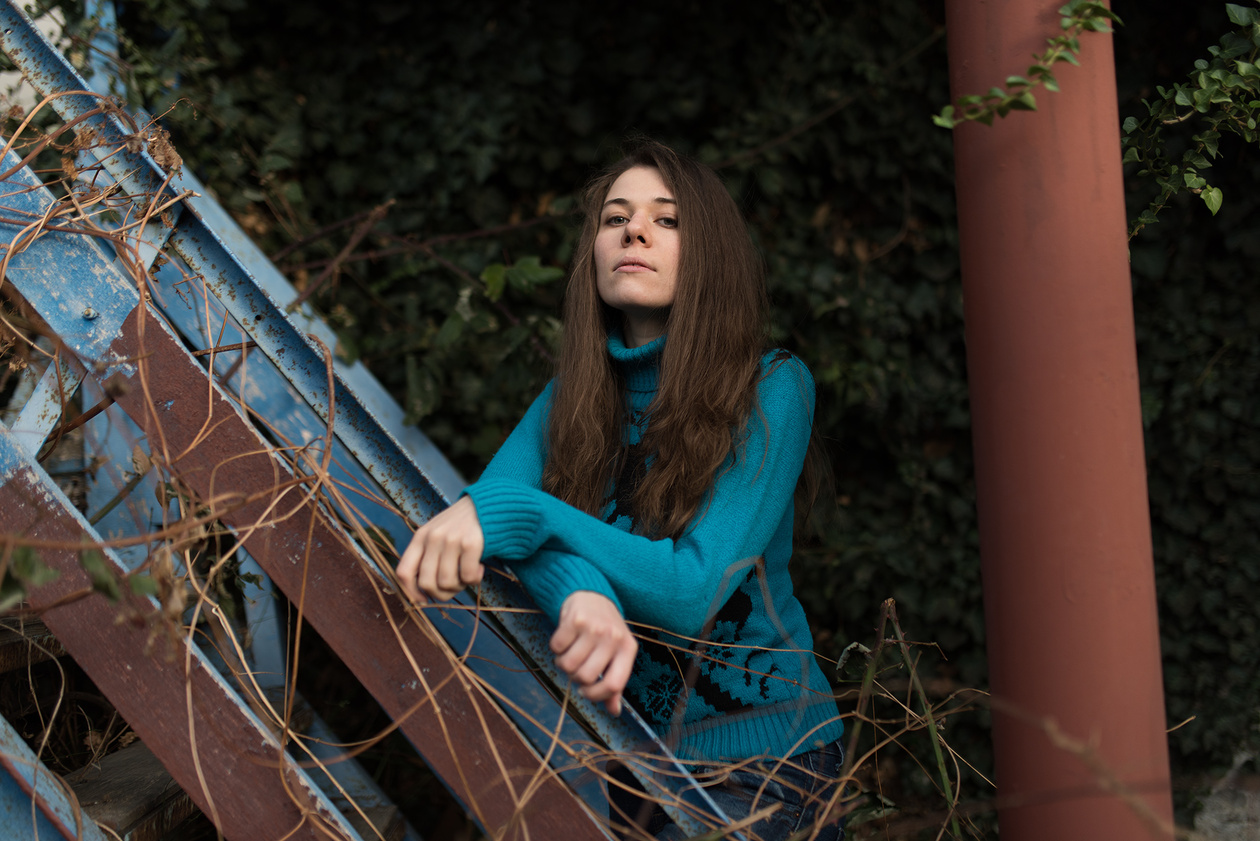
Wide-angle lenses have an angle of view from 50 to 80 degrees. Geometrically, those angles are no longer wide, but in photography they take in a broad space. Full-frame wide-angle lenses have focal lengths of about 24-35 mm; on APS-C, 16-24 mm. While ultra-wide lenses are rather specialized, moderate wide-angle lenses are versatile: with the right skill you can shoot landscapes and portraits with equal success, as well as reportage and travel. A wide-angle lens probably belongs in every photographer's kit.
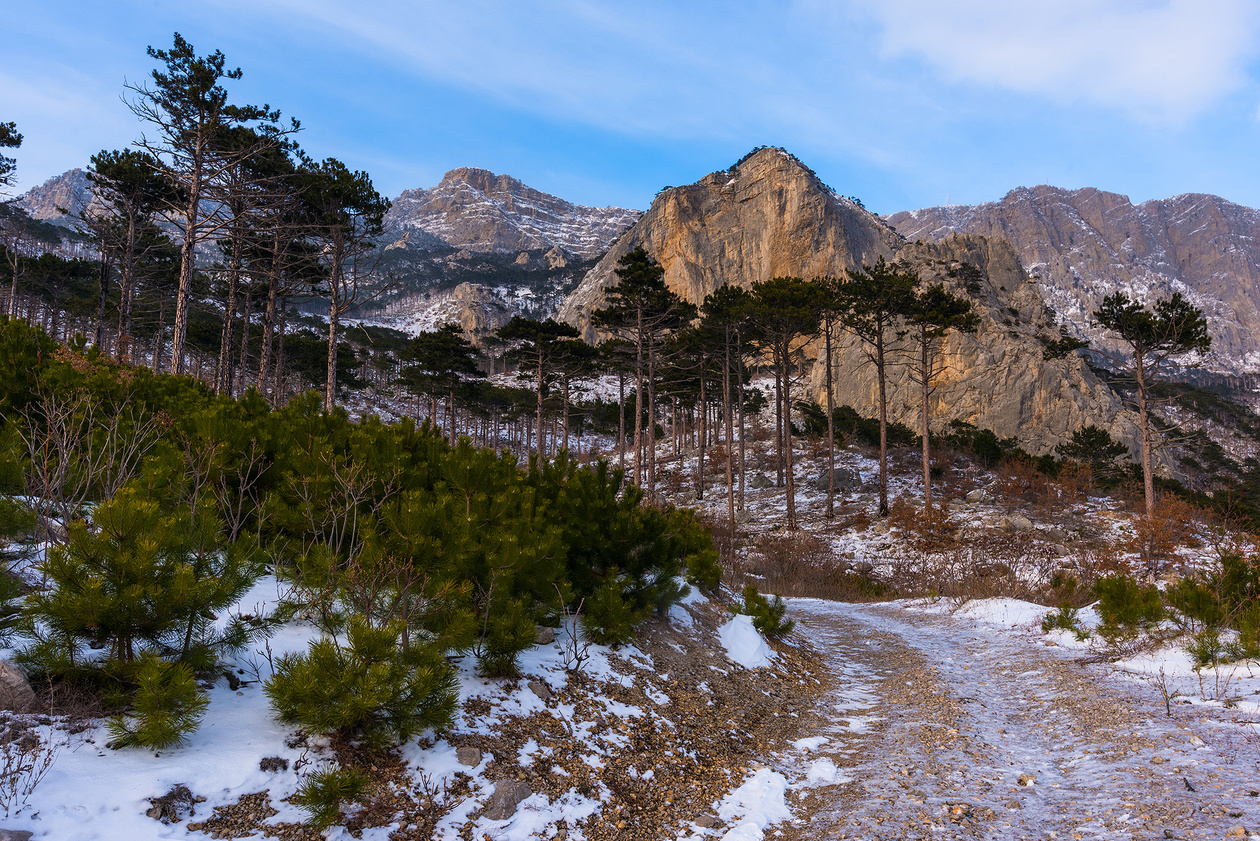
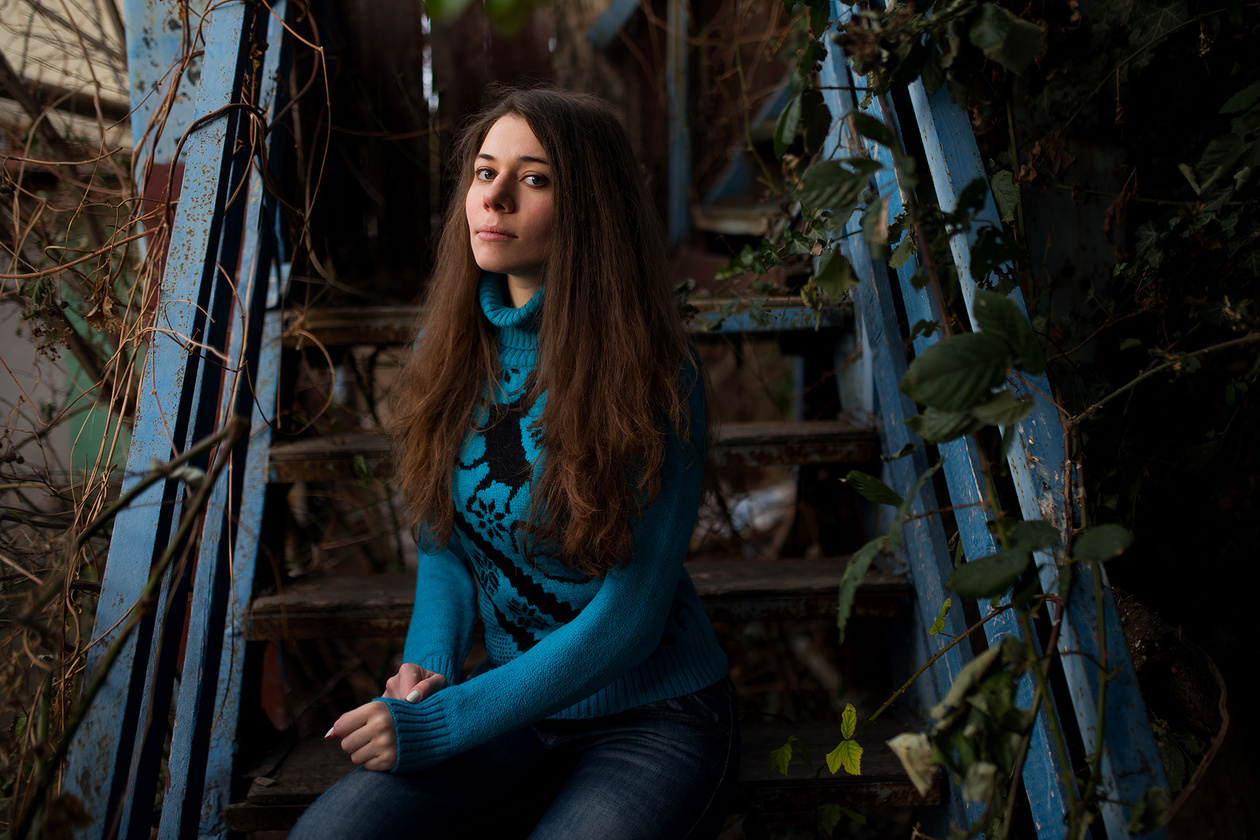
A wide-angle lens lets you shoot portraits from fairly close in cramped rooms and convey perspective and volume more strongly. But because of the short shooting distance, strong perspective distortion can appear in the frame. That is why longer lenses are used for most portraits.
What is a normal lens?
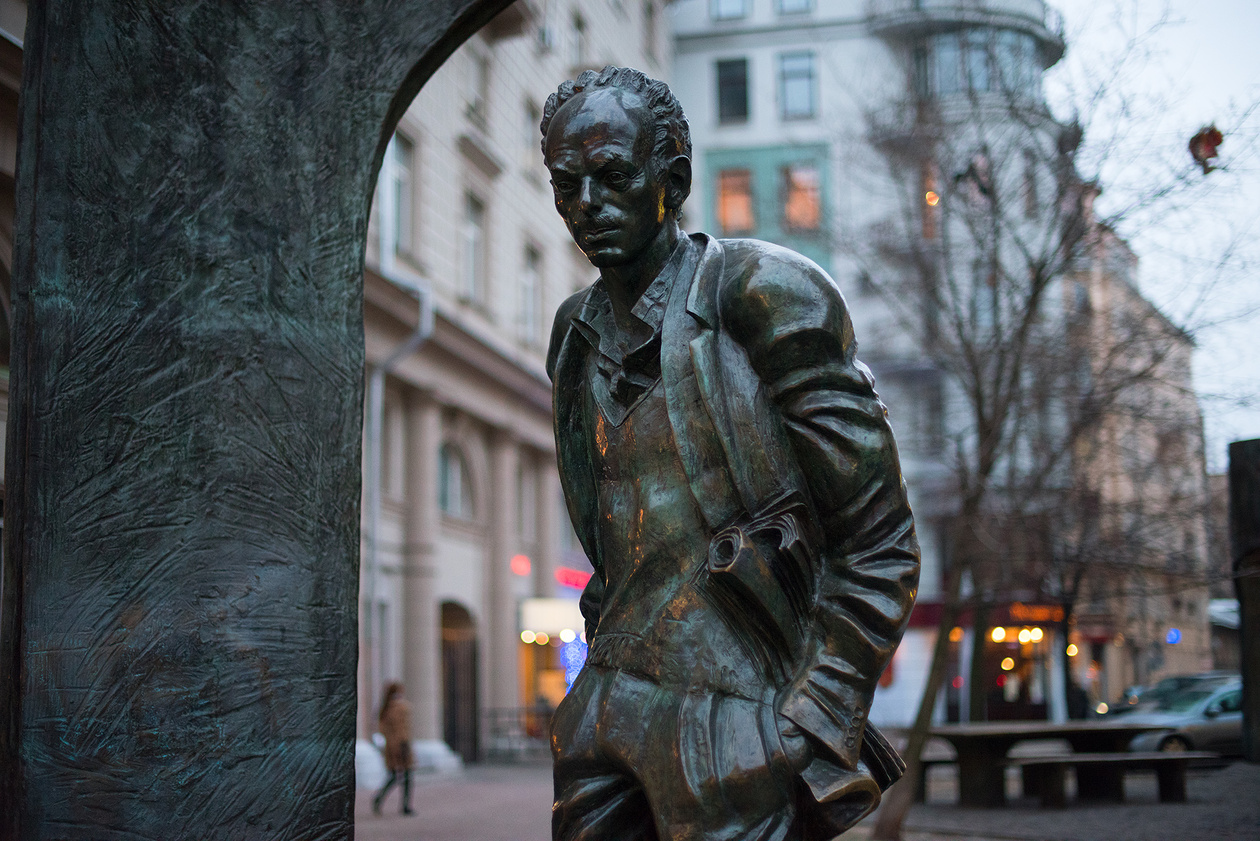
Normal (standard) lenses give an angle of view of about 40-50 degrees, which corresponds to focal lengths of 40-60 mm on full frame and 28-40 mm on APS-C. Both names are conventional: they only mean that the lens gives a "normal" angle of view and "normal" perspective, rendering the picture roughly as a person sees it. These lenses are versatile and have a place in any genre. Every general-purpose zoom covers these focal lengths.
Because they are so "normal", these lenses can seem a little dull: they cannot render perspective dramatically or take in a wide view, and they cannot bring a picture much closer the way a telephoto does. The classic normal lens is the 50 mm prime, nicknamed the "fifty". Keep in mind that the normal lens for an APS-C camera is a 35 mm lens, which matters when you choose lenses.
In the film era, cheap 50 mm primes were the kit lenses sold with cameras, which may be why normal lenses are also called "standard" lenses. The name is a little misleading, since every photographer chooses their own favorite, standard focal lengths. Still, thanks to its low price and wide aperture, a normal lens (very frequently a fifty) becomes the most-used lens for a lot of photographers. Our guide to prime lenses explains how to choose between a 35 mm and a 50 mm.
What is a telephoto lens?
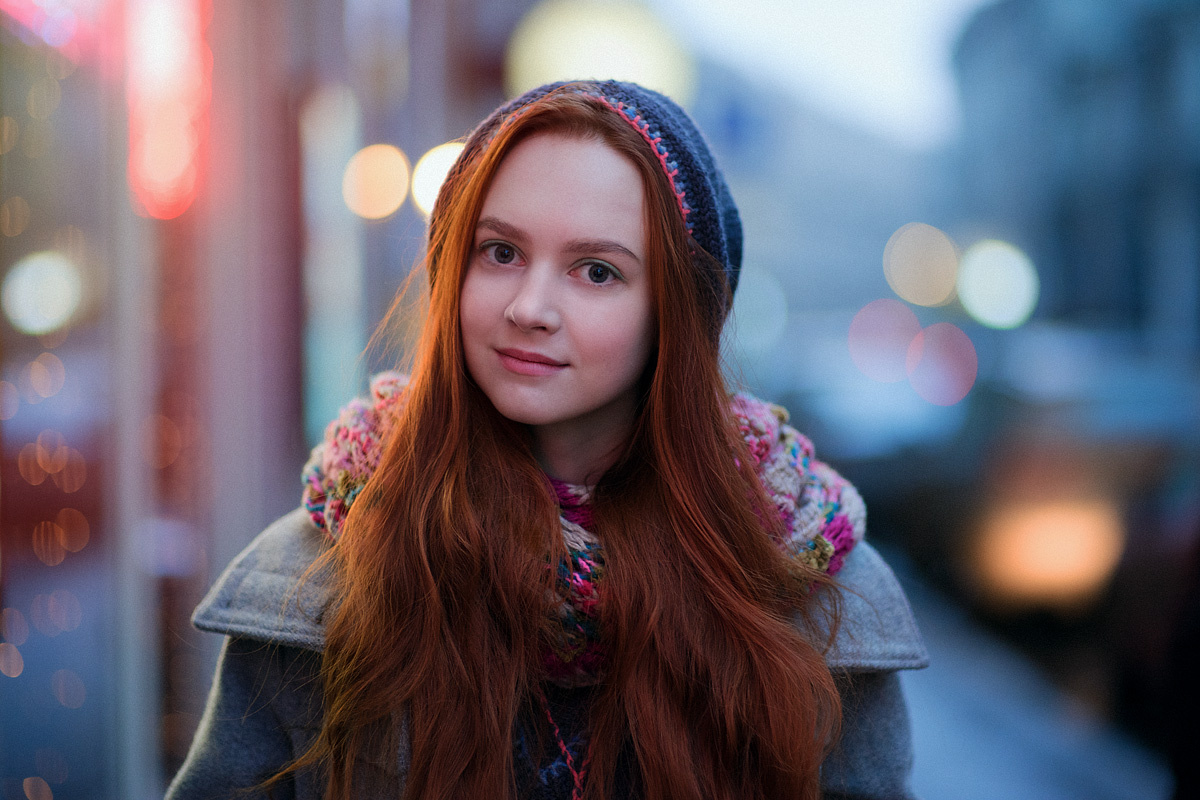
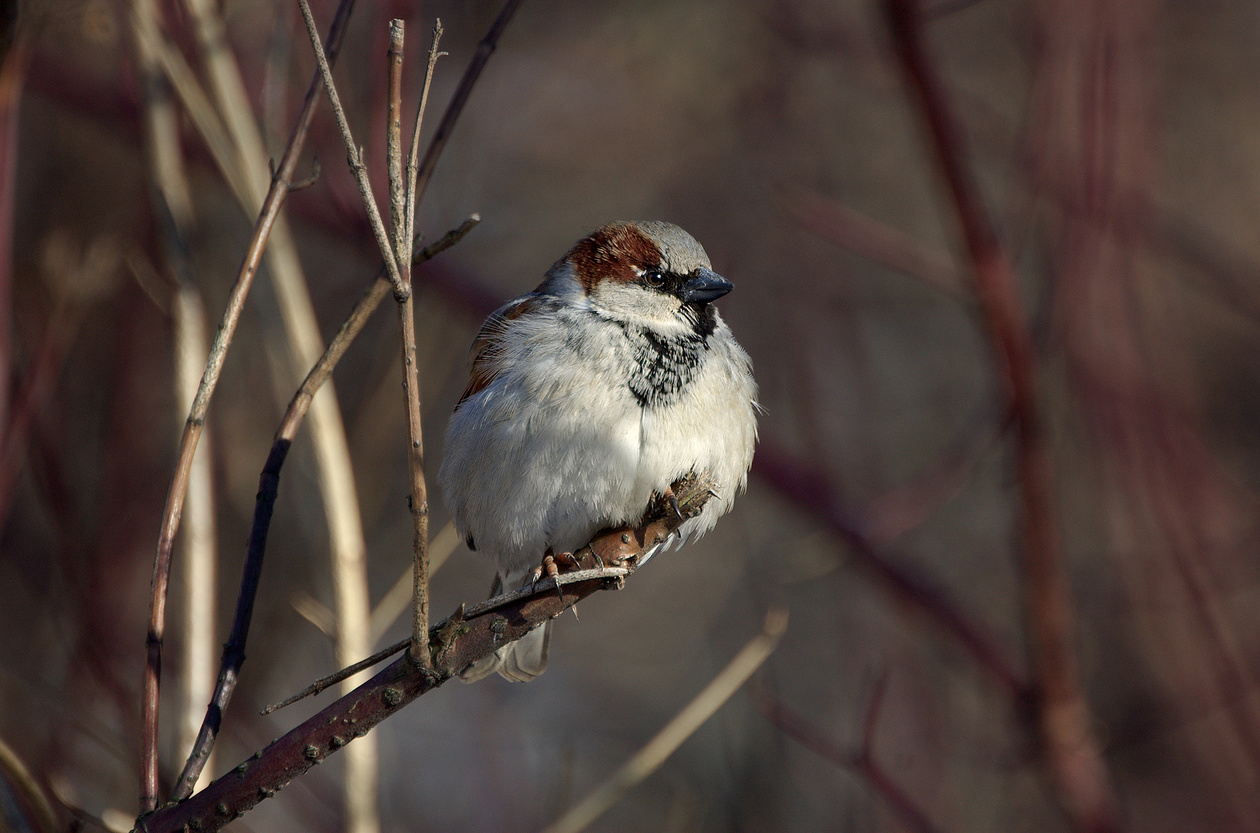
A telephoto lens has a long focal length and a narrow angle of view, from about 35 degrees down to a few degrees, so it can show subjects far away from you in close-up. The prefix "tele" comes from the Greek for "far". Moderate telephotos cover roughly 70-200 mm on full-frame cameras and 50-150 mm on APS-C; super-telephotos are longer than 200 mm on full frame and 150 mm on APS-C. As a rule, the longer the focal length, the bigger and more expensive the lens.
That is why super-telephotos are mostly professional tools for very distant subjects such as wild birds, animals or football players during a match. Nikon's AF-S NIKKOR 800mm f/5.6E FL ED VR for full-frame cameras weighs about 4,590 g (10.1 lb) and is 461 mm (18.2 in) long. It gives superb image quality, but a tool this heavy and expensive is first of all for professionals. Sensor size changes the picture: the 70-300 mm f/4.5-5.6 lens Nikon made for its small-sensor Nikon 1 cameras gave the same angle of view and the same maximum aperture at 550 g (1.2 lb), because a smaller sensor needs a smaller image.
Because a telephoto is used from farther away, its photos show a different perspective from shorter lenses. Perspective distortion is reduced to a minimum, and objects at different distances seem to draw closer together. The distance does that, not the glass: from the same spot, a shorter lens gives the same proportions in a wider frame. This is why moderate telephotos are popular for portraits: they do not distort the proportions of the face and body. Telephoto lenses can also blur the background strongly, another plus for portraits. Beyond portraits, telephotos are in demand for reportage, sports and landscapes.
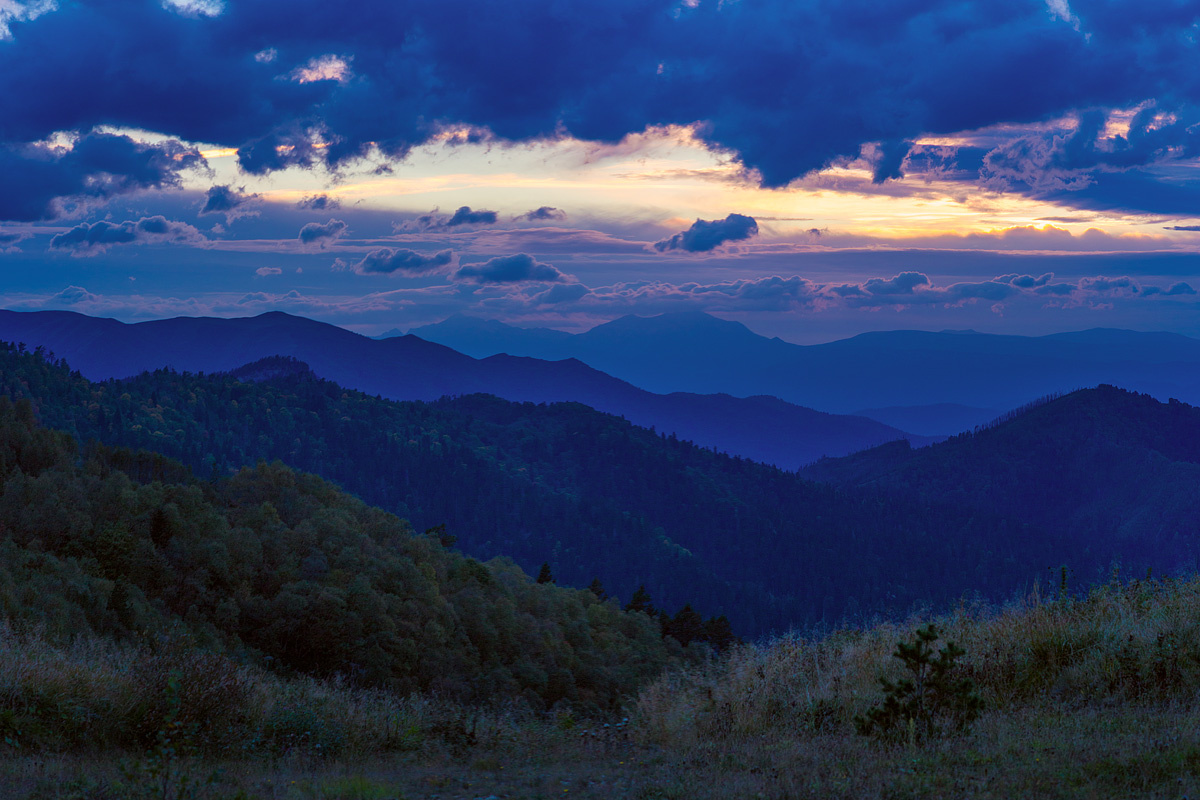
Editor's note: telephoto vs long-focus. In optics, "telephoto" names a specific design: a telephoto lens uses a rear "telephoto group" so the lens is physically shorter than its focal length. A simple lens as long as its focal length is a long-focus lens. Photographers use "telephoto" for both, and angle of view and perspective are the same at the same focal length.
Telephoto vs wide-angle lens: which does what?
The two lens types differ in angle of view, in the shooting distance that angle forces on you and therefore in perspective. A wide-angle lens takes in a broad view from close up and stretches depth, while a telephoto takes in a narrow slice from far away, and the distance compresses it. This table sums up the differences described above for full-frame cameras.
| Wide-angle lens | Telephoto lens | |
|---|---|---|
| Focal length on full frame | about 24-35 mm (ultra-wide: under 24 mm) | 70-200 mm moderate, over 200 mm super |
| Diagonal angle of view | 50° to 80° (ultra-wide: up to 180°) | 35° down to a few degrees |
| Typical shooting distance | Close | Far |
| Perspective (from the distance each is used at) | Near objects look large, distant ones small; depth is stretched | Objects at different distances seem closer together; depth is compressed |
| People | Faces and hands near the lens look enlarged unless you shoot from farther away | Natural proportions; the classic portrait choice |
| Background | A lot of background in the frame | Little background, easily blurred |
| Best for | Landscapes, interiors, architecture, travel, tight rooms | Portraits, sports, wildlife, compressed landscapes |
Portrait and macro lenses: two telephotos with a job
Among telephoto lenses, two types are designed for particular kinds of shooting. A portrait lens is built specifically for photographing people. It is most frequently a prime with a fast (wide) maximum aperture and a focal length of about 50-135 mm for interchangeable-lens cameras. Why these focal lengths? Wider lenses can distort the proportions of the face and body unflatteringly at certain angles and in certain poses, while longer lenses force you to stand so far from the person that you lose all contact with them.
Thanks to its wide aperture, suitable focal length and optical design, a portrait lens blurs the background beautifully. Other lenses can blur the background too, but portrait lenses are known among photographers for the particular beauty of their bokeh, the pattern of blur in the out-of-focus zone. The 85mm lens guide looks at the most popular portrait focal length in detail.
Macro vs telephoto lens
A macro lens is a lens that can focus at a very short distance without extra accessories such as close-up lenses or extension tubes, so it records small objects in large close-up. Macro lenses are close to portrait lenses in specifications: they too are fast lenses in the moderate telephoto range. Macro lenses are used for small nature subjects (insects, small animals, small plants) and they are the ideal choice for product, jewelry and reproduction photography.
Despite the similar specifications, a macro lens draws a very different image from a portrait lens: a rather contrasty, "hard" one. On people, that character emphasizes every skin flaw, so macro lenses are not recommended for portraits.
Editor's note: what counts as macro. In the strict definition, a macro photograph records the subject at life size or larger on the sensor, an optical reproduction ratio of 1:1, and a macro lens is one that can reach 1:1. Ordinary lenses are typically designed for a maximum reproduction ratio of about 1:10. A telephoto lens makes a distant subject large by narrowing the angle of view; a macro lens makes a small subject large by focusing very close.
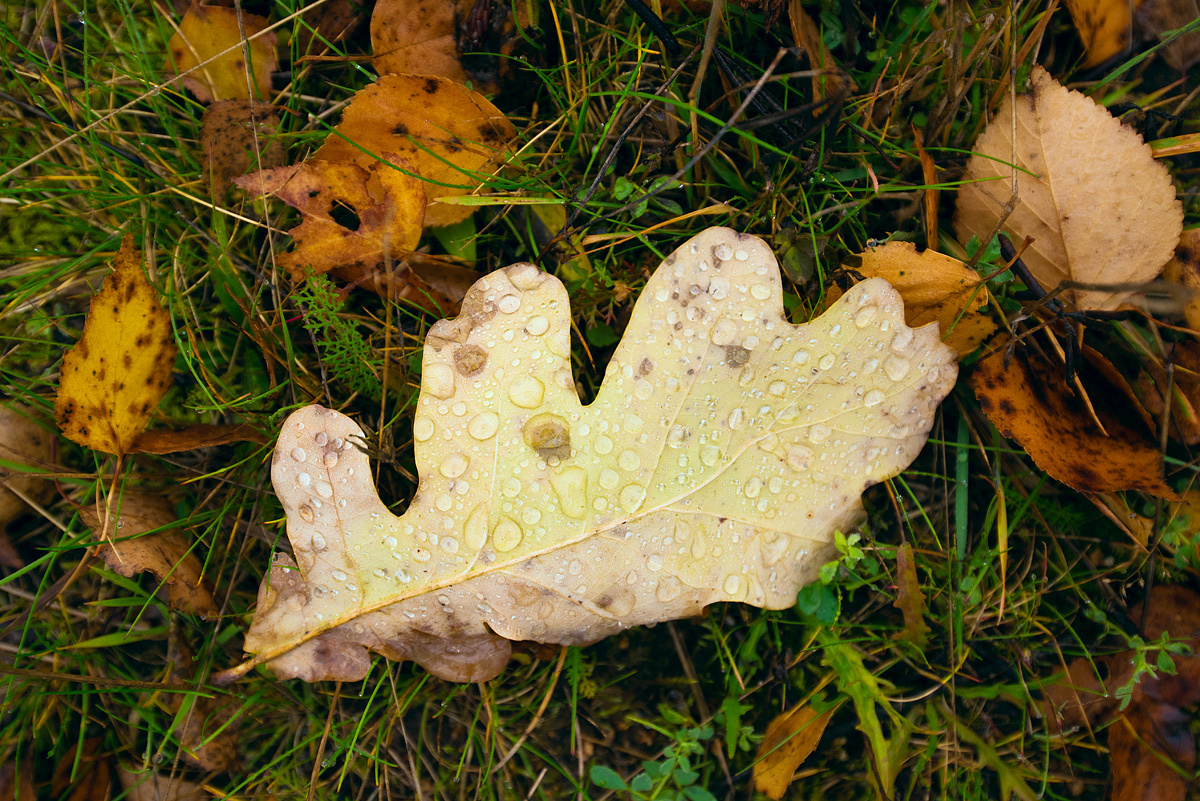
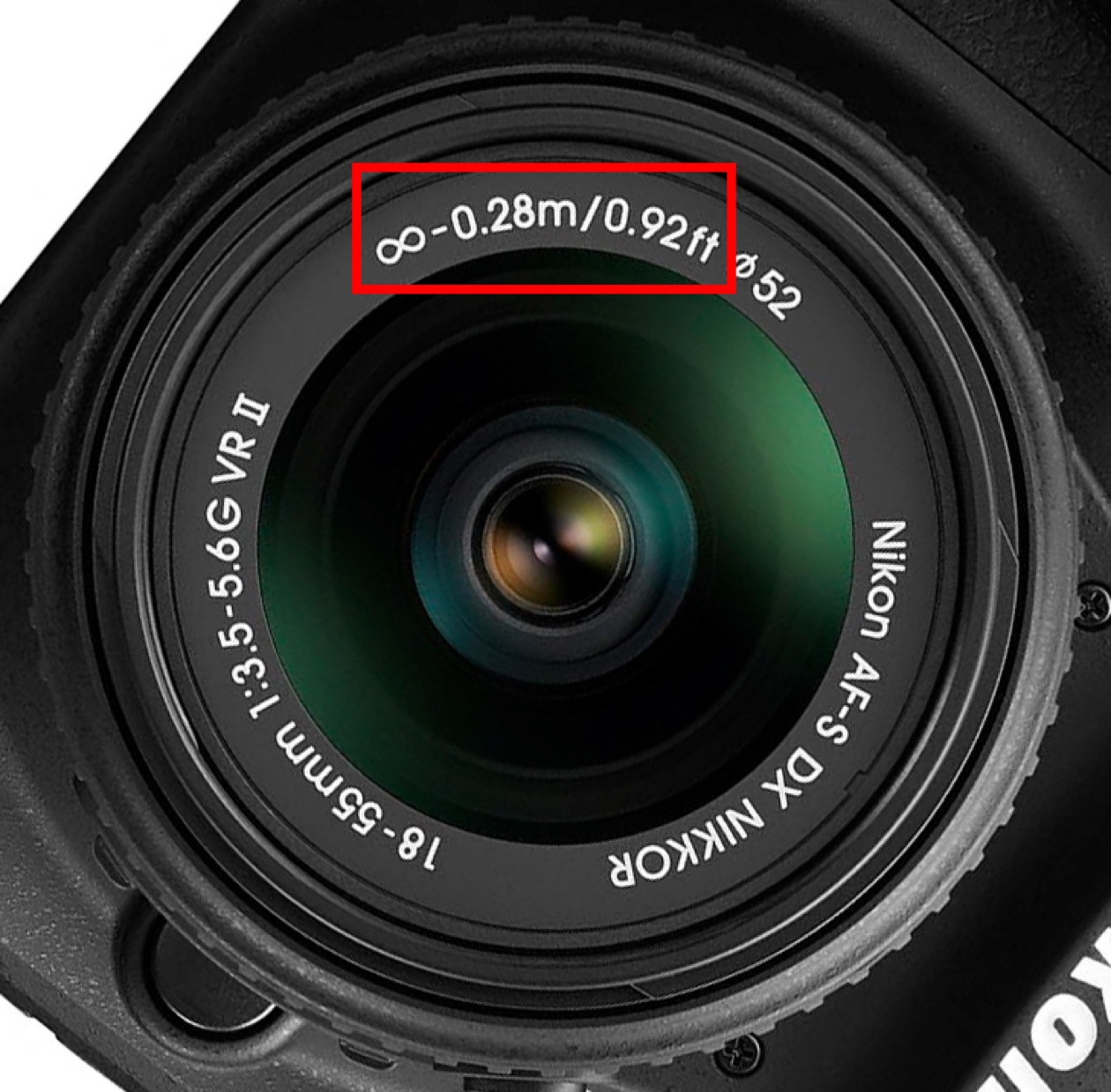
Every lens has a minimum focusing distance, and it cannot focus any closer. Depending on the model, it ranges from a few meters down to a few centimeters. Note that it is measured from the plane of the sensor (the focal plane), not from the front element, and SLR cameras carry a mark for that plane on the body. The shorter the minimum focusing distance, the larger you can photograph a subject. A macro lens such as the Nikon AF-S DX Micro NIKKOR 40mm f/2.8G focuses as close as 16.3 cm (6.4 in) from the sensor, which, counting the length of the lens itself, means almost touching the subject. Nikon lists its maximum reproduction ratio as 1x, true life size.
How do you find your lens's minimum focusing distance? It is always given in the specifications, which are easy to find online, and it is frequently printed on the front of the lens.
Zoom or prime: the other way to sort lenses
Besides angle of view, lenses divide into two categories: those with a fixed focal length (primes) and those with a variable focal length (zooms). Zoom lenses are prized for versatility. By changing the focal length, we change the angle of view, so one lens can shoot both wide views and distant subjects; in plain words, it can "zoom in and out". That versatility is why zooms are so widespread.
Zooms have drawbacks too. Image quality is frequently sacrificed for versatility, and zooms usually have a smaller maximum aperture than primes. Primes have a fixed focal length, so they cannot change the angle of view or zoom in and out. In exchange they have other strengths, the main one being excellent image quality, and primes can have very wide maximum apertures that zooms cannot match, f/1.4 and even wider.
The widest aperture of a lens is frequently called its speed (strictly, its maximum relative aperture). Simpler lenses have slow maximum apertures of F3.5 to F5.6; more advanced and expensive ones are faster, and lenses with a maximum aperture of F2.8 or wider are usually called fast. The faster the lens, the easier it is to shoot in poor light and the more it can blur the background. Our aperture and f-stops guide explains the numbers. The cheap zoom sold with a camera is the subject of our kit lens guide.
Two more things decide whether a lens fits your camera at all. The mount (bayonet) is the fitting that attaches the lens to the camera, and different manufacturers use different mounts; modern mounts also carry electronic contacts so the lens and camera can exchange data. Most modern lenses focus automatically, while lenses that focus only by hand, with a ring on the barrel, are called manual-focus lenses. Older lenses can live on through adapters, as our article on old lenses on the Nikon Z system shows.
Which lens should you buy after the kit lens?
Every beginner asks this question, and you can answer it yourself. Notice which focal lengths you use most, and what you lack: a wider angle of view, or more reach toward distant subjects. Ultimately, everything depends on your goals and interests: think about what you shoot most and what you enjoy shooting, and the lens choice becomes easy. Most beginners struggle to answer, though, because everything is interesting at once: landscapes, portraits, reportage, macro.
This is also why serious photographers own more than one lens. People who do not photograph sometimes wonder why an enthusiast or a professional needs more than one lens, and the answer is that each shooting situation suits a different lens: one for portraits, another for landscapes, with focal lengths that together cover the range the photographer needs. Professionals chasing the highest image quality and wide apertures prefer two or three zooms with shorter ranges (for example a 24-70 mm f/2.8 plus a 70-200 mm f/2.8), or they cover their favorite focal lengths with primes.
Editor's note: our verdict, by use. Here are the steps we recommend, using the ranges above:
- Check what you already use. Shoot with your kit zoom for a few weeks and look at the focal lengths in your photos' EXIF data. If most frames sit at the short end, you want a wider lens; if they sit at the long end, a telephoto.
- If you want one lens for everything, pick a general-purpose zoom whose range covers two or more categories, such as an 18-140 mm zoom for APS-C or a 24-120 mm f/4 zoom for full frame.
- If you want the best image quality and blurred backgrounds, add a normal prime: a 50 mm f/1.8 on full frame, a 35 mm f/1.8 on APS-C, or about 25 mm on Micro Four Thirds (50 ÷ 2).
- For portraits, choose an 85 mm f/1.8 portrait lens on full frame, which falls in the 50-135 mm portrait range.
- For landscapes, interiors and architecture, choose an ultra-wide zoom: under 24 mm on full frame, under 16 mm on APS-C.
- For wildlife and sports, choose a 70-300 mm telephoto zoom, or a super-telephoto once the 300 mm end is not enough.
- For insects and small products, choose a macro lens that reaches 1:1, not a telephoto.
Our pick for a first extra lens: a normal prime (50 mm on full frame, 35 mm on APS-C). It cannot zoom, but it gives excellent image quality and beautifully blurred backgrounds at a low price, and it quickly shows you whether you want a wider or a longer lens next.
Frequently asked questions
- What are the main types of camera lenses?
- Lenses are sorted by angle of view, which follows from focal length. On full frame, ultra-wide lenses are shorter than 24 mm, wide-angle lenses run about 24-35 mm, normal lenses 40-60 mm, moderate telephotos 70-200 mm and super-telephotos longer than 200 mm. Fisheye, portrait and macro lenses are special types within these groups, and every lens is either a zoom or a prime.
- What is a telephoto lens?
- A telephoto lens has a long focal length and a narrow angle of view, from about 35 degrees down to a few degrees, so it shows distant subjects large in the frame. On full frame, moderate telephotos cover about 70-200 mm and super-telephotos start above 200 mm. Strictly, a true telephoto design is also physically shorter than its focal length.
- What is the difference between a telephoto and a wide-angle lens?
- A wide-angle lens (about 24-35 mm on full frame) takes in a broad view from close up and exaggerates depth: near objects look large and distant ones small. A telephoto lens (70 mm and longer) takes in a narrow view from far away and compresses depth, so distant objects seem closer together. Shooting distance, not the lens itself, changes the proportions.
- Macro vs telephoto lens, what is the difference?
- A macro lens can focus very close and record a small subject at life size (1:1) on the sensor without extension tubes or close-up lenses. A telephoto lens brings distant subjects closer but cannot focus that close. Macro lenses are usually short telephotos with fast apertures, yet they render a contrasty, hard image that suits insects and products better than portraits.
- Which lens is best for portraits and which for landscapes?
- For portraits, the standard choice is a fast portrait lens of about 50-135 mm on an interchangeable-lens camera, which keeps facial proportions natural and blurs the background. For landscapes, wide-angle and ultra-wide lenses take in the whole scene, while a telephoto lens picks out a distant ridge and compresses the space between mountain ranges.
- What is a normal lens?
- A normal lens gives an angle of view of about 40-50 degrees, close to how a person sees a scene, so it renders perspective naturally. That means a 40-60 mm lens on full frame, a 28-40 mm lens on APS-C and, computed with the crop factor of 2, about 25 mm on Micro Four Thirds. The classic normal lens is the 50 mm prime.
Sources
- Angle of view (photography), Wikipedia contributors (2026)
- Crop factor, Wikipedia contributors (2026)
- Telephoto lens, Wikipedia contributors (2026)
- Macro photography, Wikipedia contributors (2026)
- NIKKOR Z 50mm f/1.8 S specifications, Nikon Corporation (2026)
- AF-S NIKKOR 800mm f/5.6E FL ED VR specifications, Nikon Corporation (2026)
- AF-S DX Micro NIKKOR 40mm f/2.8G specifications, Nikon Corporation (2026)